



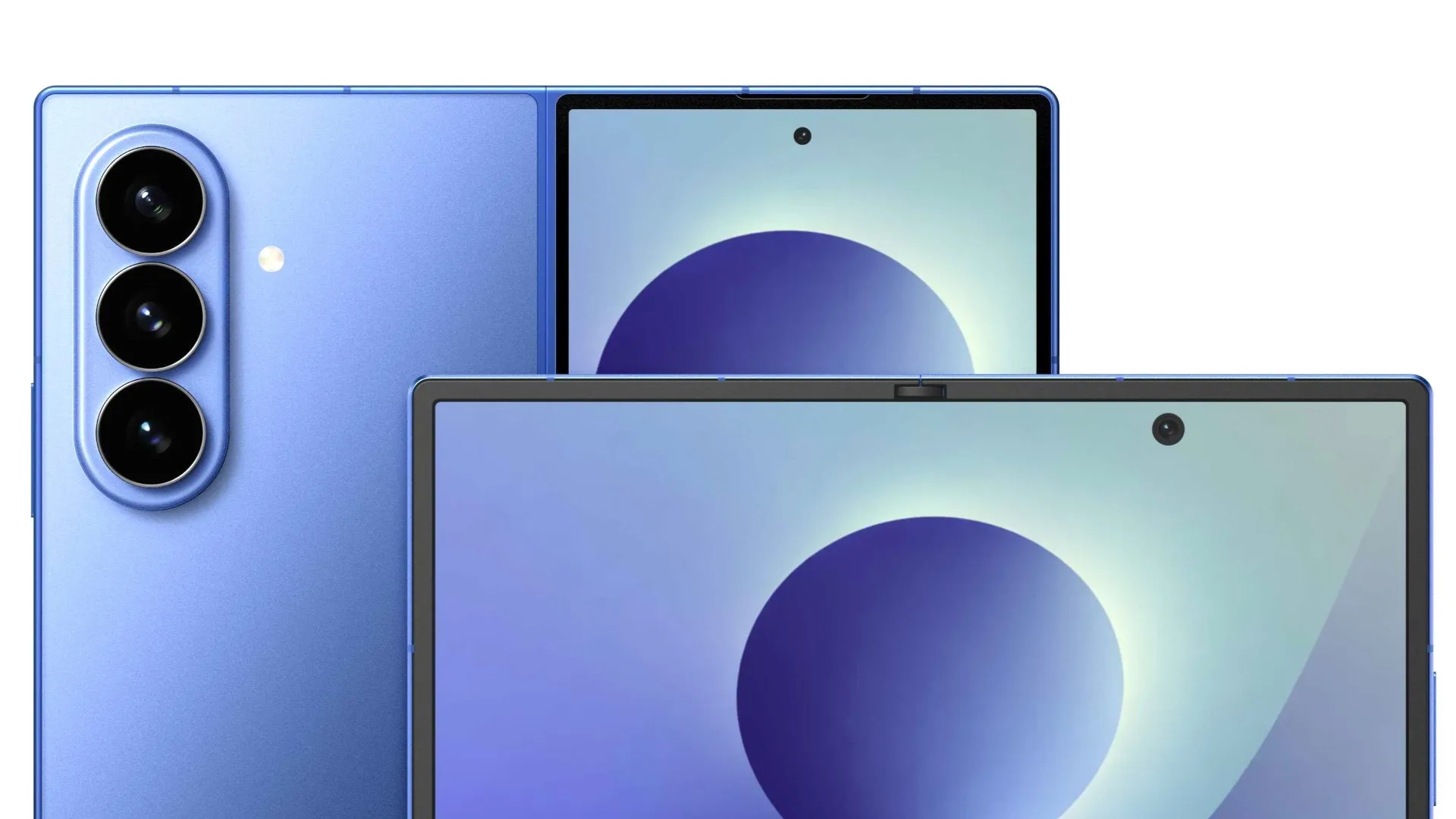
Multiple leaks point to higher prices on premium storage tiers, not a blanket increase. The $1,999 entry price may hold. The Flip 8 picture is murkier.
A tech insider posting to Naver Blog claims that Asian and European sales channels have reportedly indicated the Galaxy Z Fold 8 series will cost more than the Galaxy Z Fold 7, SamMobile reported. It's the latest signal ahead of a launch Samsung is expected to make next month, and it lands on top of earlier leak-based reporting that had already pointed in the same direction.
The Galaxy Z Fold 8 price hike, though, may not look the way most coverage implies. Earlier reporting suggests Samsung could hold the base 256GB model at $1,999 while raising prices on the 512GB and 1TB configurations. Whether you're affected depends almost entirely on which version you were planning to buy.
Galaxy Z Fold 8 price leak: where the increase appears and where it doesn't
The sharpest pricing numbers come from a SammyFans report published nearly three months ago: the base Fold 8 at $1,999, matching the Fold 7; the 512GB variant at roughly $2,199; and the 1TB model at around $2,499. The leak from Lanzuk, reported by SamMobile, corroborates the direction higher prices are coming without adding specific dollar figures.
These two reports are best understood as reinforcement rather than independent confirmation. Both come from Samsung-focused outlets drawing on leak-based sourcing, not internal documents or official communications. The March leak sourced its figures to leaker @TheGalox_; the June leak attributes the claim to Lanzuk's Naver Blog post. The convergence of two separate signals from different leakers across a roughly three-month span makes the directional claim more credible than either would be alone. It does not make it settled.
A regional caveat applies, and it's not a minor one. The Lanzuk leak specifically names Asian and European markets. The March SammyFans report did not specify which markets its figures applied to. Whether U.S. pricing follows the same pattern is not addressed in either source. North American buyers should treat the specific dollar amounts as directional signals, not guaranteed outcomes.
On the Galaxy Z Flip 8: the name surfaces repeatedly in coverage of the Fold 8 announcement window, but neither report contains concrete pricing figures for it. That gap matters. The Galaxy Z Flip 8 price hike story, such as it is, remains genuinely speculative in a way the Fold 8 story no longer quite is. The honest position is that there's nothing to report on Flip pricing yet.
Why Samsung might be pricing it this way
Two cost explanations have surfaced across the reporting. Earlier leaks pointed to rising memory prices as the driver. A May SamMobile report citing Newspim framed the rationale as broader component-cost pressure. The two explanations aren't mutually exclusive. Foldables are structurally more expensive to produce than conventional smartphones, and higher-storage configurations are disproportionately exposed to component price swings. Samsung has confirmed neither explanation.
What the leaked pricing structure could suggest is a deliberate pattern: protect the entry price, absorb margin pressure on the premium tiers. That reading is an analytical inference based on the tier structure in the leaks, not something either source states directly. Still, the logic holds up under scrutiny. Buyers stepping up from base storage have already cleared the psychological hurdle of spending $1,999 on a foldable phone; an additional $80 is unlikely to be the deciding factor. Buyers evaluating whether to enter the category at all are far more price-sensitive to that headline number.
The broader competitive context gives Samsung a plausible reason to guard the entry price carefully. The global foldable market is projected to grow around 20% in 2026, with Apple's anticipated entry adding new pressure across the segment, Counterpoint Research reported. A Fold 8 that opens at a higher sticker price than the Fold 7 would hand critics an easy narrative heading into what is shaping up as the most competitive year the foldable category has seen. Holding that line costs something in margin, and the higher storage tiers may be how Samsung recaptures it.
The expected expansion to three models adds still more flexibility. Samsung's 2026 foldable lineup is reportedly coming as a Galaxy Z Fold 8 Ultra, a wider Galaxy Z Fold 8/Fold 8 Wide, and the Galaxy Z Flip 8. A broader lineup creates more room to segment pricing than Samsung had in previous years. It also makes it easier to avoid the blunt headline that everything costs more, if only because the entry point into the lineup can stay put while premium configurations move upward.
What the Galaxy Z Fold 8 vs Galaxy Z Fold 7 price gap means for buyers
For buyers planning on the base 256GB model, the leaked evidence is relatively reassuring. The $1,999 starting price appears likely to hold, according to SammyFans. Given that a large portion of pre-announcement coverage has treated this as a general price increase, that's a meaningful distinction.
The picture changes as you move up the storage ladder. Under the leaked Fold 8 pricing, the 512GB tier would land at roughly $2,199 versus $2,119 on the Fold 7 a $80 increase on the model itself, but a wider gap from the entry price: $200 versus $120. The 1TB tier tells a similar story. The Fold 8 version may reach $2,499 compared to $2,419 on the Fold 7, with the upgrade premium from base widening to $500 versus $420, per SammyFans.
The absolute per-unit increase at each tier is $80. That number sounds modest. But the effective cost of choosing more storage is growing, and buyers who routinely opt for the highest available tier, whether for video, productivity, or simple peace of mind about running out of space, face a meaningfully different calculus than the flat entry price implies.
There's also a practical planning dimension here. If the base model at $1,999 comes with 256GB, buyers who want 512GB will need to weigh whether the jump is worth $200 more rather than $120. For some, that's a straightforward yes. For others, especially if the base storage proves adequate for their use case, it tips the decision back toward the entry model. Storage tier pricing has always had this effect on purchasing decisions; the Fold 8 leaks suggest it may matter more than usual this cycle.
What's still unknown before launch
Two separate leak-based sources, SammyFans and SamMobile, are pointing in the same direction: a selective price increase on the 512GB and 1TB Fold 8 configurations, with the $1,999 base price expected to stay flat.
Several things remain unresolved. Whether U.S. pricing mirrors the Asian and European pattern described in the June leak is an open question. What the Flip 8 will cost in any region is unknown. And the exact timing of Samsung's announcement, beyond a general expectation of next month, hasn't been pinned down.
What the leaks don't support is the framing of a category-wide hike. The increase, if it materializes as described, targets a specific segment of buyers, those who want more than the base storage configuration. With the official announcement likely just weeks away and the foldable market heading into its most crowded competitive moment, the picture will sharpen fast.







Comments
Be the first, drop a comment!