



Samsung Foldable Phone Patent Shows Bi-Directional Z Flip Design
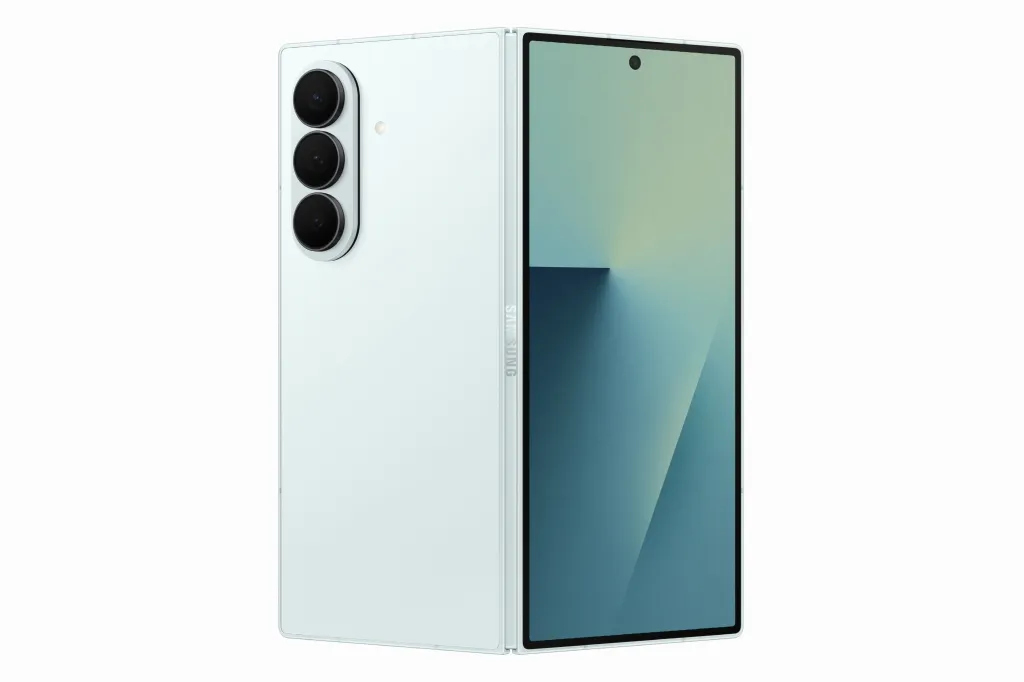
Samsung has filed a patent for a clamshell phone with a double-jointed hinge that can fold both inward and outward, eliminating the cover screen in favor of a single flexible panel that serves both purposes. Android Authority reported the filing today. It's at least the second Samsung foldable phone patent staking out this concept: Tech Advisor covered a related WIPO design patent earlier this year.
This is not a product announcement. What makes it worth reading is what it reveals when placed next to a separate Samsung announcement from two days ago: Samsung confirmed Flex Titanium, a new display material stack headed into next-generation Galaxy foldables, built to address the crease, stiffness, and shock-resistance problems of the current inward-fold design. That's a different engineering problem than the two-way patent creates. The gap between what Flex Titanium solves and what a bi-directional flip would require is the clearest signal of where this idea actually sits on Samsung's timeline.
What Samsung's foldable phone patent actually proposes
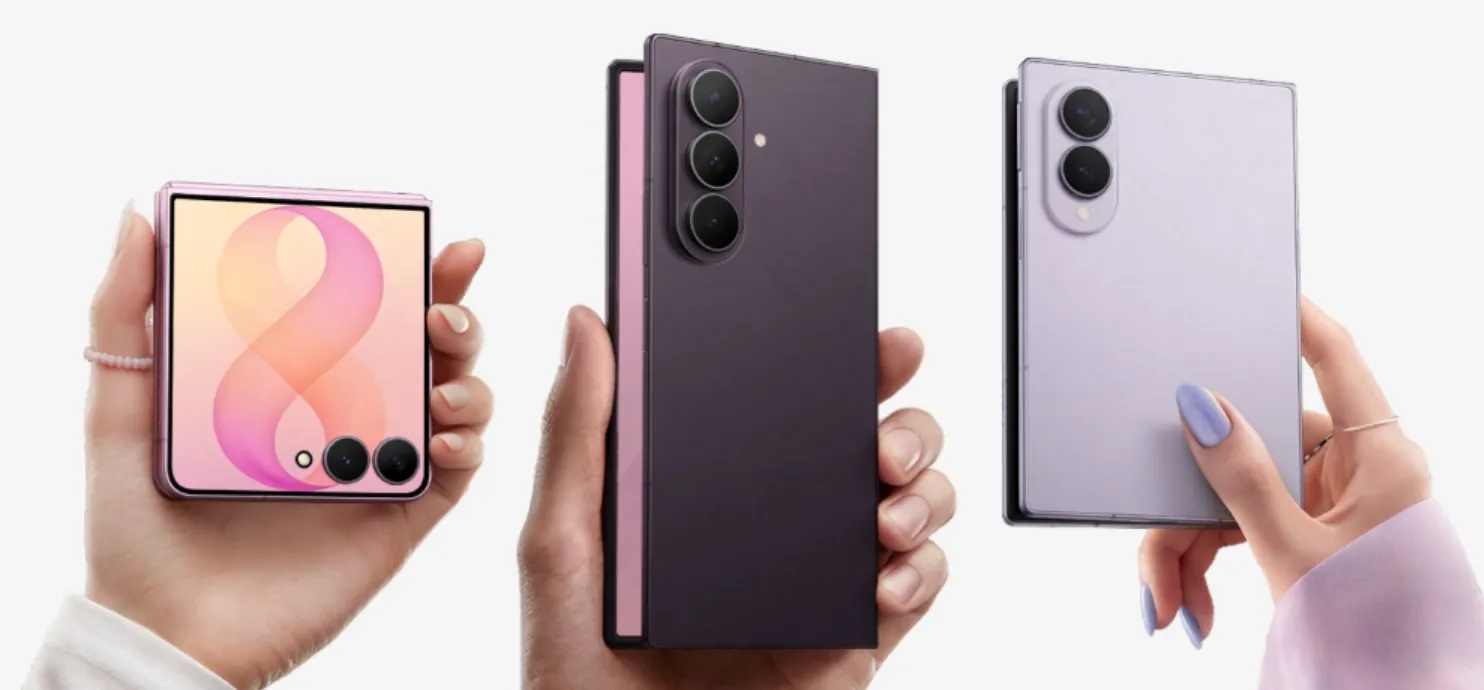
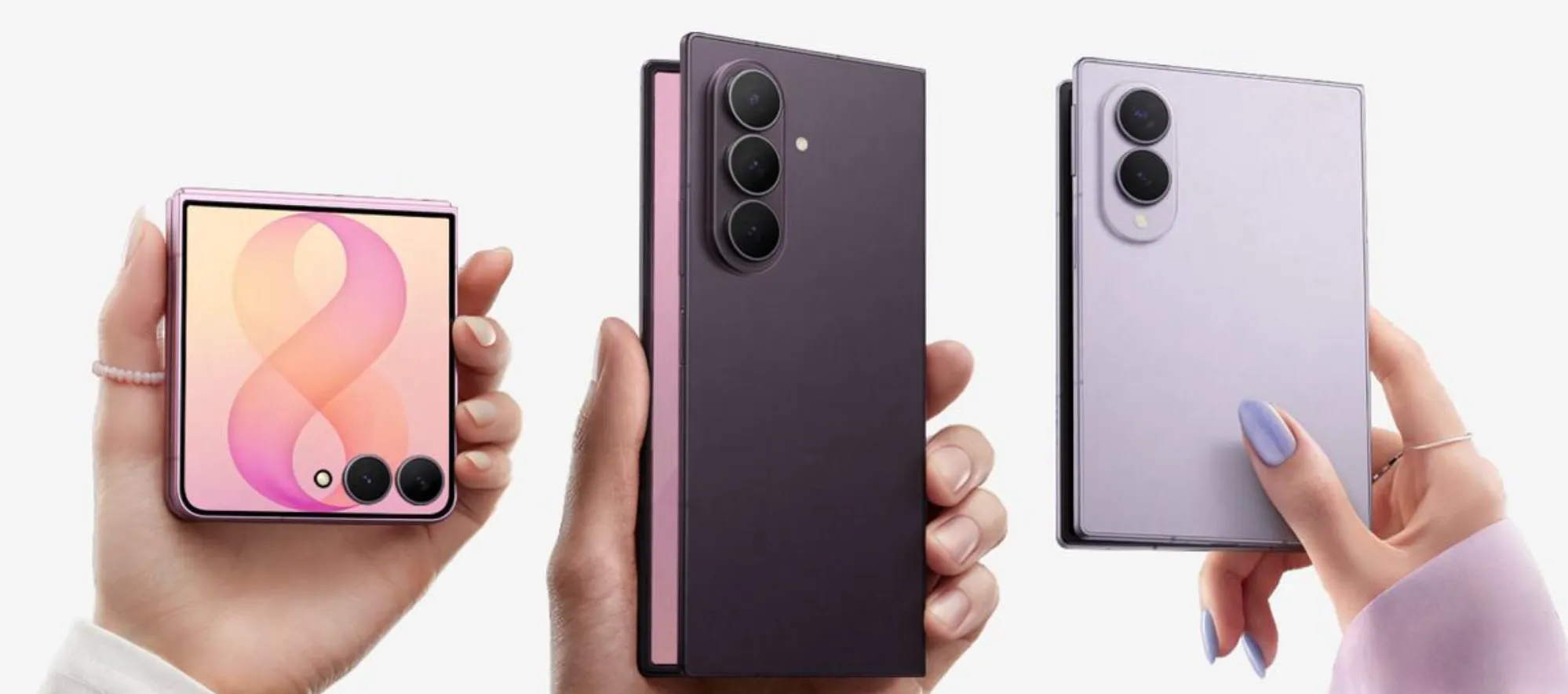
The Z Flip's cover screen is a practical workaround, not a design statement. Samsung added a secondary outer panel because a clamshell with its display folded inward becomes nearly useless when closed. The patent's design logic, as Tech Advisor laid out earlier this year, replaces two separate hardware components with one flexible surface: folded outward when you need screen access, inward when you want the display protected.
On paper, that's a cleaner solution. In practice, it changes what the display has to survive every single day. The current Z Flip's inner panel spends most of its life shielded inside a chassis it faces the world only when you open the phone deliberately. A display folded outward would be the phone's outer shell, facing pockets, bags, keys, and hard surfaces constantly. Per Android Authority, Samsung's patent envisions users carrying the phone in this outward-folded configuration meaning that bezel-free panel would be exposed not occasionally, but by default.
When folded inward, the patent describes a curved display on both sides that would surface glanceable information along the edges, echoing the Galaxy S7 Edge's design language, according to Android Authority. That's a workable substitute for a cover screen in limited scenarios. The harder shift is the outward mode: a display that was engineered to live protected inside a device suddenly becomes its most exposed surface.
Samsung's engineering pattern: reduce complexity first, expand later
Seven generations of Galaxy foldables tell a consistent story. Samsung's approach has been to reduce mechanical complexity, then use the space and weight savings to unlock performance improvements elsewhere. The Z Flip4 and Z Fold4 hinge redesign is the clearest example on record. Samsung cut hinge component count by 60%, which freed internal space for larger camera systems without adding thickness, per the company's own engineering Q&A from 2022. The redesigned hinge also came out 21% lighter than the previous generation. The stated goal was fitting better hardware into the same envelope not adding mechanical capability for its own sake.
That pattern held through 2024. An iFixit teardown of the Z Flip 6 and Z Fold 6 found internal layouts nearly identical to the prior generation larger batteries and minor refinements, no structural reinvention, The Verge reported in 2024. Across all seven generations, Samsung has described its understanding of user expectations as stable: more immersive screen, less visible crease, better durability, thinner profile, per the Samsung Newsroom this week.
A bi-directional hinge runs against that logic directly. Where Samsung has consistently reduced articulation points per fold cycle, a two-way mechanism introduces more moving parts, more potential failure surfaces, and reverse-bend fatigue stress that accumulates differently from a single-direction fold. That's not a generic engineering concern it's a specific reversal of the principle Samsung has applied every generation.
Flex Titanium addresses today's foldable problem, not the outward-fold one
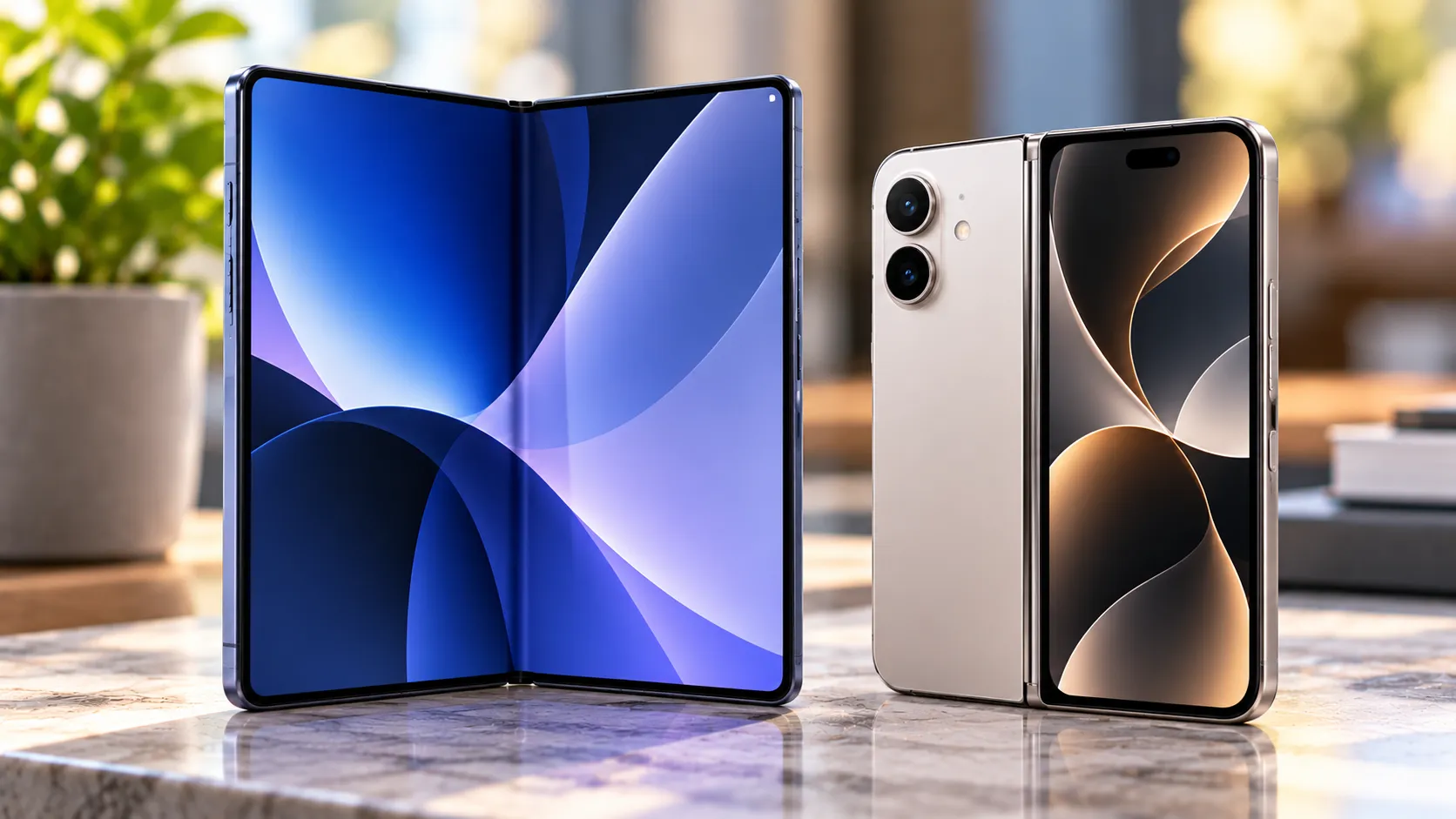
Two days before the patent surfaced, Samsung announced Flex Titanium, confirmed to debut in next-generation Galaxy foldables, with further details to follow at Galaxy Unpacked, per Samsung Mobile Press and the Samsung Newsroom. The technology integrates two titanium-based components designed to balance slimness, flexibility, and strength simultaneously the constraint that has defined foldable engineering since the first generation.
A titanium-alloy film sits directly beneath the OLED panel, delivering 20 times the mechanical stiffness of current polymer film while measuring roughly one-third the thickness of a human hair, according to Samsung Mobile Press. Below it, a titanium plate with micro-patterned holes through the fold zone maintains flexibility under repeated bending while tightening the bond between the display module and its backing, reducing the air gaps that make crease lines visible.
Those are real advances. They're also advances built specifically for how foldables already work. Samsung describes Flex Titanium's design mandate as withstanding external shock, surviving repeated folding, and fitting within a thinner device structure. That engineering brief is about hardening the conventional inward fold making a protected inner panel more durable while keeping the chassis slim. It is not a solution to what an outward-folded display would need to survive as a phone's permanent outer surface.
No independent technical validation of the 20x stiffness claim exists yet Flex Titanium is an announced technology, not a reviewed product. But even taking Samsung's framing at face value, it represents the next step in a direct line of iterative improvements. The bi-directional patent would require all of that, plus display materials engineered for the scratch resistance and daily impact exposure of an outer chassis, plus a hinge capable of reliable bidirectional articulation at scale. None of that appears in Samsung's confirmed roadmap.
What the two announcements together actually signal
Samsung has now filed on this concept at least twice in six months. Repeated filings suggest genuine strategic interest the company is protecting intellectual property around an idea it considers worth owning. That's a meaningful signal. It doesn't mean the engineering is close, and Android Authority notes the standard caveat applies: a patent filing doesn't confirm Samsung is actively building this, or that it ever will.
Flex Titanium is headed to Samsung's next-generation foldables. It solves the crease, stiffness, and shock-resistance problems of the existing fold. The two-way patent is waiting for the materials and hinge architecture that Flex Titanium doesn't address chiefly, what happens when a flexible display becomes a phone's permanent outer surface rather than a protected inner one.
The cover screen on the current Z Flip exists because Samsung hasn't solved that problem yet. Flex Titanium is a step in that direction. The inward-outward Galaxy Z Flip is waiting for the steps that come after and Samsung's own product history says those steps arrive one generation at a time.






Comments
Be the first, drop a comment!