





Samsung Galaxy Z Fold 8 Ultra vs Motorola Razr Fold: Which to Buy
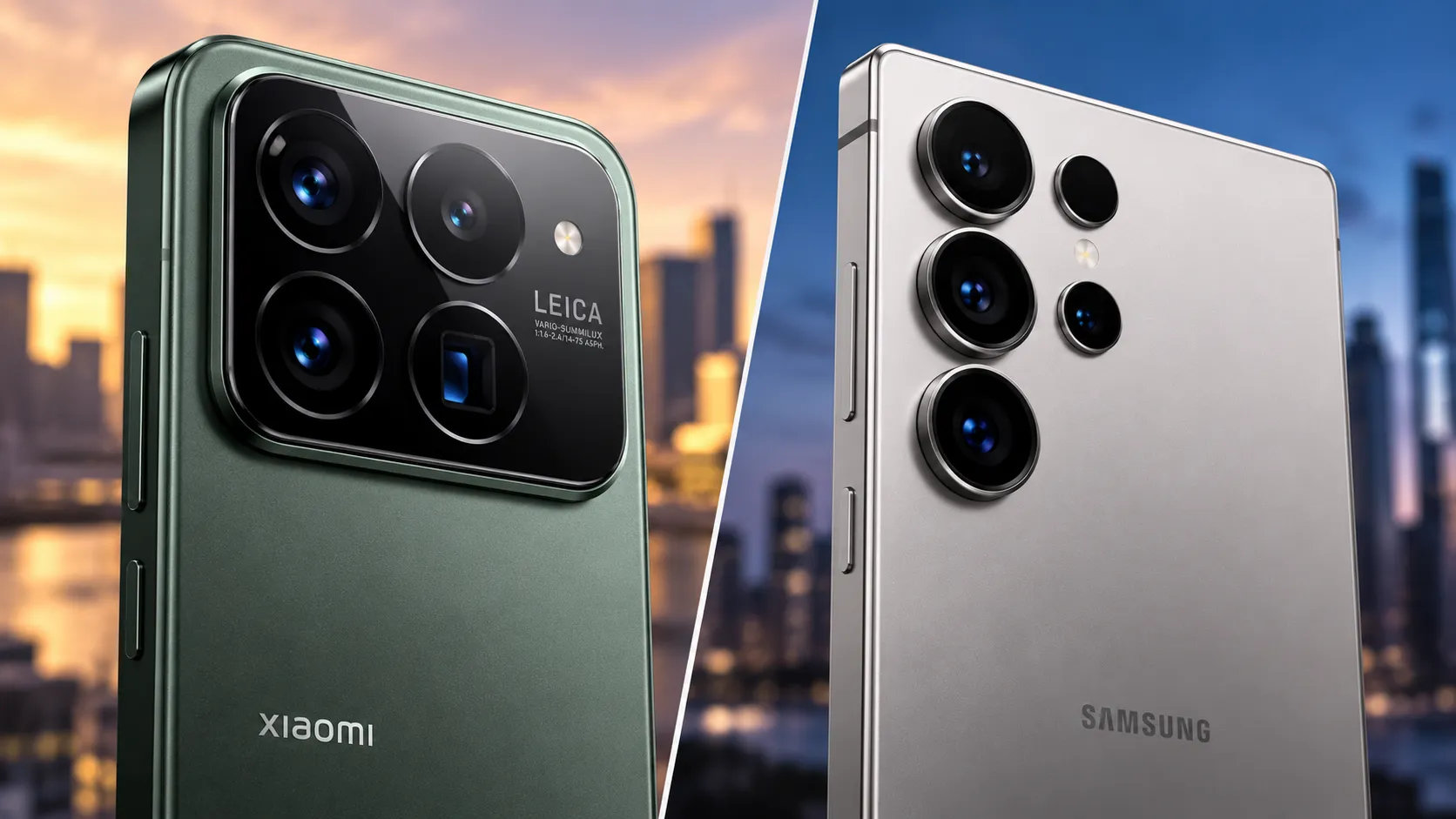
The Samsung Galaxy Z Fold 8 Ultra vs Motorola Razr Fold matchup is the most competitive the book-style foldable category has seen. For seven years, Samsung refined this segment largely without a serious large-format rival. The Motorola Razr Fold is Motorola's first attempt at that space, and it comes in swinging on hardware: a 6,000mAh silicon-carbon battery against the Z Fold line's 4,400mAh, and charging speeds of 80W wired and 50W wireless against Samsung's 25W and 15W (PCMag UK reported in May).
One important caveat before going further. The Samsung device in this comparison is the Galaxy Z Fold 8 Ultra, the current-generation model as of July 2026. The most detailed independent comparison data available at publication covers the Z Fold 7. Where Z Fold 8 Ultra specifications are known to differ, that will be flagged. Where they are unconfirmed, this article will say so. The Razr Fold is Motorola's first book-style device; Samsung's current flagship is its eighth generation (PCMag UK, May 2026). That gap matters, and it shapes everything that follows.
The case this article makes, tested across four areas, is this: available reporting points to Motorola holding the edge on raw hardware and value, while Samsung leads on software maturity and daily carry. The ownership picture, for the Razr Fold especially, is not yet complete. Which phone you should buy depends on which of those things you need most, and how much uncertainty you're willing to absorb.
Galaxy Z Fold 8 Ultra vs Razr Fold: Battery, charging, and display brightness
These are Motorola's strongest cards. The gaps are real, not just spec-sheet theater.
The Razr Fold's 6,000mAh silicon-carbon battery, paired with 80W wired and 50W wireless charging, is a genuine differentiator in a category where most competitors still sit between 4,500 and 5,000mAh, according to NGXPTech in May. Samsung's Z Fold 7 runs a 4,400mAh cell with 25W wired and 15W wireless, meaning both the reservoir and the refill rate trail significantly (PCMag UK, May 2026). For travelers and heavy users, that compounds across a day in ways a spec comparison undersells.
There's a physical cost. The Razr Fold weighs 8.57 ounces versus 7.58 ounces for the Z Fold 7, a gap that's partly attributable to the larger cell, though the sources treat that as a reasonable inference rather than a directly measured cause (PCMag UK, May 2026). A full ounce shows up in a jacket pocket by afternoon.
Motorola's display numbers are similarly aggressive. The outer screen runs 6.6 inches at up to 165Hz with a claimed peak brightness of 6,000 nits; the 8.1-inch inner display reaches 6,200 nits. Samsung's Z Fold 7 inner display peaks at 2,600 nits, less than half that figure on paper, which matters if you use the device outdoors regularly (PCMag UK, May 2026). Both Motorola displays support 10-bit color and Dolby Vision.
The caveats are significant. PCMag UK noted in May it had not run standardized battery tests on the Razr Fold, meaning the 6,000mAh figure does not translate automatically into confirmed screen-on time. The brightness numbers are manufacturer-declared peak claims, not independently validated results. On the processor side, the Razr Fold runs a Snapdragon 8 Gen 5, a step below the custom Snapdragon 8 Elite for Galaxy in the Z Fold 7; PCMag UK noted benchmarks hadn't been run but that performance "will likely be close." That's the extent of the support for any confidence about real-world chip parity.
Where Samsung leads: Software, form factor, and multitasking depth
Samsung's advantages are harder to photograph. They show up over weeks, not in a single benchmark.
One UI is the most foldable-aware Android software available. App continuity, the transition between cover screen and inner display as you open the device, works with less breakage than any competitor. Practical features are mature: the system learns frequently used app pairs and surfaces them proactively, supports three simultaneous apps, and can display a live meeting summary on one panel while keeping a notes app open on the other (NGXPTech, May 2026). These aren't features in a press deck. They've been tuned across multiple hardware generations.
Motorola's near-stock Android 16 approach looks cleaner in theory. PCMag UK granted Samsung a software advantage explicitly because the Razr Fold's implementation hadn't been fully evaluated at time of writing. NGXPTech reached the same conclusion: for buyers who prioritize polished, reliable software, Samsung still holds the edge (both May 2026). That's a provisional judgment, not a permanent verdict, but it's the best evidence currently available.
The physical form is where Samsung's years of iteration pay off most visibly. The Z Fold 7 folds to 8.9mm and opens to 4.2mm, the thinnest Galaxy smartphone ever built, the result of successive hinge redesigns culminating in the Armor FlexHinge (Samsung Global Newsroom, a year ago). For buyers in slim-fit clothing who pocket a phone all day, or who are sensitive to device weight, that refinement is not cosmetic.
One reversal worth noting: PCMag UK reports the Razr Fold supports a Motorola stylus accessory, while the Z Fold 7 does not, a notable shift given Samsung's S Pen support from the Fold3 through Fold5 (PCMag UK, May 2026). However, NGXPTech states that no dedicated stylus support is currently included. Because those sources disagree, buyers who annotate or sketch should treat stylus compatibility as an open question and verify directly with Motorola before purchasing.
Samsung Galaxy Z Fold 8 Ultra vs Motorola Razr Fold: Who pays extra for software, and who pockets the savings?
This is the section a commercial buyer actually needs, and it requires being honest about what the pricing picture looks like right now.
On storage-to-price value, the Razr Fold enters at $1,899.99 with 512GB and 16GB of RAM as the only configuration available. Reaching the same 512GB tier on the Z Fold 7 costs $2,119.99, a $220 premium for equivalent capacity (PCMag UK, May 2026). If NGXPTech's expected range of $1,499 to $1,599 proves accurate, the gap widens further (NGXPTech, May 2026). That's a discrepancy of up to $400 between the two sources, which is large enough to affect how you evaluate Motorola's value case. Until US pricing is confirmed, treat both figures as estimates.
Carrier availability is another variable. As of May, no confirmed US carrier partnerships for the Razr Fold had been announced, according to NGXPTech. That reporting is now about two months old. Buyers who rely on carrier financing or prefer in-store support should verify the current status before committing. Samsung's carrier relationships and retail footprint are established and not in question.
The support horizon is genuinely disputed. Samsung has formally committed to seven years of OS and security updates for the Z Fold 7. NGXPTech cites a matching seven-year promise from Motorola; PCMag UK says Motorola had not yet formally defined its commitment and estimated at least four years (both May 2026). Until Motorola publishes an official statement, buyers who care about long-term software support should treat the gap between four and seven years as unresolved.
Repair infrastructure is a cleaner call. Motorola's US service network remains limited compared to Samsung's established presence, NGXPTech noted in May. For a $1,900 device, that matters in practice if something goes wrong.
The buyer profile that suits the Razr Fold, assuming pricing lands closer to the lower estimates, is a traveler or heavy user who prioritizes battery and charging, spends significant time outdoors where display brightness matters, and wants 512GB of storage without paying Samsung's storage premium. The buyer profile for the Z Fold 8 Ultra is someone who needs polished multitasking software today, wants the lighter and thinner daily carry, values a formally documented support commitment, and is willing to pay more for the confidence that comes with eight generations of refinement.
What this comparison still can't tell you
Several of the most purchase-relevant questions have no reliable answer yet.
Camera. On paper, the Z Fold 7 carries a 200MP primary sensor; the Razr Fold runs three 50MP cameras, with a 3x periscope telephoto using a Sony Lytia sensor. Megapixel count is not image quality. No head-to-head camera comparison with standardized real-world samples had been published at time of writing. NGXPTech advises against the Razr Fold for camera-first buyers; PCMag UK lists specs without image quality conclusions (both May 2026). Camera buyers should wait for full independent reviews.
Water resistance. PCMag UK reports Motorola lists the Razr Fold as IP48/49-rated, protecting against large particles and water jets but not submersion. NGXPTech reports IPX8, which implies submersion resistance. These are contradictory, and Motorola had not clarified the discrepancy as of May (PCMag UK; NGXPTech, both May 2026). Treat Razr Fold water resistance as unverified until official documentation confirms it. The outer display uses Gorilla Glass Ceramic 3; inner display protection is unspecified by Motorola.
Hinge durability. No independent endurance testing for the Razr Fold has been published. This is Motorola's first book-style hinge. Samsung's Armor FlexHinge is the product of seven prior generations. That is not a verdict against Motorola, but it is an unresolved question that matters for a device you might own for five or more years.
Which phone, and whether to buy now
The Motorola Razr Fold makes the most sense for buyers who need maximum battery life and fast charging, spend significant time outdoors, want 512GB of storage without paying Samsung's storage premium, and can tolerate open questions about pricing, carrier access, and hinge longevity.
The Samsung Galaxy Z Fold 8 Ultra makes the most sense for buyers who need polished multitasking software today, prefer the lighter and thinner daily carry, want a formally documented long-term support commitment, or are already in the Samsung ecosystem. Eight generations of refinement produced a device that costs more to configure comparably but comes with fewer unresolved variables (NGXPTech, May 2026; Samsung Global Newsroom, a year ago).
For buyers where camera quality, hinge durability, final US pricing, carrier availability, or the support timeline are deciding factors: wait. The hardware evidence is strong in places; the ownership evidence is not complete. The exception is buyers whose decision turns primarily on battery and charging, where the data is clearest and the Motorola advantage is real. Everyone else is evaluating a comparison that isn't finished yet (PCMag UK, May 2026).
One thing is already clear regardless of how this particular matchup resolves. Motorola's entry into book-style foldables raises what buyers can reasonably expect from the category. The battery and charging gap between these two phones is too wide for Samsung to leave unaddressed. That competitive pressure makes the next year or two an interesting time to buy a foldable, whether or not the Razr Fold turns out to be the right answer for you.


Comments
Be the first, drop a comment!