





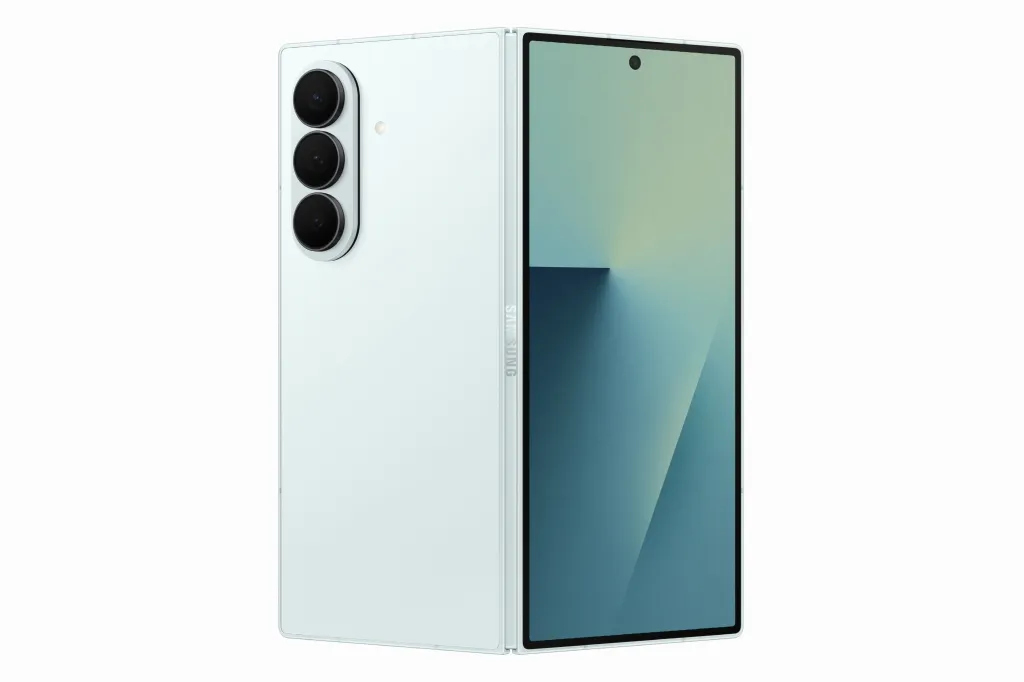
The Galaxy Z Fold7 became Samsung's first book-style foldable to outsell its companion Flip model during a South Korean preorder period. Its share rose from roughly 40% in the previous generation to 60%, giving Samsung fresh evidence that buyers would choose the more expensive Fold when its design addressed the format's biggest usability problems.
Samsung has not said Fold7 demand caused it to expand the Galaxy Z8 lineup. The new devices would have been in development before complete Fold7 sales results were available. Still, the preorder reversal strengthened the case for offering two book-style models instead of asking one Fold to serve every buyer.
Fold7 overtook the Flip7 in Korean preorders
The Fold7 accounted for 60% of South Korean preorders for the Fold7 and Flip7 in July 2025. It was the first time Samsung's book-style model had led the domestic preorder mix since the company introduced its foldable lineup in 2019.
Together, the Fold7 and Flip7 generated 1.04 million South Korean preorders. That surpassed the Fold5 and Flip5 record of 1.02 million in 2023 and the Fold6 and Flip6 total of 910,000 in 2024.
Samsung reported similar momentum in the United States, although it did not disclose how orders were divided between the two formats. According to the company, combined US preorders for the Fold7 and Flip7 rose more than 25% from the previous generation, while the Fold7 received the most preorders of any Galaxy Z Fold model to date.
Samsung also said carrier preorders for the two devices rose nearly 60% combined. After US availability began on July 25, 2025, Fold7 orders ran nearly 50% ahead of Fold6 orders. These company-reported figures have not been independently audited and do not represent final retail sales.
Early demand for Samsung's follow-up lineup has also extended beyond its home market. The Fold8, Fold8 Ultra, and Flip8 surpassed 270,000 preorders in India within 72 hours of their July 22, 2026, unveiling. Samsung said the previous generation needed its full 15-day preorder period to reach a similar total.
The company did not disclose how those Indian orders were divided among the three devices. The result shows strong combined demand but does not establish whether the two Fold models are outselling the Flip8 outside South Korea.
Why more buyers chose the Fold7
The Fold7 addressed several recurring complaints about book-style foldables at once: weight, thickness, and an awkwardly narrow outer screen.
At 215 grams, it weighed less than the Galaxy S25 Ultra. The phone measured 8.9mm when folded and 4.2mm when open, making it considerably thinner than earlier Galaxy Folds.
Samsung also widened the cover display to a 21:9 aspect ratio and increased the main display area by 11% over the Fold6. The wider outer screen made routine tasks more practical without requiring users to open the phone, addressing one of the line's longest-running usability complaints.
Those changes made the Fold7 feel closer to a conventional flagship during everyday use. Buyers could still open it for a larger workspace, but they no longer had to tolerate as many compromises when using it closed.
Launch promotions, trade-ins, and carrier financing may also have contributed to demand. Those offers varied by country, however, making it difficult to isolate how much of the preorder increase came from the hardware itself.
Samsung split the Fold into two models
Samsung unveiled the Fold8, Fold8 Ultra, and Flip8 on July 22, 2026, replacing its previous one-Fold, one-Flip pairing with three distinct foldable models.
The standard Fold8 introduces a shorter, wider shape built around reading, browsing, gaming, and video. It weighs 201 grams and pairs a 5.5-inch cover screen with a 7.6-inch inner display using a near-4:3 aspect ratio.
The Fold8 Ultra occupies the higher tier with an 8-inch internal display, a 200-megapixel main camera, and a design focused more heavily on multitasking, content creation, and large-screen productivity. The Flip8 remains the compact clamshell option.
The split allows Samsung to prioritize portability and everyday content viewing in the standard Fold8 while reserving the largest display and more advanced camera system for the Ultra. Buyers no longer have to accept one book-style design intended to cover every use case.
The Ultra label also gives Samsung a foldable hierarchy similar to the one used in its Galaxy S family. The company can now separate buyers by preferred format and features rather than relying mainly on storage capacity to create higher price tiers.
Promotions complicate the preorder comparison
South Korea's preorder mix is useful, but one market cannot establish a global shift toward book-style foldables. Launch incentives can also concentrate purchases within a limited preorder period.
Samsung offered storage upgrades and other preorder benefits for the Z8 series, with the exact promotions varying by market. Taxes, exchange rates, carrier discounts, financing, and trade-in offers also make direct regional comparisons unreliable.
Those incentives may pull purchases forward rather than create additional demand. A sustained Fold-heavy sales mix after the launch promotions end would provide stronger evidence of a lasting preference change.
South Korea is also Samsung's home market. Its results may not translate directly to countries with different brand preferences, carrier structures, financing options, and income levels.
The available figures do not show how many customers were buying their first foldable, switching from another brand, or replacing an older Galaxy Fold. They also do not reveal whether the Fold8 Ultra is attracting additional customers or moving planned Fold8 buyers toward a more expensive model.
Three results will test Samsung's strategy
The Fold7's preorder reversal shows that a thinner, lighter book-style foldable can compete more effectively with Samsung's cheaper Flip model among premium-phone buyers. It does not yet prove that consumers have permanently shifted toward the Fold format.
Three results would provide a clearer answer:
The South Korean model mix: Combined Fold8 and Fold8 Ultra orders would need to exceed Flip8 orders again to show that the Fold7 result was not isolated.
The Ultra's incremental demand: Samsung would need to show that the Fold8 Ultra attracted additional customers rather than merely moving planned Fold8 buyers to a higher-priced device.
Demand outside South Korea: A Fold-heavy split in markets such as the United States and India would indicate that the preference can survive different prices, promotions, and carrier arrangements.
India has already produced strong combined preorder volume, but Samsung has not released the model split needed to evaluate the third test.
The broader foldable category is also expected to grow while becoming more competitive. Counterpoint Research forecasts a 21% year-over-year increase in global foldable shipments in 2026, but it projects Samsung's share will fall from 40% in 2025 to 32% as more manufacturers enter the market.
Samsung's decision to offer two Fold models gives buyers a clearer choice between portability and maximum screen space. The more important test now is not whether the Z8 family produces another large combined preorder total, but whether customers continue favoring the Fold after launch incentives end.
South Korean Z8 preorders were scheduled to close on August 3, 2026, ahead of general availability on August 7. Another Fold majority would turn the Fold7's surprising result into stronger evidence of a lasting change in Samsung's foldable sales mix.


Comments
Be the first, drop a comment!