





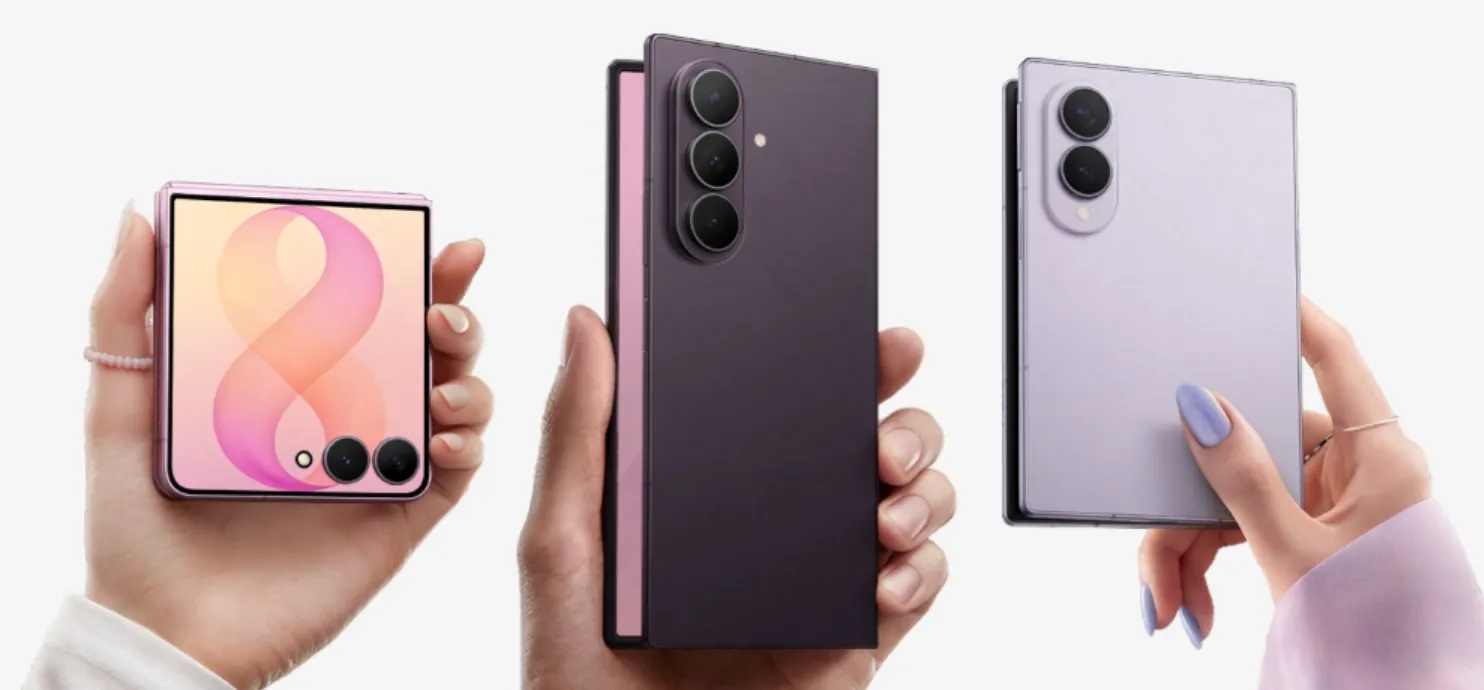
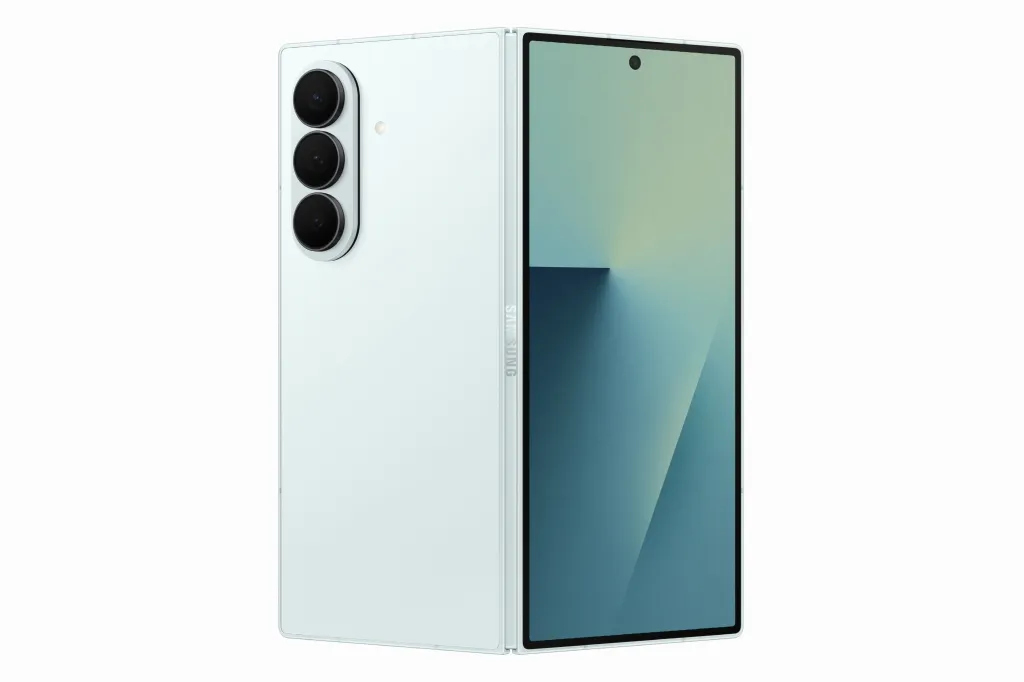
Samsung unveiled its biggest foldable lineup change in seven years at Galaxy Unpacked in London on July 22. The Galaxy Z Fold8 adopts a shorter, wider design built around a 4:3 internal display, while the larger format associated with recent Fold models moves into the premium Galaxy Z Fold8 Ultra.
The redesign addresses one of the Fold line's most persistent complaints: its tall, narrow proportions. It does not solve Samsung's larger problem. Foldables still represent a small fraction of global smartphone shipments, and a better aspect ratio alone may not persuade mainstream buyers to spend at least $1,899.99 on a phone.
Samsung has made a significant ergonomic correction, but the Fold8 must also show what users can do more comfortably or efficiently than they can on a conventional flagship. Apple's expected entry into foldables raises the stakes, although Apple has not confirmed a device, design, price, or release date.
The Fold8 finally addresses the narrow-screen problem
The Fold8's wider dimensions address a limitation that followed Samsung's book-style foldables for years. When folded, its 5.5-inch cover screen uses a more familiar 10:16 ratio for messages, social media, short videos, and other everyday phone tasks.
Opening the device reveals a 7.6-inch display with a 4:3 ratio. Samsung says the shape is better suited to games and video, while rotating the device produces a 3:4 layout intended for reading and web browsing.
At 201 grams, the Fold8 is also lighter than the 215-gram Fold8 Ultra. The lower weight could make it easier to carry as a primary phone, although handling and comfort will require independent testing.
Samsung has separated its two book-style foldables more clearly. According to the company's official Galaxy Z series announcement, the Fold8 starts at $1,899.99 and prioritizes lower weight and the new 4:3 format. The $2,099.99 Fold8 Ultra adds an 8-inch display, a 200-megapixel main camera, a 5,000mAh battery, 45-watt wired charging, and a telephoto camera with 3x optical zoom.
Both models will be generally available beginning August 7, 2026. The lineup also includes the $1,199.99 Galaxy Z Flip8, giving Samsung three foldable designs aimed at different uses.
The standard Fold8 emphasizes content consumption and lighter multitasking. The Ultra offers a larger workspace, a stronger camera system, and a bigger battery. The Flip8 remains the compact clamshell option for cover-screen interactions and flexible camera angles.
That broader lineup gives Samsung a stronger defense than simply matching the proportions reported for Apple's first foldable.
A wider screen does not solve the demand problem
Better proportions improve the experience for people already interested in a foldable. They do not automatically create demand among buyers satisfied with conventional phones.
Counterpoint Research expects global foldable shipments to grow 21% year over year in 2026. The firm projects that Samsung will remain the category leader, although its share could fall from 40% in 2025 to 32% in 2026 as competition increases.
Counterpoint also forecasts that Apple could capture 25% of the category during its first year. That is a market projection, not evidence of actual demand, but it illustrates how quickly Apple could alter a segment Samsung helped establish.
A separate TrendForce forecast published on April 13 placed Apple's possible first-year share closer to 20%. TrendForce said Apple could enter the market as early as the second half of 2026, reducing Samsung and Huawei to about 30% each.
The forecasts differ, but both expect Apple to become a substantial book-style foldable competitor. Apple has not announced a foldable iPhone or confirmed reports of a September 2026 launch. Rumored dimensions, production volumes, component suppliers, and pricing should therefore remain identified as industry reporting rather than product facts.
Samsung's more immediate task is to prove that its software takes advantage of the wider hardware.
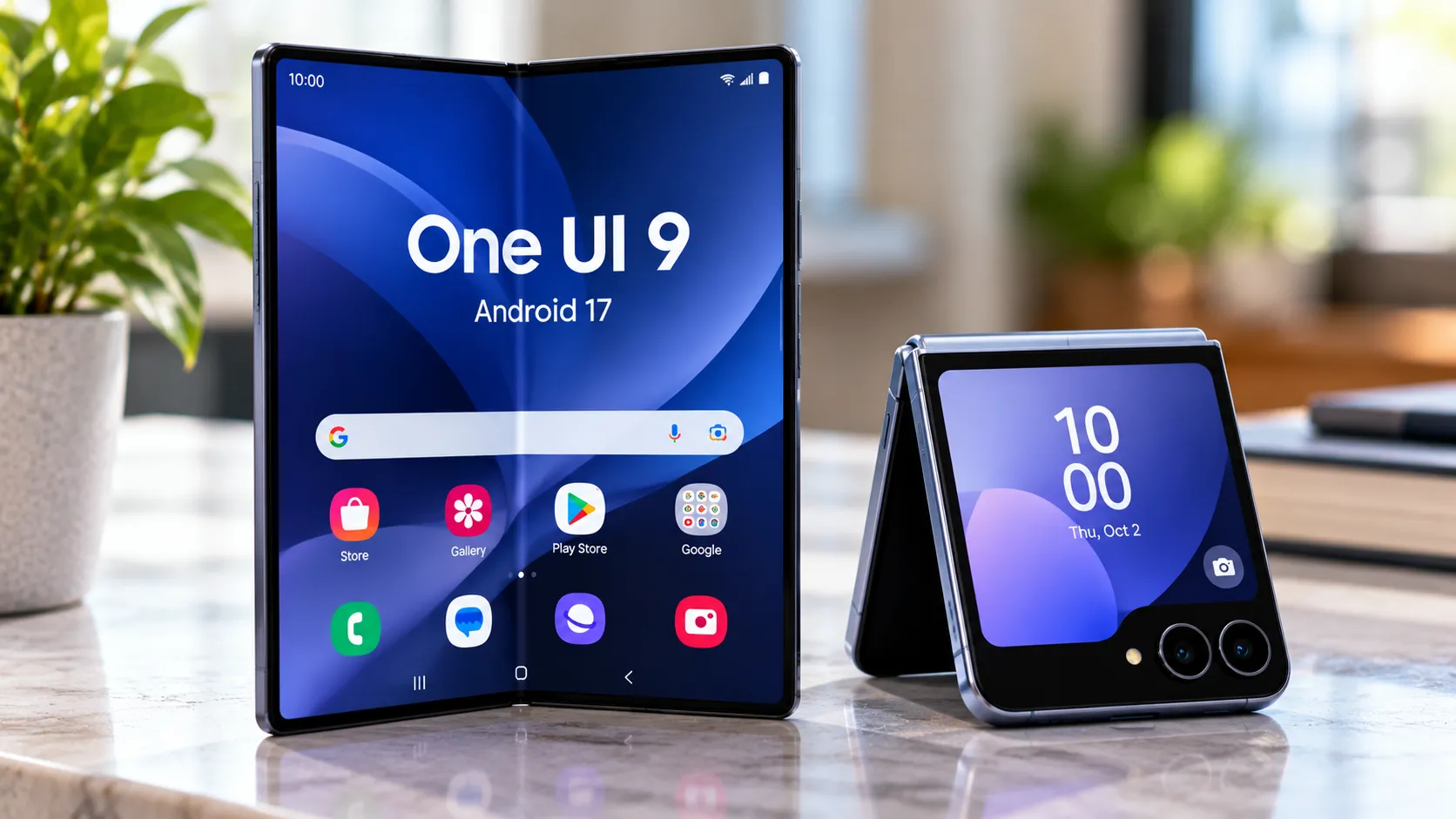
One UI 9 includes Multi Window, Split view, drag-and-drop file handling, and Now Nudge prompts that can open related apps side by side. A conversation about dinner plans, for example, can prompt the phone to display a calendar or location alongside the messaging app.
Samsung says Gemini Intelligence can automate tasks across more than 40 supported apps and services. Gemini Notebook can also organize notes, images, recordings, files, and documents in one workspace.
Availability will vary. Now Nudge requires a Samsung account, and supported functions depend on the country, region, language, and messaging app. Those limitations matter because Samsung is presenting its connected AI workflows as part of the Fold8's practical advantage.
The features give Samsung a clearer answer to the "why fold?" question than screen shape alone. Independent testing must still establish whether they reduce enough friction to justify the price.
Apple is not Samsung's only foldable threat
Apple attracts the most attention because of its ecosystem and premium iPhone customer base, but Samsung is already losing ground to another established competitor.
Counterpoint found that Samsung's North American foldable share fell to 51% in 2025 as Motorola reached 44%. Strong demand for the Razr 2025 series helped North American foldable shipments grow 28% that year.
Counterpoint attributed Motorola's growth partly to its pricing strategy and carrier partnerships. That exposes a gap in Samsung's current approach: the Fold8 and Fold8 Ultra strengthen its premium book-style range but do not directly address Motorola's gains among clamshell buyers seeking lower prices or aggressive carrier promotions.
The Flip8 competes in that segment, but its $1,199.99 starting price keeps it firmly in premium territory.
Samsung is therefore defending multiple fronts. It must make the Fold8 compelling before Apple enters book-style foldables, distinguish the Ultra well enough to justify another $200, and prevent Motorola from taking more of the clamshell market.
What Samsung still has to prove
The Fold8 addresses an obvious ergonomic weakness. Its cover display should feel more natural for ordinary phone tasks, while its internal screen is better proportioned for reading, video, gaming, and side-by-side apps.
The remaining question is whether those changes improve daily use enough to justify the cost.
The Fold8 and Fold8 Ultra are easy to distinguish on a specification sheet. The standard model is lighter and introduces the new shape. The Ultra adds a larger display, bigger battery, stronger camera system, optical zoom, and faster wired charging.
Reviews will need to determine whether those differences are equally clear in practice. They must also establish whether One UI 9's multitasking and AI tools feel integral to the folding display or merely add more functions to an already expensive phone.
Durability will remain part of that judgment. Samsung says its Flex Titanium display structure supports a thinner design, absorbs pressure and impact, reduces crease visibility, and makes the devices smoother to unfold. Those remain manufacturer claims until independent testing and long-term use show how well the phones hold up.
Samsung no longer needs to prove that it can produce a polished foldable. It needs to show that the folding design makes common tasks noticeably better.
The company has supplied wider hardware and software built to use it. Apple's expected arrival will sharpen the comparison, but the Fold8 faces the same question before then: Is it simply a better-proportioned foldable, or a better reason to buy one?


Comments
Be the first, drop a comment!