





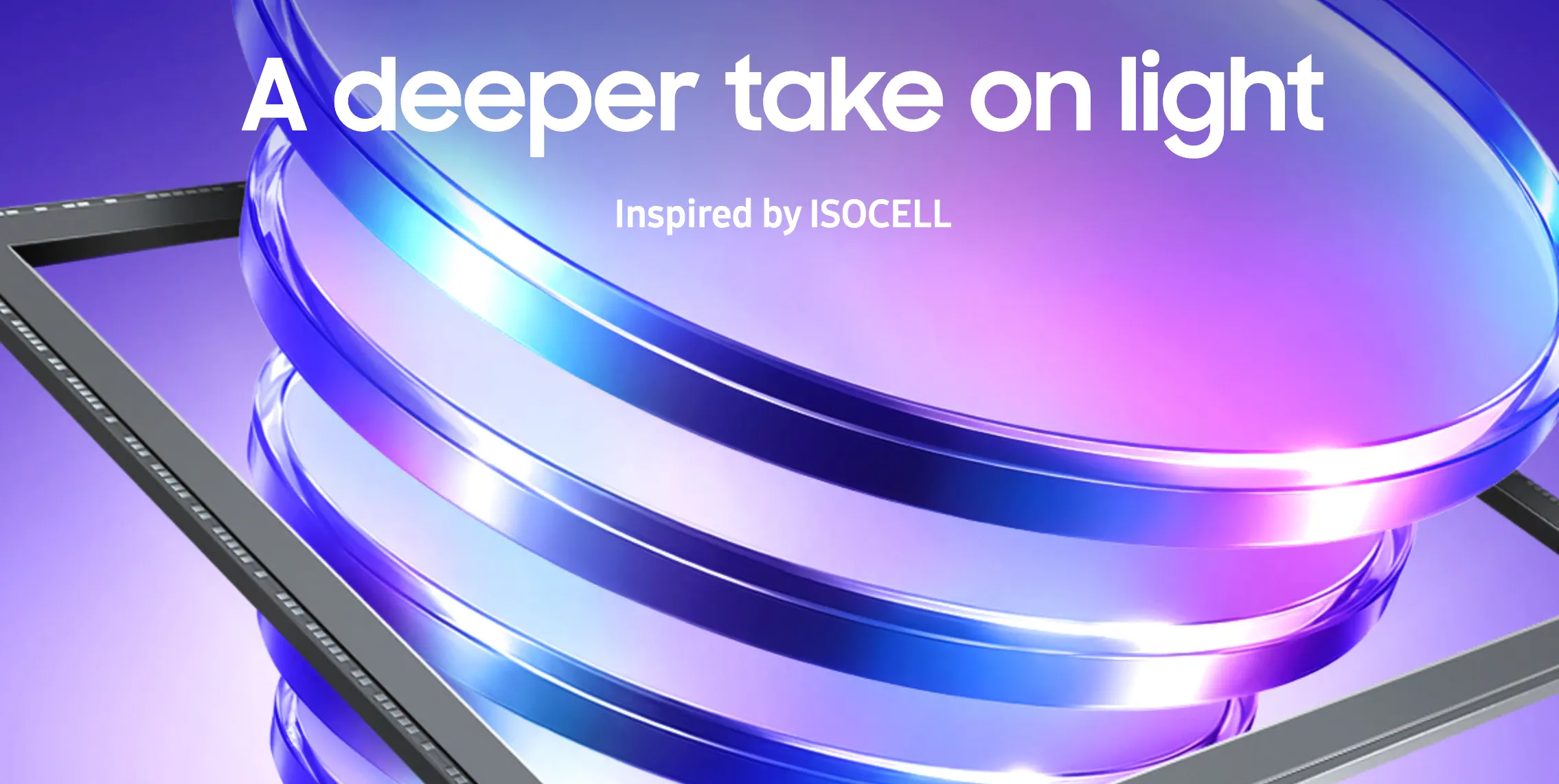
Samsung's latest 200MP image sensor offers an early look at where its smartphone camera technology is headed, but it is not yet the Galaxy S27 Ultra's confirmed camera sensor.
The ISOCELL HPC introduces a new pixel architecture called DeepPix that Samsung says increases each pixel's full-well capacity — the amount of charge it can hold before saturating — by 60%. The sensor is already listed as being in mass production and uses a 1/1.3-inch optical format with 0.6-micron pixels.
Those dimensions are familiar. Samsung's ISOCELL HP2, introduced with the Galaxy S23 Ultra in 2023, is also a 200MP, 1/1.3-inch sensor with 0.6-micron pixels. HPC's more interesting advances happen inside those pixels, with Samsung targeting better light handling, HDR and in-sensor zoom rather than simply increasing resolution or sensor size.
The catch is that Samsung has not announced a phone that will use HPC. Earlier leaks have instead linked another unannounced sensor, the ISOCELL HP6, to the Galaxy S27 Ultra. More recent reporting has left the phone's primary sensor unidentified, so neither HPC nor HP6 should be treated as confirmed S27 Ultra hardware.
ISOCELL HPC vs. HP2: what changes
HP2 established the basic hardware template in 2023. HPC keeps the same resolution, sensor size and pixel pitch while changing the architecture underneath.
The main difference is DeepPix. Samsung says the design gives each 0.6-micron pixel more capacity to collect charge before highlights saturate without making the sensor physically larger. That could leave the image processor with more usable information in scenes containing both bright highlights and deep shadows.
HPC also supports single-frame 16-bit HDR and RAW16 output. Higher bit-depth capture can preserve more tonal information for processing, but those specifications alone do not show how much better finished photos will look. Independent testing will be needed to judge Samsung's claimed gains.
The real upgrade, then, is not 200MP itself. Samsung is trying to extract better image quality from roughly the same physical sensor footprint.
Why HPC could strengthen Galaxy S27 Ultra zoom
HPC's in-sensor zoom capabilities are particularly relevant to the Galaxy S27 Ultra rumors, although the connection remains speculative.
The sensor supports single-frame HDR at 1x, 1.5x, 2x, 3x and 4x in-sensor zoom. Those intermediate focal lengths come from cropping and processing information from the main sensor rather than switching to another lens, so they cannot replace true optical magnification. Better sensor-level HDR could, however, help cropped shots retain more highlight and shadow detail.
That becomes more interesting because leaks disagree over the S27 Ultra's telephoto setup.
An April 2026 report said Samsung could eliminate the dedicated 3x telephoto and rely more heavily on the main camera for intermediate zoom before switching to a longer-range telephoto.
A July 24 camera leak complicated that picture, describing the top-end S27 model with a 50MP 5x telephoto plus another, unspecified zoom camera. The same leak pointed to a 50MP Sony IMX855 ultrawide and a 16MP autofocus selfie camera while leaving the main sensor unidentified.
On August 4, however, reporting citing Korea's ETNews again raised the possibility that Samsung will cut the 3x telephoto and move to three rear cameras.
The telephoto layout is therefore far from settled. HPC's 2x-to-4x in-sensor zoom could make sense in a phone that leans more heavily on its main camera between 1x and 5x, but it is not evidence that Samsung has chosen that configuration.
HPC also supports up to 4K video at 180fps, 8K at 30fps and 1080p at 360fps, although some maximum frame rates come with autofocus limitations. Whether those modes reach a shipping phone will depend on the processor, thermals, storage bandwidth and camera software.
Galaxy S27 Ultra camera rumors: HP6 or HPC?
HPC is the known quantity here. Samsung has detailed its specifications and put the sensor into mass production, but it has not connected it to the Galaxy S27 Ultra.
HP6 is the opposite: It has repeatedly appeared in S27 Ultra leaks, but Samsung has not officially announced the sensor itself.
A January 12 report attributed to leaker Ice Universe said the Galaxy S27 Ultra would receive a new sensor expected to be called ISOCELL S5KHP6, reportedly retaining the same 1/1.3-inch optical format as HP2.
A March 2 report on HP6 said the rumored sensor could be a smaller derivative of Samsung's larger HPA design and may use LOFIC, or Lateral Overflow Integration Capacitor, technology intended to improve dynamic range.
None of those HP6 specifications has been confirmed by Samsung, and the July camera leak notably left the S27 Ultra's primary sensor unspecified.
The evidence therefore does not present a clean HPC-versus-HP6 choice. HPC is a real Samsung sensor with documented capabilities. HP6 remains a recurring Galaxy S27 Ultra rumor.
HPC points to better HDR, not more megapixels
The meaningful HPC upgrades are not its 200MP resolution or 1/1.3-inch size. DeepPix, higher full-well capacity, single-frame HDR and more capable in-sensor zoom are the changes that could produce better results, particularly in high-contrast scenes and at intermediate zoom levels.
The Galaxy S27 Ultra could benefit from similar technology whether it eventually uses HPC, HP6 or another sensor entirely. Its primary camera and telephoto layout remain unresolved, while newer leaks also point to possible changes to the ultrawide and selfie cameras.
For now, HPC is best viewed as evidence of Samsung's next generation of camera-sensor engineering, not as a Galaxy S27 Ultra specification. Until Samsung confirms the hardware, both the main sensor and the fate of the dedicated 3x telephoto remain open questions.

Comments
Be the first, drop a comment!