





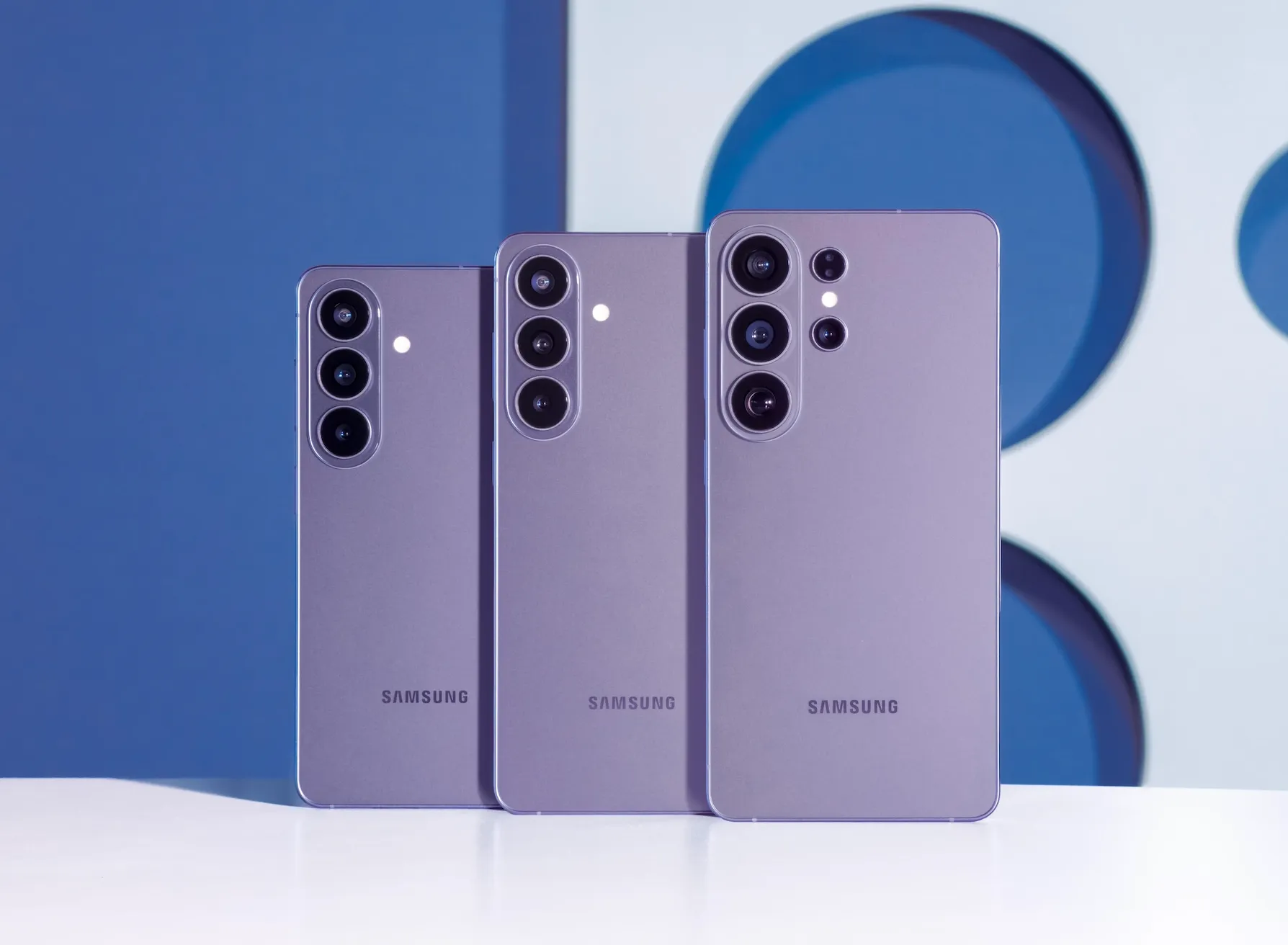
Samsung's next flagship smartphone lineup could introduce a Galaxy S27 Pro, giving buyers another premium option — and potentially another reason to pay attention to which version of a phone they're buying. New reports suggest Samsung is expanding production of its Exynos 2700 processor, which could power several Galaxy S27 models in some markets while other regions receive Qualcomm Snapdragon chips.
The distinction could affect everything from gaming performance to battery life, although it's too early to say which processor will deliver the better experience.
According to an October 2 report from South Korean semiconductor publication The Elec, Samsung has begun full-scale front-end wafer production of the Exynos 2700. Planned production volume is reportedly more than 10% higher than for the Exynos 2600, partly because Samsung is preparing to add a Pro model alongside the standard Galaxy S27, S27 Plus, and S27 Ultra.
Samsung has not officially announced the Galaxy S27 Pro, confirmed the Exynos 2700's production status, or disclosed processor assignments for its 2027 flagship lineup. The production and regional details come from industry sources, while early performance comparisons remain unverified by independent testing.
Galaxy S27 Pro could revive Samsung's regional chip split
The Elec reports that Samsung plans to equip the Galaxy S27, S27 Plus, and S27 Pro with Exynos 2700 processors in South Korea and Europe. The United States and China, meanwhile, are expected to receive versions powered by Qualcomm's Snapdragon 8 Elite Gen 6 family.
The processor allocation for India and other markets remains uncertain. Samsung has not published regional specifications, and the original report does not establish which chips will power every international variant.
There is also an important distinction between the two newest Snapdragon processors. Qualcomm officially introduced the Snapdragon 8 Elite Gen 6 and Snapdragon 8 Elite Extreme Gen 6 on September 22, replacing the tentative naming used in earlier leaks.
The Extreme model is Qualcomm's more powerful offering, with enhanced graphics and AI capabilities. Earlier reporting referred to it as the Snapdragon 8 Elite Gen 6 Pro, but that is not its official commercial name.
The standard Snapdragon 8 Elite Gen 6 is a possible choice for some Galaxy S27 variants, while the Extreme model is reportedly being considered for the Ultra. Samsung has yet to confirm those assignments.
Regional processor differences are not new to Galaxy phones. The Galaxy S26 and S26 Plus already use different processors in certain markets, while the S26 Ultra ships with Qualcomm's Snapdragon 8 Elite Gen 5 globally.
That precedent makes the latest reports plausible, but it doesn't establish how the Galaxy S27 lineup will perform. Two versions of an otherwise similar phone can deliver different results in demanding games, sustained workloads, battery endurance, and cellular connectivity.
Those differences won't become clear until reviewers can compare finished devices under similar conditions.
Exynos 2700 benchmarks look promising, but don't tell the whole story
Samsung's next Exynos processor is expected to use the company's second-generation 2-nanometer manufacturing process, known as SF2P.
Samsung's official second-quarter 2026 financial results, released July 30, confirmed plans to increase production of mobile products built on its second-generation 2nm process during the second half of 2026. The announcement did not specifically name the Exynos 2700.
The Elec reports that SF2P could deliver approximately 12% higher performance, 25% lower power consumption, and an 8% reduction in chip area compared with Samsung's first-generation SF2 process, which is used for the Exynos 2600.
These improvements describe the manufacturing process rather than guaranteed gains between finished processors. A smaller, more efficient manufacturing node can provide advantages, but chip architecture, operating speeds, thermal design, and software optimization also influence performance.
Early benchmark claims suggest the Exynos 2700 could be competitive with Qualcomm's latest flagship processors.
An August 24 report by GSMArena, citing anonymous industry sources, described alleged Samsung internal testing in which the Exynos 2700 scored 19% higher in Geekbench 6.5 multicore testing than the standard Snapdragon 8 Elite Gen 6. It reportedly outperformed the higher-end chip, then known by its tentative Pro designation, by 9.5%.
The reported graphics results were encouraging as well. In testing under a 2.5-watt power limit, Exynos reportedly scored 22% higher than the higher-end Snapdragon and 24% higher than the standard model. A separate AI evaluation using Meta's Llama 3.1 8B model allegedly showed an 18% speed advantage over the Snapdragon chip used for comparison.
The figures sound impressive, but several qualifications matter.
First, the results come from anonymously sourced internal testing, not publicly documented benchmarks conducted on finished Galaxy smartphones. Second, the reported advantages concern specific workloads and test conditions. They don't establish that Exynos will outperform Snapdragon consistently across applications.
The Elec's October report also indicates that Exynos may continue to trail Qualcomm's higher-end processor in single-core performance, despite its alleged multicore advantage.
Single-core performance can influence how quickly individual tasks execute, while multicore performance becomes more important when software can distribute work across several processing cores. Neither score, by itself, determines how responsive a phone feels.
Gaming performance raises another question: how long can a processor sustain its speed before heat forces it to slow down? A short benchmark cannot reliably answer that, nor can it establish real-world battery endurance.
Until independent reviewers test retail hardware, the numbers remain promising claims rather than proof of a better smartphone experience.
Galaxy S27 Ultra could be the real test of Samsung's confidence
The Galaxy S27 Ultra remains the biggest unresolved piece of Samsung's reported processor strategy.
Although Samsung has reportedly planned Exynos production for the standard, Plus, and Pro models, the company has not finalized whether its most expensive conventional flagship will also use the Exynos 2700.
That would represent a notable change from the Galaxy S26 Ultra, which uses Qualcomm's flagship processor across markets.
The Elec describes competing considerations within Samsung. Its System LSI business, responsible for Exynos chip development, reportedly favors broader adoption. The Mobile eXperience division, which oversees Galaxy smartphones, must weigh performance, thermal behavior, processor costs, and manufacturing capacity before making a decision.
Expanding Exynos adoption could reduce Samsung's dependence on Qualcomm and give it greater control over components and costs. But savings alone would not justify a processor that failed to meet customer expectations.
For the Ultra, those expectations are particularly high. Users paying a premium for Samsung's most capable Galaxy phone will expect consistently strong gaming performance, reliable camera processing, responsive multitasking, and dependable battery life.
The rumored S27 Pro also raises questions about how Samsung intends to distinguish four flagship models. Its name suggests a position between the Plus and Ultra, but Samsung has not confirmed its display, cameras, features, or pricing.
A Pro model would need a meaningful distinction beyond its processor to justify another place in the lineup.
Whether Samsung ultimately chooses Exynos for the Ultra could offer a clearer indication of its confidence in the chip than the reported allocation for lower-priced models.
What to check before buying a Galaxy S27 from another region
The processor inside a Galaxy S27 could become an important buying consideration, especially for anyone planning to purchase an international variant.
Once Samsung announces the lineup, start with the official specifications for the country where the phone will be sold. Check the exact model number rather than relying only on the Galaxy S27, Plus, Pro, or Ultra name.
That matters for more than identifying the processor. Imported smartphones can have different supported cellular bands, carrier-specific features, and warranty terms. A phone designed for another market may work locally but lack some network capabilities or after-sales support.
It's also worth distinguishing between early processor benchmarks and complete phone reviews. A chip that leads in multicore tests may not deliver the longest battery life, the lowest temperatures during extended gaming, or the best sustained performance.
Independent comparisons should ideally examine equivalent regional Galaxy S27 models, using similar software versions, display settings, and workloads. Tests involving mobile data, navigation, gaming, photography, and ordinary app use will reveal more about daily performance than isolated benchmark scores.
For now, the Galaxy S27 Pro remains unannounced, and neither its final processor configuration nor its availability across markets is certain.
Samsung's reported Exynos 2700 production plans suggest the company is preparing to give its own silicon a larger role in its next flagship generation. Whether that translates into a better Galaxy phone is still an open question.
The deciding evidence won't be which processor wins an early benchmark. It will be how the Exynos and Snapdragon versions perform when they're finally in buyers' hands.










Comments
Be the first, drop a comment!