



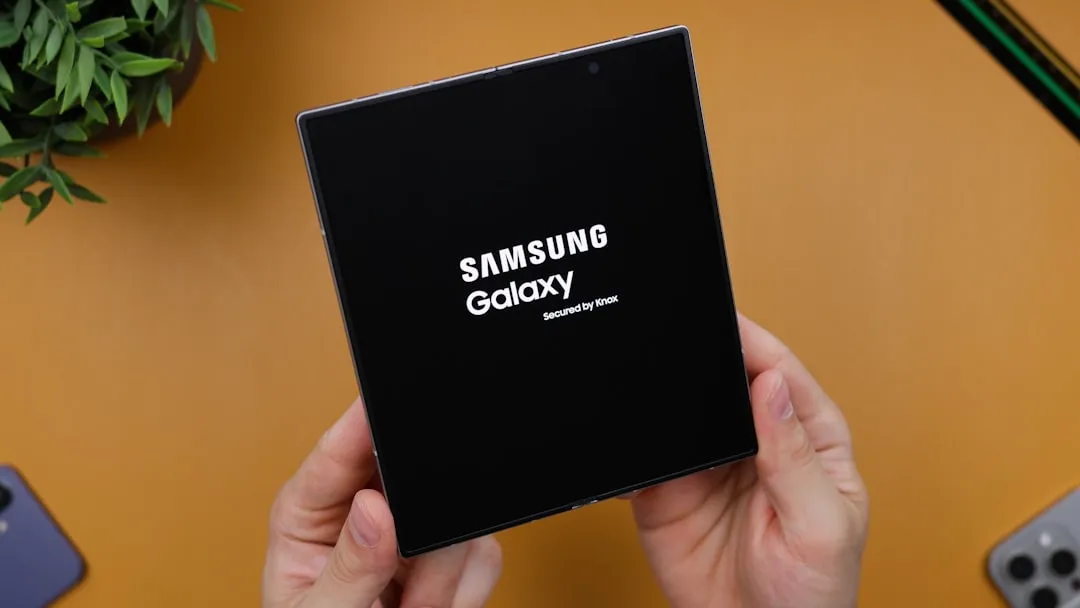
Mobile development is evolving rapidly, and Samsung appears ready to join the revolution in a big way. The tech giant has expressed significant interest in bringing "vibe coding" capabilities directly to Galaxy smartphones, potentially transforming how developers work on mobile devices. This development could reshape the landscape of mobile programming, offering new possibilities for on-device development workflows that rival traditional desktop environments.
While concrete details remain limited since Samsung's interest appears to be in early exploration stages rather than confirmed implementation, the implications for mobile AI integration and developer tooling are substantial. This move would position Samsung competitively against Google and Apple in the emerging space of AI-powered development tools, while raising important questions about on-device processing versus cloud-based solutions.
What exactly is "vibe coding" and why does it matter?
Here's the thing about "vibe coding"—it's not just another buzzword floating around the tech world. This conceptual approach represents the next evolution in AI-assisted programming, where the interface adapts to your natural thought process rather than forcing you into rigid syntax patterns.
Think of it as programming that flows with your cognitive rhythm. Instead of memorizing specific commands and syntax rules, you describe your intent in natural language, and the AI translates that into functional code. It's like having a coding partner who speaks both human and machine language fluently, bridging that gap that's frustrated developers since programming began.
This represents a dramatic shift from conventional mobile development, where phones serve primarily as testing devices rather than creation platforms. You know the drill—write code on your laptop, push it to your phone, cross your fingers and hope it works properly. But what if that entire workflow could happen right on your Galaxy device?
By integrating these AI-assisted coding capabilities, Samsung could enable developers to write, test, and deploy code directly from their smartphones using conversational interfaces. Picture telling your phone "I need a function that sorts user preferences by frequency" and watching it generate, explain, and integrate that code seamlessly into your project.
The timing aligns perfectly with the broader shift toward flexible development environments. As remote work becomes standard and developers demand greater mobility, the appeal of sophisticated coding tools that fit in your pocket becomes undeniable. This could democratize programming by making development more intuitive for newcomers while giving experienced developers unprecedented on-the-go capabilities.
How on-device AI transforms the mobile development equation
Samsung's exploration into AI-assisted coding likely centers on sophisticated on-device language models that understand coding intent and generate contextually appropriate solutions. This isn't just about having a smart autocomplete—we're talking about genuine AI comprehension of programming logic and project structure.
Modern Galaxy devices pack serious computational power, particularly their neural processing units designed specifically for AI workloads. These specialized chips can handle the complex pattern recognition and language processing required for intelligent code generation without constantly reaching out to cloud servers.
The on-device approach solves three critical problems that plague cloud-based development tools. First, latency disappears—when you're in the coding zone, waiting for suggestions to bounce back from distant servers kills productivity. Second, privacy protection becomes ironclad since your sensitive code never leaves your device. Third, you get consistent functionality regardless of internet connectivity, which any developer who's tried to work from an airport can appreciate.
But here's where it gets really interesting: on-device processing enables true contextual awareness. Your phone doesn't just understand the current line of code you're writing—it comprehends your entire project structure, coding style, and development patterns. This creates possibilities for suggestions and automations that cloud-based systems, with their limited context windows, simply can't match.
The implications extend beyond individual productivity. Real-time error detection, automated testing procedures, and intelligent refactoring suggestions all become possible when the AI has complete access to your development environment without the constraints of network communication.
Privacy and performance: navigating the on-device challenge
Let's break down the fundamental technical challenge Samsung faces: delivering sophisticated AI assistance while maintaining the responsiveness and battery life users expect from their smartphones.
On-device processing addresses privacy concerns that have become increasingly important in our security-conscious development environment. When your intellectual property never leaves your device, you're protected from the data breaches and unauthorized access that have affected numerous cloud services. This becomes especially critical for enterprise developers working with proprietary codebases or sensitive client projects.
However, running AI language models capable of understanding and generating code demands significant computational resources. The challenge lies in optimizing these models through techniques like neural network pruning, quantization, and efficient architectures that can deliver intelligent responses without overwhelming the device's processor or draining the battery.
Samsung's solution will likely involve a tiered approach to AI assistance. Simple code completions and syntax suggestions could run continuously on-device using lightweight models. More complex operations—like architectural analysis or comprehensive code reviews—might utilize more powerful models that activate only when needed, potentially with hybrid cloud processing for the most demanding tasks.
The key innovation opportunity lies in creating AI models that learn and adapt to individual coding patterns over time. By understanding your specific development style and common patterns, the on-device AI becomes increasingly efficient at providing relevant suggestions while reducing unnecessary processing overhead.
Samsung's strategic position in the AI development tools race
Samsung enters this space facing established competitors who've already made significant investments in AI-powered development assistance. Google has integrated advanced coding capabilities throughout their development ecosystem, while Apple continues expanding Xcode's intelligent features with each release.
This competitive landscape creates both pressure and opportunity for Samsung. The company can't simply match existing features—they need to offer compelling advantages that justify developers adopting new workflows and potentially switching from established tools.
Samsung's potential advantages lie in their hardware-software integration capabilities and enterprise relationships. Galaxy devices already include sophisticated AI acceleration hardware that could provide performance benefits over generic solutions. Additionally, Samsung's strong presence in enterprise markets could facilitate adoption among professional development teams looking for secure, mobile-first coding solutions.
The broader ecosystem integration presents another strategic opportunity. Samsung's Galaxy ecosystem spans smartphones, tablets, laptops, and accessories. A developer could potentially start coding on their phone during a commute, continue on a tablet during lunch, and finish on a laptop at the office—with the AI assistant understanding and maintaining context across all devices.
Success in this market requires more than technical capability—it demands building developer trust and community adoption. Samsung's challenge involves demonstrating genuine productivity improvements while ensuring the tools integrate smoothly with existing development workflows and popular frameworks.
The future landscape of mobile-native development
Samsung's exploration of AI-assisted mobile coding signals a broader transformation in how and where software development happens. We're witnessing the early stages of truly mobile-native development workflows that could fundamentally change the industry's approach to programming environments.
As smartphone processors continue advancing—with flagship devices now outperforming many laptops from just a few years ago—the artificial distinction between "mobile" and "desktop" development environments becomes increasingly meaningless. The limiting factor isn't hardware capability anymore; it's software sophistication and user interface design.
The success of mobile development platforms could catalyst an entirely new category of developer-focused devices and features. Imagine specialized developer modes that optimize device performance for coding tasks, enhanced cooling systems for sustained development work, or even dedicated developer editions of flagship devices designed specifically for programming workflows.
This evolution extends beyond individual productivity improvements. When sophisticated development tools become as accessible as opening an app on your phone, the barriers to programming participation drop significantly. Students could learn coding without expensive computer lab access. Freelance developers could work effectively with minimal equipment investment. Emergency bug fixes could happen from anywhere, anytime.
The convergence of powerful mobile processors, advanced AI capabilities, and intuitive interfaces suggests we're approaching a future where development environment choice becomes truly flexible. Whether you're prototyping during a lunch break, debugging while traveling, or conducting full development sessions from unexpected locations, the tools will adapt to your context rather than constraining your options.
What makes this transition particularly compelling is that we're still in the experimental phase of discovering what mobile-native development actually looks like in practice. Samsung's AI-assisted coding exploration represents one approach among many possible solutions. The companies that successfully navigate this transition won't just be selling devices—they'll be enabling fundamentally new ways of creating software, potentially reshaping how we think about programming itself.



Comments
Be the first, drop a comment!