





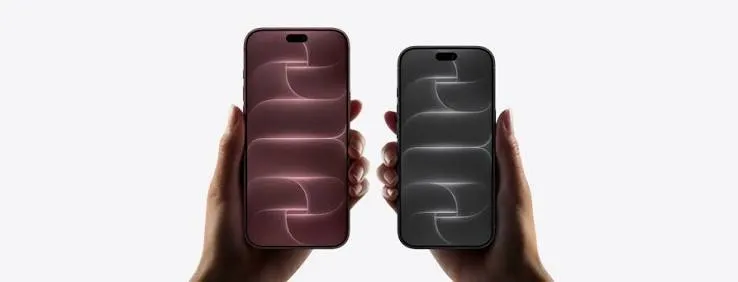
Apple's EU-mandated energy label has settled a question that used to require teardown videos and guesswork: the iPhone 18 Pro battery capacity comes in at 4,056mAh, while the iPhone 18 Pro Max jumps to 5,391mAh. That Pro Max figure now edges past the Galaxy S26 Ultra's official 5,000mAh typical capacity, with a 4,855mAh rated capacity listed in Samsung's specifications and EU energy-label records.
Those two numbers don't carry equal weight, and the evidence gap matters more than the mAh gap itself. Apple's figures come from the EU energy-label disclosures the company is required to publish on its iPhone product pages. Samsung's numbers are now confirmed by Samsung's published specifications and the EU's EPREL database.
The smaller iPhone 18 Pro barely moved. Its 4,056mAh cell is only 68mAh larger than the iPhone 17 Pro's 3,988mAh, a 1.7% increase that's unlikely to change the battery-life picture by itself. That's why the meaningful matchup here is Pro Max against Ultra, not a blanket claim that Apple beat Samsung on battery across the board.
The numbers at a glance: what's official and what's still a leak
iPhone 18 Pro
Battery capacity: 4,056mAh
Change vs. prior generation: +1.7% (from 3,988mAh)
Charge-cycle rating: 1,000 cycles to 80% health
Source status: Confirmed, EU energy label
iPhone 18 Pro Max
Battery capacity: 5,391mAh
Change vs. prior generation: +11.7% (from 4,823mAh)
Charge-cycle rating: 1,000 cycles to 80% health
Source status: Confirmed, EU energy label
Galaxy S26
Battery capacity: 4,175mAh rated, roughly 4,300mAh typical
Change vs. prior generation: Slightly larger than Galaxy S25's 4,000mAh
Charge-cycle rating: 1,200 cycles
Source status: Confirmed, Samsung specs + EU EPREL
Galaxy S26 Ultra
Battery capacity: 4,855mAh rated, roughly 5,000mAh typical
Change vs. prior generation: No change vs. Galaxy S25 Ultra
Charge-cycle rating: 1,200 cycles
Source status: Confirmed, Samsung specs + EU EPREL
The rated-versus-typical split on Samsung's side explains why outlets quote slightly different numbers for the same phone. The EU energy labels list rated capacities, 4,855mAh for the Ultra, while the corresponding typical capacity most spec sheets would show comes out to roughly 5,000mAh. Apple's confirmed figures don't require that translation because they're the numbers Apple itself published.
None of these figures, on their own, actually predict how long a phone lasts on a given day. Capacity, cycle rating, and endurance hours describe the battery in isolation; real-world battery life also depends on the display, chip, modem, software, and how a specific person uses the phone. That's the gap between a spec sheet and an actual day of use, and it's why the sections below separate what's measured from what's still an open question.
iPhone 18 Pro vs Galaxy S26 battery: where Apple's capacity gains land
Apple's battery increase this generation isn't evenly distributed. The Pro Max picked up 568mAh, an 11.7% jump, while the standard Pro gained just 68mAh, or 1.7%. Almost all of Apple's capacity gain this year sits in one model, which matters if a buyer is choosing between the two Pro sizes on battery alone rather than screen size or price.
That concentration is also what puts the Pro Max ahead of the Galaxy S26 Ultra on raw capacity: 5,391mAh against an official 5,000mAh typical figure, a 391mAh gap between Apple's confirmed number and Samsung's leaked one. That advantage doesn't extend down Apple's own lineup, though. The base Galaxy S26 has a 4,300mAh typical capacity, which would still put it ahead of the smaller iPhone 18 Pro's 4,056mAh. "Apple beats Samsung on battery capacity" is really a Pro Max versus Ultra story specific to this generation's largest models.
Strip out the marketing and here's where each phone actually stands:
iPhone 18 Pro: a small, confirmed capacity gain that's unlikely to move daily battery life much by itself.
iPhone 18 Pro Max: a substantial, confirmed capacity increase, and independent battery testing has now begun to publish
Galaxy S26 Ultra: its 5,000mAh figure and 1,200-cycle rating both still trace back to a leak, not a Samsung filing.
There's also a compatibility catch US buyers in particular need to check. The 4,056mAh and 5,391mAh figures apply only to models with a physical SIM tray. eSIM-only versions, sold in the US, Canada, Japan, and several other markets, reportedly use a slightly larger cell that fills the space the tray would otherwise occupy, but Apple hasn't published that number yet. Buying in one of those eSIM-only regions means not assuming the SIM-tray figure is what's actually inside your unit.
On charging, there's a claim worth watching rather than deciding on. Android Authority reported yesterday that Xiaobai's Tech Reviews, relayed via Ice Universe, says the iPhone 18 Pro Max charging speed could hit 100% in 55 minutes with a 52W peak, which would make it the fastest-charging iPhone yet.
iPhone 18 Pro battery charging cycles vs Galaxy S26: what the rating actually predicts
Android Authority and PhoneArena both reported yesterday that EPREL rates both iPhone 18 Pro models at 1,000 charge cycles before battery health drops to 80%. Assuming roughly one full charge cycle per day, that works out to about three years of use before hitting that threshold. Leaked Galaxy S26 labels claim 1,200 cycles to that same 80% mark, which under the same daily-cycle assumption works out to roughly 3.3 years.
Do the subtraction, and the practical gap is closer to seven months, not the full extra year the raw cycle counts might suggest. Cycle count also only measures how many charges a battery can absorb before degrading, not how long either phone lasts between charges on a given day, which is a separate question the rating can't answer.
For context, 1,000 to 1,200 cycles isn't the ceiling other phone makers are hitting this generation. Android Authority's rundown, published yesterday, puts the OnePlus 15 at 1,100 to 1,400 cycles and the Xiaomi 17 series at 1,600. Both companies rate their batteries higher than Apple's 1,000 or Samsung's 1,200, a reminder that neither brand is setting the bar on this particular spec.
The Samsung side of this comparison gets murkier the further back it's traced. Just one generation earlier, the Galaxy S25 series carried a 2,000-cycle EU energy-label rating, double what Apple and Google were claiming at the time. A 1,200-cycle figure for the S26 marks a steep drop from that number.
Apple's side complicates a clean reading too, though it's a company position rather than independent proof. Apple has argued that its declared battery ratings are intentionally conservative because it disputes parts of the EU's testing methodology, and has said its iPhone 16 lineup could have qualified for an A energy rating but was assigned a B under those disputed rules. That's Apple's own explanation for why its numbers look modest next to Samsung's, not a verified finding that the iPhone 18 Pro's real-world durability beats its 1,000-cycle label.
Leaked Galaxy S26 labels also list higher endurance-per-charge-cycle hours than the previous generation: 51 hours for the base model and 55 hours for the Plus and Ultra, up from a 37-to-45-hour range, alongside an A efficiency rating. The same leaked labels reportedly carry a C repairability rating, which would make an eventual battery swap more complicated regardless of how the cycle numbers shake out.
Apple's other changes this generation cut in a different direction. PhoneArena reported yesterday that the new 2nm A20 Pro chip should deliver real efficiency gains, and that Apple added vapor cooling and improved thermals on top of it, changes that could translate into better real-world battery life than the capacity numbers alone suggest. Whether that efficiency gain shows up as longer screen-on time or gets absorbed by heavier background processing isn't something a spec sheet can answer.
What to verify before choosing a phone on battery alone
What's actually settled: the iPhone 18 Pro Max's 5,391mAh SIM-tray capacity is an official disclosure, and it exceeds the Galaxy S26 Ultra's reported 5,000mAh, but that Samsung number still traces back to a leak rather than a confirmed filing. Samsung's reported cycle-life edge, 1,200 versus Apple's 1,000, amounts to roughly seven extra months before hitting 80% health if the daily-cycle math holds, and even that assumes the leaked figure survives contact with an official filing.
Don't decide between the Pro Max and the Galaxy S26 Ultra on mAh or cycle-count specs alone. If buying in the US, Canada, Japan, or another eSIM-only market, confirm the actual battery size for the specific model rather than assuming the SIM-tray figure applies. Wait for independent, comparable battery testing on both phones before treating any of these numbers as a verdict on which one actually lasts longer in daily use.


Comments
Be the first, drop a comment!