



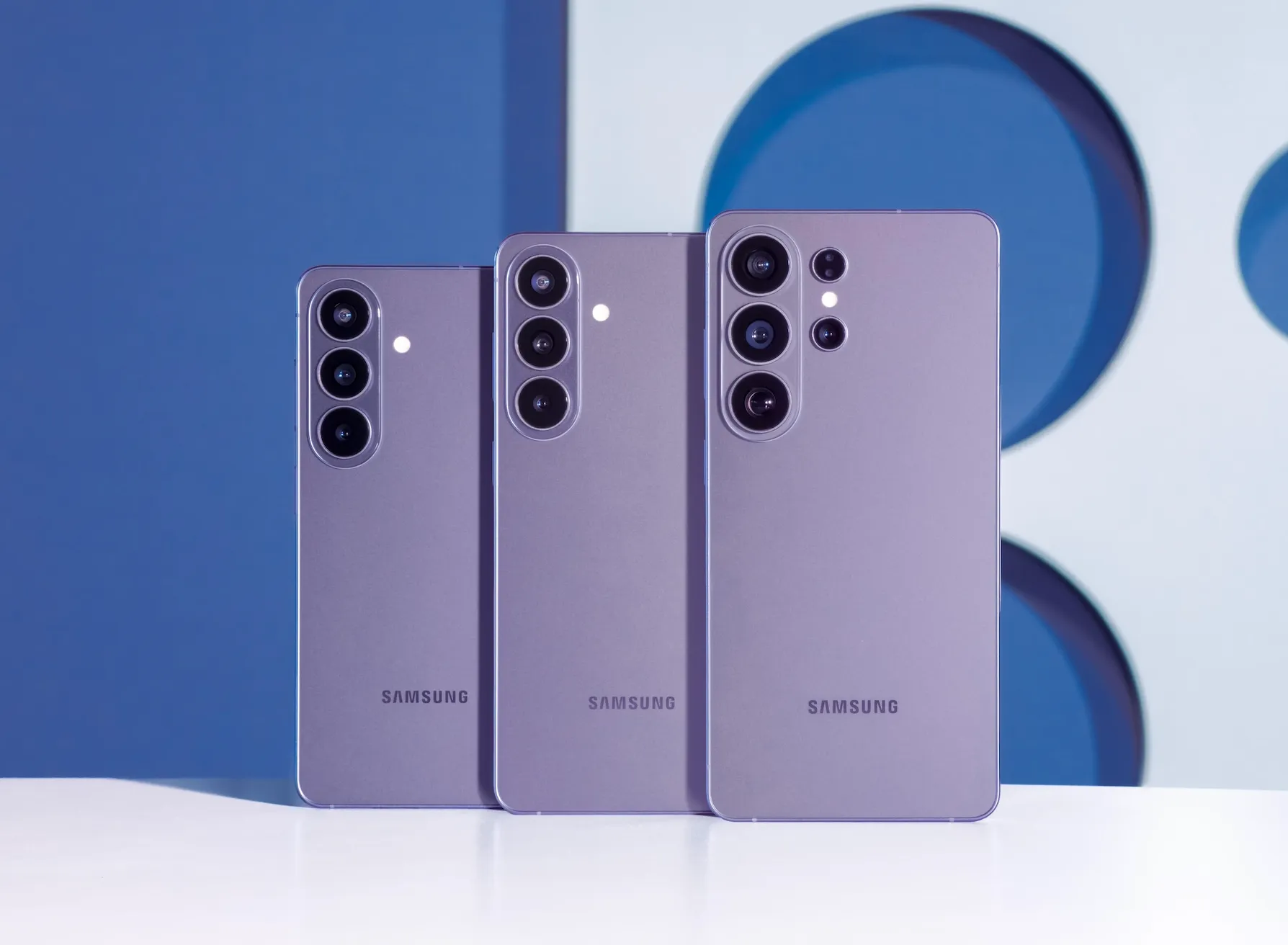
Samsung's upcoming Galaxy S26 lineup is set to introduce a proactive AI assistant that could fundamentally change how you interact with your phone throughout the day. Rather than waiting for you to search, tap, or type, this new feature aims to anticipate your needs by analyzing what's currently on your screen and offering timely suggestions before you even ask. It's Samsung's latest push to make Galaxy AI feel less like a tool you activate and more like a helpful companion that quietly works in the background.
The feature, called Now Nudge, emerged through leaked firmware builds and has been spotted in both One UI 8.5 and One UI 9.0 code, according to SamMobile. Samsung launched the One UI 8.5 beta program for the Galaxy S25 series several weeks ago, as reported by SamMobile, and while the feature hasn't appeared in public beta builds yet, internal testing reveals a surprisingly broad scope. Early demonstrations show Now Nudge understanding on-screen context and delivering actionable prompts—whether you're filling out a travel form, coordinating plans over text, or browsing a foreign-language website. Privacy-conscious users will appreciate that these suggestions are processed using the device's Neural Processing Unit, keeping your screen data local rather than sending it to the cloud, according to Samsung Community.
What Now Nudge actually does
Now Nudge is built around three core functions that address common friction points in daily smartphone use. The first, Recall Important Info, retrieves relevant details from past activity—like older chat threads, screenshots, or saved images—when your current task suggests you might need them again, as described by SammyGuru. Imagine receiving a message asking for your gate code; your phone could automatically surface the screenshot you took last week without you hunting through your gallery.
Or consider apartment deliveries—your phone could surface the building access code you screenshotted months ago when a delivery notification arrives, rather than forcing you to dig through a year's worth of photos. The system learns from your behavior patterns—recognizing which information you tend to reference repeatedly—and brings it forward at the moment it's most relevant. What makes this particularly useful is how the feature distinguishes between multiple similar items: if you've saved gate codes for three different locations, it uses contextual clues like your current GPS position or the contact messaging you to surface the right code.
The second function, Fill Out Forms Easily, aims to eliminate repetitive typing across websites and apps. Once your device learns the information you frequently enter—name, email, loyalty program numbers, even passport details—it can automatically populate those fields the next time you encounter a similar form, according to Samsung Community. Samsung is testing this capability with services including Expedia, DoorDash, Trip.com, and Market Kurly, as reported by FindArticles, suggesting the feature won't be limited to Samsung's own ecosystem.
The context-awareness here is crucial. Basic autofill treats every "address" field identically, but Now Nudge apparently distinguishes between billing addresses, shipping destinations, and location searches based on surrounding form elements and the app you're using. That level of semantic understanding requires sophisticated natural language processing, not just pattern matching. If you're booking a flight and the form asks for passport information, your phone recognizes that specific request and offers the right data—not just any stored credential, but the passport number you used last time you booked through that service.
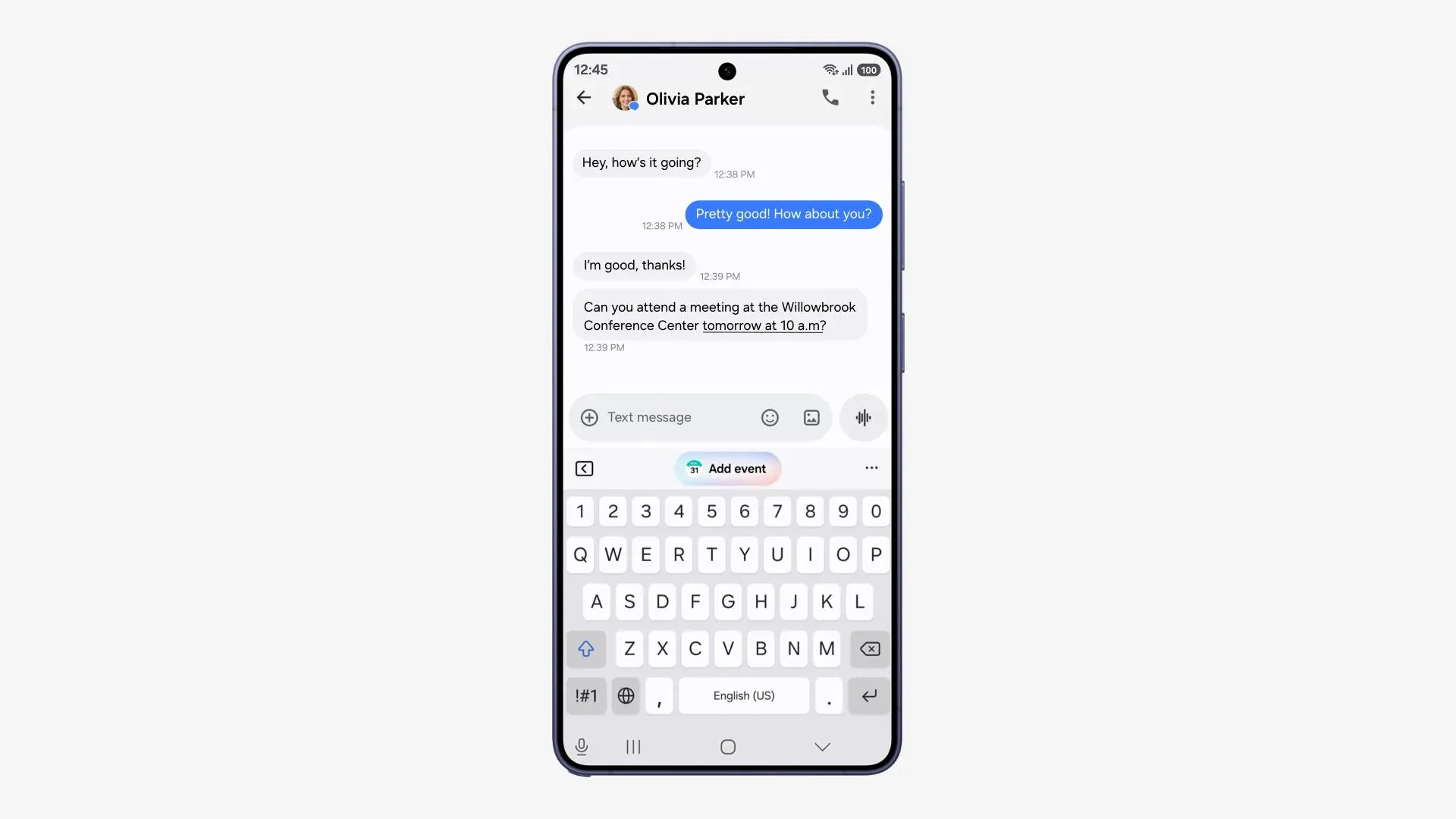
The third pillar, Get Things Done Quickly, focuses on context-aware shortcuts that save you from the usual "copy, switch app, paste" routine. If a friend texts you an address in WhatsApp, Now Nudge can offer to open that specific location directly in Google Maps, according to Samsung Community. Reading a webpage in a foreign language? The feature will prompt you to start a translation without manually launching Samsung's translation tools, as noted by SammyGuru. If you're discussing scheduling over text, it may suggest creating a Calendar event on the spot, according to Samsung Community.
What's compelling is how these three functions work together in complex scenarios. Booking international travel, for example, requires all three capabilities simultaneously: recalling your passport details, filling out airline forms, and quickly accessing maps or translation tools when coordinating ground transportation. Samsung's bet is that orchestrating these features seamlessly will feel qualitatively different from using them individually.
Flights, rentals, reservations, and beyond
Leaked firmware strings reveal a surprisingly wide range of tasks that Now Nudge is designed to assist with. These include mobility rentals—which could encompass ridesharing services—flights, government services, location data, medical information, phone services, and movies, according to SamMobile. The list isn't exhaustive, and Samsung will likely expand support for additional task types before One UI 9.0's official release, as reported by SamMobile.
The breadth of these categories reveals an ambitious scope—and a significant technical challenge. Helping someone book a flight involves relatively structured data: departure times, confirmation numbers, gate information. But "government services" could mean anything from renewing a driver's license to filing taxes, each with different forms, requirements, and verification steps. Medical information adds another layer of complexity, given the sensitivity and regulatory requirements around healthcare data. Samsung's ability to deliver consistent accuracy across these varied domains will determine whether Now Nudge becomes genuinely useful or just occasionally helpful.
For frequent travelers, this could mean automatic suggestions when you're checking flight status, booking a rental car, or confirming hotel reservations. If you're coordinating dinner plans, Now Nudge might pull up restaurant reservation details or suggest delivery options based on your conversation. The feature's ability to work across messaging platforms like Instagram, WhatsApp, and Facebook, as noted by FindArticles, means these nudges won't be confined to Samsung's native apps—they'll follow you wherever you communicate.
One particularly useful scenario: if you viewed a screenshot of a gate code or flight confirmation number earlier in the day, your phone might automatically surface that image when you arrive at the relevant location or open a travel app, according to Samsung Community. That kind of proactive recall could eliminate the frantic scrolling through photos that usually happens when you're standing at a locked gate or airline check-in counter.
How it compares to Google's Magic Cue and Apple's intelligence push
Samsung isn't alone in pursuing proactive AI assistance. Google's Magic Cue on Pixel 10 devices uses Gemini to understand on-screen context and suggest next actions, as reported by FindArticles. Both systems aim to eliminate the multi-step process of copying information, switching apps, and pasting—instead recognizing your intent and enabling one-tap actions, according to FindArticles.
The key difference may lie in execution. While Google has raised the stakes with Gemini-powered features and Apple is pushing systemwide suggestions under its intelligence banner, as noted by FindArticles, Samsung's approach emphasizes on-device processing for common nudges, potentially reducing latency and limiting data sent to the cloud, according to FindArticles. This could give Samsung an edge in privacy-conscious markets like Europe, where GDPR compliance and data sovereignty influence purchasing decisions—something Google's more cloud-dependent Gemini features may struggle with.
Google's advantage lies in Gemini's training data breadth and cloud-scale processing power, while Apple's strength is systemwide integration across iOS. Samsung's approach—leveraging on-device NPUs while maintaining cloud connectivity for complex queries—attempts to split the difference, but that hybrid architecture introduces its own complexity around deciding which queries stay local and which get escalated. The Exynos 2500 and Snapdragon 8 Gen 4 chips Exynos 2500 (Samsung claims ≈59 TOPS) and Snapdragon 8 Gen 4 (vendor/benchmarks report ~45–60 TOPS depending on metric) (trillions of operations per second) ratings than previous generations—theoretically enough headroom to run multiple AI models simultaneously without noticeable latency. But theoretical performance and real-world responsiveness often diverge, especially when processing complex screen contexts in real-time.
Industry analysts including IDC and Counterpoint Research anticipate rapid growth in phones sold with on-device AI features, meaning capabilities like Now Nudge will increasingly influence upgrade decisions, according to FindArticles. These gaps matter because Samsung is playing catch-up. Google shipped Magic Cue months ago, giving them real-world usage data that Samsung won't have until One UI 9.0 reaches users. That data advantage could prove decisive in refining suggestion accuracy—the difference between a feature users embrace and one they immediately disable.
What we still don't know
Several critical details remain unclear. Samsung hasn't confirmed which devices will support Now Nudge, whether it will be opt-in by default, or how much processing happens locally versus in the cloud, according to FindArticles. Battery impact is another watch item—constantly analyzing on-screen context can drain power quickly unless Samsung leverages efficient NPUs and smart triggers, as reported by FindArticles.
Equally important but unaddressed: how much control will users have over these nudges? Can you disable specific categories while keeping others active? Will there be a learning period where the system makes frequent mistakes before improving? And critically, how does Samsung handle corrections when Now Nudge surfaces wrong information—does it learn from those errors, or will users face the same bad suggestions repeatedly? These user control questions matter as much as the underlying technology.
Beyond these technical uncertainties, market execution questions loom equally large. There's also uncertainty about the feature's release timeline. While leaks initially suggested Now Nudge would arrive in One UI 8.5, current beta builds for the Galaxy S25 series don't include the functionality, according to SamMobile. However, the feature was discovered in leaked One UI 9.0 firmware for the Galaxy Z Fold 7, as reported by SamMobile, suggesting it may debut with One UI 9.0 instead. One UI 8.5 is expected to officially launch with the Galaxy S26 series in early 2026, before rolling out to older devices like the S25 and Z Fold 7 later in the year, according to Samsung Community.
The version confusion makes sense given how Samsung typically develops major features. They often test internally across multiple firmware branches before deciding which release vehicle makes the most sense. Samsung's track record with AI feature rollouts suggests a cautious approach—Galaxy AI tools typically debut on flagship devices before expanding to mid-range models 6-12 months later, which aligns with the leaked timeline showing S26 exclusivity initially. It seems like Now Nudge might be substantial enough to anchor the One UI 9.0 launch rather than squeeze into the tail end of 8.5.
Language support and regional app compatibility will also be factors worth watching. While early testing mentions global services, the true test will be whether Now Nudge works consistently across diverse markets and app ecosystems, as noted by FindArticles. A feature like this is only as useful as its coverage—if it works brilliantly with Western apps but stumbles elsewhere, adoption will be limited in huge markets like India, Southeast Asia, and Latin America.
The bottom line: proactive AI becomes table stakes
Now Nudge represents more than just a new feature—it's Samsung's clearest signal yet that Galaxy AI is evolving from a collection of discrete tools (photo editing, translation, transcription) into an ambient intelligence layer that spans your entire phone experience. Whether that vision materializes depends on execution details we won't see until early 2026.
Proactive assistants are quickly becoming essential features for flagship smartphones. Chipmakers are developing faster NPUs to handle more inference on-device, according to FindArticles, and Samsung appears committed to strengthening Now Nudge so it delivers substantial value from day one, as reported by SamMobile.
The concept itself isn't revolutionary—context-aware suggestions have existed in various forms for years. But execution will determine whether Now Nudge becomes indispensable or just another toggle buried in Settings. What matters most is whether these nudges earn their place on your screen through three key criteria: instantaneous speed that feels natural rather than disruptive, contextual relevance that demonstrates genuine understanding of your needs, and user trust built through accurate suggestions and transparent data handling. Samsung's challenge is calibrating that balance so Now Nudge feels like it's genuinely saving you time rather than adding noise to your workflow. Get too aggressive and users tune out, stay too cautious and the feature feels pointless.
Samsung's claim of broad app compatibility should be viewed with healthy skepticism—similar promises for Bixby integration never fully materialized across third-party apps. The leaked strings mention specific partners (Expedia, DoorDash), suggesting Samsung may be pursuing formal integrations rather than relying on universal screen reading, which would limit initial scope but potentially increase accuracy.
For Galaxy S25 owners, the timing question matters. If Now Nudge proves genuinely useful, waiting for the S26 might make sense—but if it arrives via One UI 9.0 updates to existing devices as Samsung Community sources suggest, upgrading specifically for this feature would be premature. The smart move is watching early S26 reviews to see whether Now Nudge delivers on its promise or joins the long list of AI features that sound impressive in keynotes but disappoint in daily use. If Samsung can deliver suggestions that feel genuinely helpful without becoming intrusive, Now Nudge could redefine how Galaxy users interact with their devices—turning the phone from a tool you actively manage into an assistant that quietly anticipates what you need next.


Comments
Be the first, drop a comment!