





Reviewed by: Y. Garcia
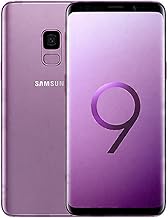
You remember the Galaxy S9, don't you? That 2018 flagship that quietly introduced one of the most ingenious camera innovations in smartphone history — Samsung's dual-aperture (two-step) system. While the rest of the industry was fixated on adding more lenses and cranking up megapixel counts, Samsung built a camera that could literally change how much light hit the sensor, switching between f/1.5 for low-light shooting and f/2.4 for sharp daylight photos.
Now here's where things get interesting: industry whispers suggest Samsung might be dusting off this technology for a modern comeback. And honestly? It's about time.
The Original Innovation That Everyone Forgot
Let's break down what made the Galaxy S9's variable aperture so special. Most smartphone cameras are stuck with a fixed aperture — think of it as having sunglasses you can never take off. The Galaxy S9's camera could actually adjust its "pupil" size, opening wide to gather maximum light in dim conditions or narrowing down for optimal sharpness when there's plenty of light available.
The technical implementation was genuinely impressive: mechanical blades that could physically adjust the aperture opening, switching between f/1.5 and f/2.4 in a fraction of a second. This wasn't just computational trickery — this was real, hardware-level optical adjustment happening inside a device thinner than most magazines.
But here's what really made it work: the f/1.5 setting maximized light gathering for those challenging indoor shots and evening photos, while f/2.4 provided the sweet spot for sharpness across the frame in bright conditions. It solved a fundamental physics problem that every camera designer faces — the trade-off between light sensitivity and optical quality.
Why Variable Aperture Disappeared (And Why It Shouldn't Have)
The smartphone camera arms race took a different turn after 2018. Everyone started chasing computational photography, multi-lens arrays, and AI-powered scene detection. These aren't bad approaches — they've given us incredible features like Night Mode and Portrait photography. But they also shifted focus away from fundamental optical improvements.
Variable aperture got lost in the shuffle, partly because it's genuinely complex to implement well. You need precise mechanical engineering, robust actuators that can handle millions of cycles, and sophisticated software to know when to switch between settings. It's easier to add another camera lens than to perfect moving parts inside an existing one.
The timing wasn't quite right either. In 2018, most users didn't fully understand what variable aperture meant or why it mattered. The feature became a technical footnote rather than a selling point, even though it delivered real, measurable improvements in image quality.
What a Modern Variable Aperture Comeback Could Look Like
Here's what makes a potential return so compelling: six years of technological advancement would transform how variable aperture works. We're not talking about the same two-setting system from the Galaxy S9.
Imagine variable aperture with Samsung's current camera software stack. Instead of just f/1.5 and f/2.4, modern actuators could potentially offer multiple stops across a wider range. The camera could make micro-adjustments based on scene analysis, subject distance, and lighting conditions — all happening invisibly in the background.
The integration possibilities are fascinating. Variable aperture could work alongside computational photography rather than competing with it. Think about Night Mode that's enhanced by hardware-level light gathering, or Portrait Mode that uses aperture adjustment for natural depth of field effects rather than relying entirely on software blur.
PRO TIP: If Samsung does bring back variable aperture, look for it to appear first in their Ultra flagship models. The technology requires premium components and sophisticated engineering that make the most sense at the highest price points.
The Strategic Timing Makes Sense
The smartphone camera market has reached an interesting inflection point. Computational photography has delivered impressive results, but we're starting to see diminishing returns. Adding a fourth or fifth camera lens doesn't necessarily translate to dramatically better photos for most users.
Variable aperture represents hardware differentiation that's genuinely difficult to replicate through software alone. While competitors focus on AI enhancement and computational tricks, Samsung could own a unique optical advantage that delivers tangible benefits in real-world shooting scenarios.
It's also the kind of innovation that aligns with Samsung's engineering strengths. They've always been willing to tackle complex hardware challenges — from curved displays to under-screen fingerprint sensors. Variable aperture fits that pattern of solving problems through sophisticated mechanical and optical engineering.
What This Means for Your Next Phone
Bottom line: if Samsung really is planning a variable aperture comeback, it represents more than just a nostalgic return to a previous feature. It's a signal that hardware innovation still matters in an increasingly software-driven world.
The key question isn't whether variable aperture can improve photo quality — we know it can. The question is whether Samsung can implement it in a way that feels essential rather than technical, delivering benefits that users immediately notice and appreciate.
The key takeaway is that sometimes the most innovative thing you can do is perfect something that was ahead of its time. Variable aperture in 2018 was impressive but perhaps not fully realized. Variable aperture in 2024, built on modern engineering capabilities and integrated with current camera software, could be transformative.
Whether this rumored return actually materializes remains to be seen, but it's exactly the kind of bold hardware bet that could remind us why fundamental optical improvements still matter. In a world of computational photography and AI enhancement, there's still something to be said for letting more light hit the sensor in the first place.


Comments
Be the first, drop a comment!