



The Galaxy Z TriFold may have been shelved, but Samsung isn't backing down from the foldable frontier. Recent industry reports suggest the tech giant is already developing a successor that could redefine what we expect from multi-fold devices. While the original TriFold concept faced significant engineering and market challenges, Samsung's continued investment in this form factor signals their belief that triple-screen foldables represent the future of mobile computing.
What's fascinating about Samsung is how this iterative approach to ambitious concepts has historically paid off. The original Galaxy Fold faced numerous delays and durability issues before becoming a viable product line. Now, the TriFold's cancellation follows a similar pattern—encountering obstacles that force Samsung to rethink their approach before eventually delivering a refined solution that addresses real-world needs.
Why the original TriFold hit a dead end
The Galaxy Z TriFold's cancellation wasn't entirely surprising to industry watchers, honestly. If you've been following Samsung's foldable journey, you know that even their dual-screen devices took several generations to really nail down the fundamentals. Manufacturing complexities around triple-hinge mechanisms proved more challenging than Samsung initially anticipated, with early prototypes struggling to maintain the slim profile consumers expect from premium devices.
Here's where things get really tricky from an engineering perspective. The team faced particular hurdles with battery placement and thermal management across three separate display sections. These challenges represent a more complex version of issues that have plagued the entire foldable industry—every additional fold point creates exponentially more engineering constraints around power distribution, heat dissipation, and structural integrity.
Cost considerations also played a major role in the decision, and this is where market reality started bumping up against engineering ambition. Initial pricing projections suggested the TriFold would need to launch at nearly $3,000 to maintain healthy margins, positioning it well beyond even the most premium smartphone segments. That's getting into serious laptop territory, price-wise.
Market research indicated consumer hesitation around investing in such expensive experimental technology, especially given the durability concerns that still plague existing foldable devices. And let's be honest—when people are still worried about their $1,800 Z Fold surviving daily use, asking them to spend another $1,200 for an even more complex design was always going to be a tough sell.
What Samsung learned from the setback
Here's the thing about Samsung's approach to innovation—they're really good at turning setbacks into learning opportunities. The TriFold's development wasn't a complete loss, and that's actually more valuable than you might think. Samsung's engineering teams gained crucial experience with multi-hinge durability testing, discovering new approaches to screen crease management that could benefit all future foldable designs.
These discoveries go beyond just triple-fold applications. The stress testing methodologies developed for three-hinge mechanisms are already informing improvements to existing dual-fold designs, potentially extending the lifespan and reducing crease visibility across Samsung's entire foldable lineup.
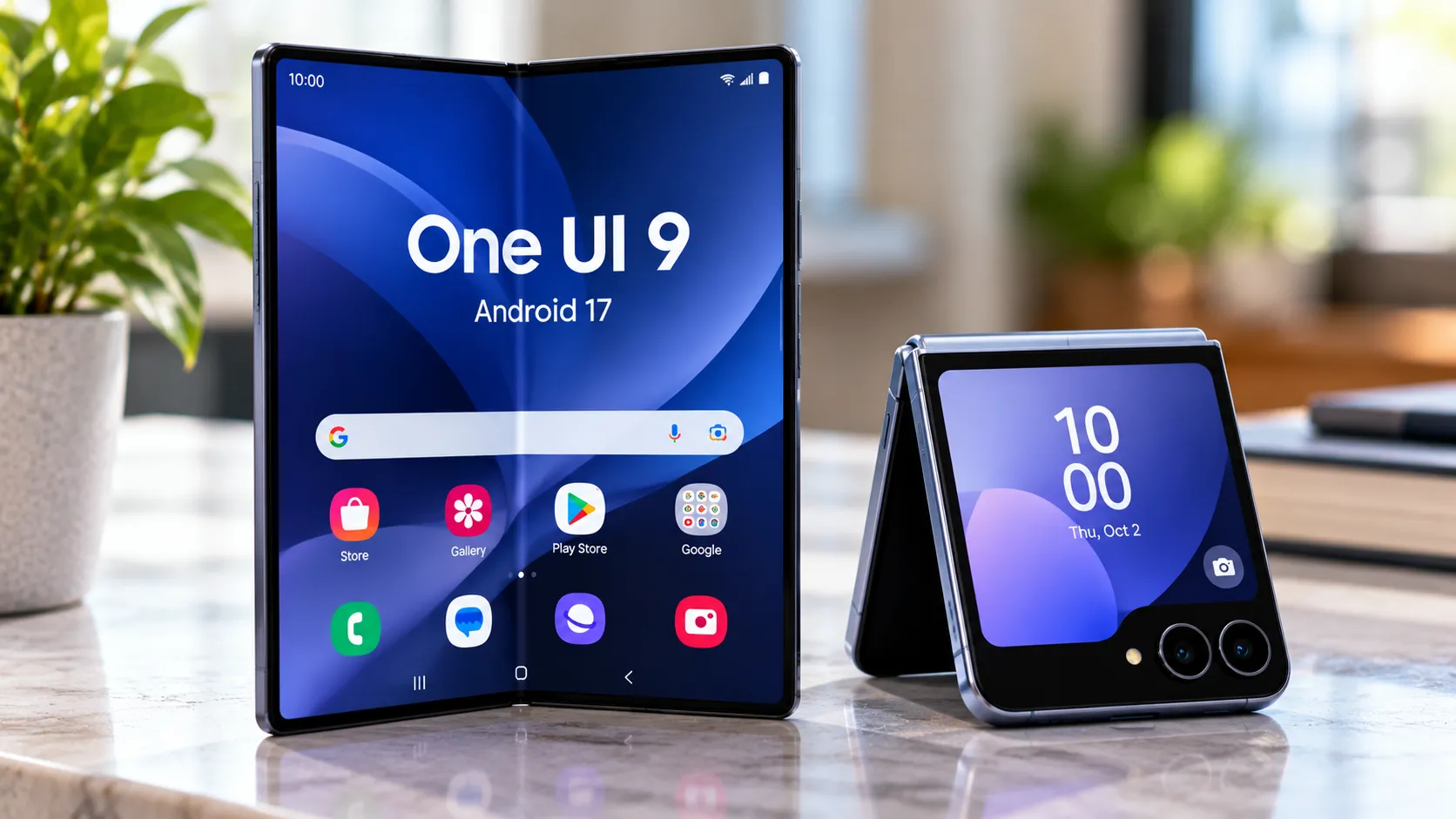
Software optimization emerged as another key learning area, and this might be where the real long-term value lies. The challenge of creating seamless user experiences across three distinct screen configurations pushed Samsung's One UI team to develop new multitasking frameworks that could eventually enhance even dual-screen devices. Think of it as developing the software foundation for form factors that don't even exist yet—that's the kind of forward-thinking approach that usually pays off down the road.
This software foundation positions Samsung uniquely in the competitive landscape. While competitors like Google's Pixel Fold and OnePlus's upcoming foldables focus on perfecting dual-screen experiences, Samsung's team already understands the complexities of managing app continuity and multitasking across multiple fold states—knowledge that translates into more sophisticated software optimization for any foldable design.
The successor takes a different approach
Now here's where things get really interesting. Early reports suggest Samsung's new TriFold successor adopts a fundamentally different design philosophy, and it's actually pretty smart when you think about it. Rather than pursuing the thinnest possible profile, the new concept reportedly prioritizes durability and battery life, accepting a slightly thicker form factor in exchange for improved longevity.
This shift reflects Samsung's recognition that early adopters value reliability over absolute portability, and honestly, that makes perfect sense. If you're going to spend serious money on cutting-edge tech, you want it to actually work consistently. This philosophy mirrors Samsung's approach to the Galaxy Z Fold 4 and 5, where successive generations prioritized durability improvements over dramatic design changes.
The successor also appears to target a different market segment entirely, which is a clever strategic pivot. Instead of competing directly with flagship smartphones, Samsung is positioning this device as a tablet replacement that happens to fold into phone-sized dimensions. This repositioning could justify higher pricing while setting more appropriate consumer expectations about the device's primary use cases.
It's like they're saying, "Don't think of this as an expensive phone—think of it as a portable tablet that can also make calls." That's a much easier value proposition to understand and accept, especially if you're someone who currently carries both a phone and a tablet.
Where this leaves Samsung in the foldable race
Samsung's continued TriFold development keeps them ahead of competitors who are still perfecting dual-screen designs, and that positioning is probably more valuable than it might initially appear. While companies like Google and OnePlus focus on refining traditional book-style foldables, Samsung's multi-fold research positions them to lead the next evolutionary step in flexible display technology.
This forward-thinking approach maintains their reputation as the foldable innovation leader, which has real business value beyond just the devices themselves. When consumers think "foldable phone," Samsung is usually the first brand that comes to mind, and staying ahead of the curve helps preserve that association.
The timing could prove crucial as display technology continues advancing rapidly. Improved ultra-thin glass and more flexible OLED panels are making previously impossible form factors increasingly viable. Samsung's investment in triple-fold research means they'll have refined manufacturing processes, optimized software frameworks, and solved durability challenges before competitors even begin exploring multi-fold designs.
Consider the current market timeline: most manufacturers are just now achieving acceptable durability and pricing for dual-fold devices. By the time they're ready to explore triple-fold concepts, Samsung will have years of additional development experience and a head start on the technical challenges involved.
What this means for foldable enthusiasts
Bottom line: The TriFold successor represents Samsung's commitment to pushing foldable boundaries, even when initial attempts don't reach market. This iterative approach suggests we'll continue seeing experimental form factors that gradually become more practical and affordable over time.
For consumers interested in cutting-edge mobile technology, Samsung's willingness to restart ambitious projects signals that truly innovative devices are still in development. It's not like they're just going to stick with the current Z Fold and Z Flip designs forever—they're actively working on what comes next.
The lessons learned from the original TriFold's challenges will likely benefit Samsung's entire foldable lineup, potentially leading to more durable hinges, better software experiences, and more thoughtful market positioning across all their flexible display devices. Sometimes the projects that don't make it to market end up being just as valuable as the ones that do, at least in terms of advancing the overall technology.
What's exciting is that we're still in the early stages of figuring out what foldable devices can become. Based on Samsung's development patterns, expect to see TriFold successor hints in their patent filings and supplier partnerships over the next 12-18 months. The device itself likely won't arrive until late 2025 or early 2026, but the groundwork being laid now will determine whether Samsung maintains their foldable leadership when multi-fold devices finally become mainstream.


Comments
Be the first, drop a comment!