





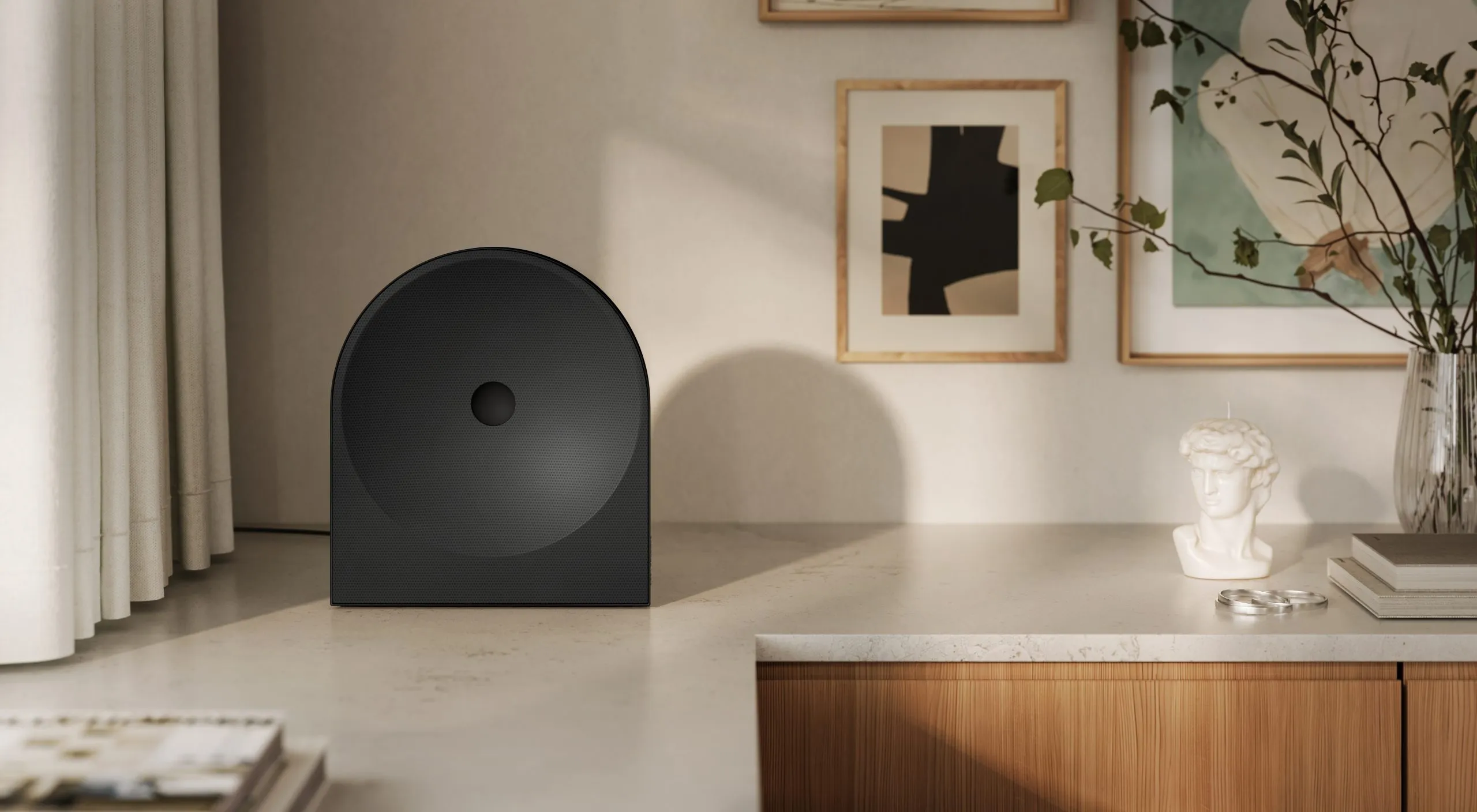
Samsung's Music Studio 7 ($499.99) and Music Studio 5 ($299.99) went on sale today via Amazon, marking one of the first confirmed U.S. retail listings for either model since its January CES preview. Both speakers work as standalone room units, scale into a ten-speaker whole-home network, or slot into a five-device home theater setup alongside a Samsung TV and soundbar using the same hardware for all three configurations.
That flexibility is the frame for the buying decision. The answer to which speaker makes sense depends almost entirely on which of those scenarios you're actually in.
Quick picks:
Buy the Music Studio 7 if you have a Samsung TV and want HDMI eARC plus a discrete up-firing driver for real Dolby Atmos height
Buy the Music Studio 5 if you want a music-first speaker, plan to pair two units for stereo, or are building out a Samsung wireless whole-home audio room by room
Wait if you care about independent sound tests or want clarity on which control app ships as the day-one default
Samsung has led the global soundbar market for eleven consecutive years. The Music Studio line looks like Samsung's clearest push yet into standalone Wi-Fi speakers, a direct signal that it's trying to turn these into more than one-off products.
The 7 is for your TV room. The 5 is for everything else.
The Music Studio 7 at $499.99 is built around a TV-room use case. It's a 3.1.1-channel speaker with left, front, right, and a physical up-firing driver for genuine Dolby Atmos height, not virtualized. It includes an HDMI eARC port for direct wired TV connection, a 5-inch woofer, and supports hi-res audio up to 24-bit/96kHz. Via Wi-Fi, it connects to compatible Samsung TVs and soundbars and can function as a rear speaker in a surround configuration.
The $200 premium over the 5 is mostly hardware: the discrete up-firing driver and the HDMI port. If you sit in front of a Samsung TV and want a single speaker that can grow into a rear-channel component, the 7 is the right starting point.
The Music Studio 5 at $299.99 is a different proposition. It weighs 5.29 lbs against the 7's 12.35 lbs. Built around a 4-inch woofer with dual tweeters and a waveguide for controlled sound dispersion, it skips HDMI eARC entirely. Dolby Atmos height is virtualized rather than produced via a dedicated up-firing driver, which matters if you're choosing between the two for a TV room; less so for a bedroom, kitchen, or hallway.
One practical upside specific to the 5: two units can be paired for a wider stereo image, making it a sensible first node in a multiroom setup or a living-room music speaker with room to expand, eCoustics confirms.
Control and connectivity: what to know before buying
Both speakers share the same connectivity foundation: Wi-Fi, Bluetooth, AirPlay, Google Cast, Roon Ready, and Spotify Connect. Neither includes a remote control. Day-to-day management runs through onboard buttons, voice commands via Alexa, Google Assistant, or Bixby, and a dedicated Spotify Connect shortcut for one-tap playback, per eCoustics.
The app control picture has a conflict worth knowing about. Samsung lists a new Sound app as 'coming soon,' while earlier reporting points to SmartThings as the current control interface. The setup software may shift after launch; which app serves as the functional day-one default isn't settled.
Design is worth a note: both speakers use a circular "dot" form developed by French designer Erwan Bouroullec, shaped around loudspeaker geometry and refined for sound dispersion, Samsung's newsroom explained. The form factor is shelf-friendly and doesn't need to hide, which matters when choosing between one of these and a soundbar for a shared living space.
The ecosystem logic: full value requires a Samsung TV
Q-Symphony is the connective layer. It coordinates up to five Samsung audio devices: TV speakers, a soundbar, and Wi-Fi speakers, optimizing output based on each unit's placement. The same hardware also scales outward for Samsung wireless whole home audio: up to ten Music Studio speakers can run across a home for synchronized or independent multiroom playback.
The five-device ceiling is for a home theater. The ten-device ceiling is for whole-home audio. One speaker participates in both, depending on context.
The key constraint worth stating plainly: Wireless Dolby Atmos over Wi-Fi, Q-Symphony coordination, and SpaceFit Sound Pro room calibration all require compatible Samsung TVs. SpaceFit Sound Pro uses onboard microphones to read the room and recalibrates automatically each day or whenever a speaker is moved, according to eCoustics. Active Voice Amplifier Pro adjusts dialogue intelligibility against ambient noise in real time without raising overall volume, a feature shared with the 2026 flagship HW-Q990H soundbar.
Samsung TV owners get a system that can expand piece by piece, from one speaker to a full coordinated surround setup. Everyone else gets a capable Wi-Fi speaker with broad platform support, genuinely useful, but without the deeper integration. That distinction should drive the buying decision as much as price or driver count.
Where the HW-Q990H fits
The 2026 flagship soundbar runs the same platform: 11.1.4-channel configuration, wireless subwoofer and rear speakers included, Q-Symphony, Wireless Dolby Atmos, SpaceFit Sound Pro, and AVA Pro all present, per Samsung's Philippines storefront. That listing confirms the product exists and details its feature set. Samsung's 2026 soundbars' availability remains unconfirmed in the U.S.; no confirmed pricing or U.S. release date had surfaced at the time of publication.
For most buyers, the Music Studio speakers are the cheapest way into Samsung's broader audio system. The Q990H is where it tops out.
Samsung Music Studio 7 and 5 availability: what's on sale now
The Music Studio 7 and Music Studio 5 are available on Amazon today. The 7 at $499.99 is the right call for Samsung TV owners who want home-theater capability from a single speaker with room to grow. The 5 at $299.99 is the better entry point for whole-home audio, or for anyone who wants a music-first speaker that pairs cleanly with a second unit for wider stereo, eCoustics confirms.
Two things worth revisiting before committing. First, all audio quality claims at this stage come from Samsung and launch-period reporting; no independent performance reviews exist yet. Second, the app control situation isn't fully settled, and the gap between SmartThings and the forthcoming Sound App may affect the day-one setup experience in ways that aren't yet visible.
Samsung says the full 2026 lineup lets music, podcasts, and films move "effortlessly throughout the home," with up to five products combining in Q-Symphony for the most immersive setup the company has shipped, Samsung UK's newsroom stated in January. Whether the software delivers on that promise at launch is what independent reviews, when they arrive, will actually answer.




Comments
Be the first, drop a comment!