





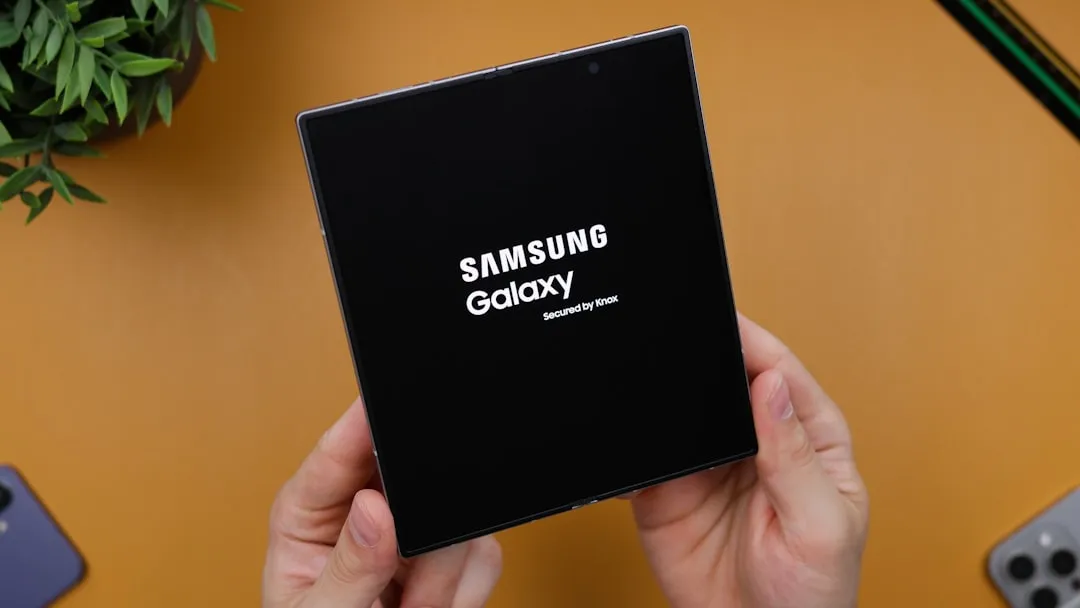
Samsung Galaxy Z Fold 8 Renders: Same Design, Major Internal Upgrades
Fresh spec leaks published this week reinforce what earlier Samsung Galaxy Z Fold 8 renders have shown since January: the phone will carry the same book-style silhouette as its predecessor while reportedly delivering the most substantive internal changes the Fold line has seen. The most newsworthy development arriving today is confirmation that the crease-reduction display technology Samsung demonstrated at CES in January remains on track, with the summer launch window approaching. For anyone who passed on previous Fold generations because of the crease, the battery, or the charging speed, the Fold 8 is the first model where the leaks are actually aimed at those complaints.
SamMobile laid out the structural problem in January: foldables face three disadvantages against standard flagships, a visible crease, smaller battery capacity, and limited camera hardware. The Fold 8 leaks take aim at all three. The chassis looks familiar. What's reportedly changing is underneath it.
Samsung is targeting a July 2026 launch, ahead of Apple's expected first foldable, per Time.news and GSMArena. The competitive pressure from that timing is real, and it shows in where the engineering effort appears to be focused.
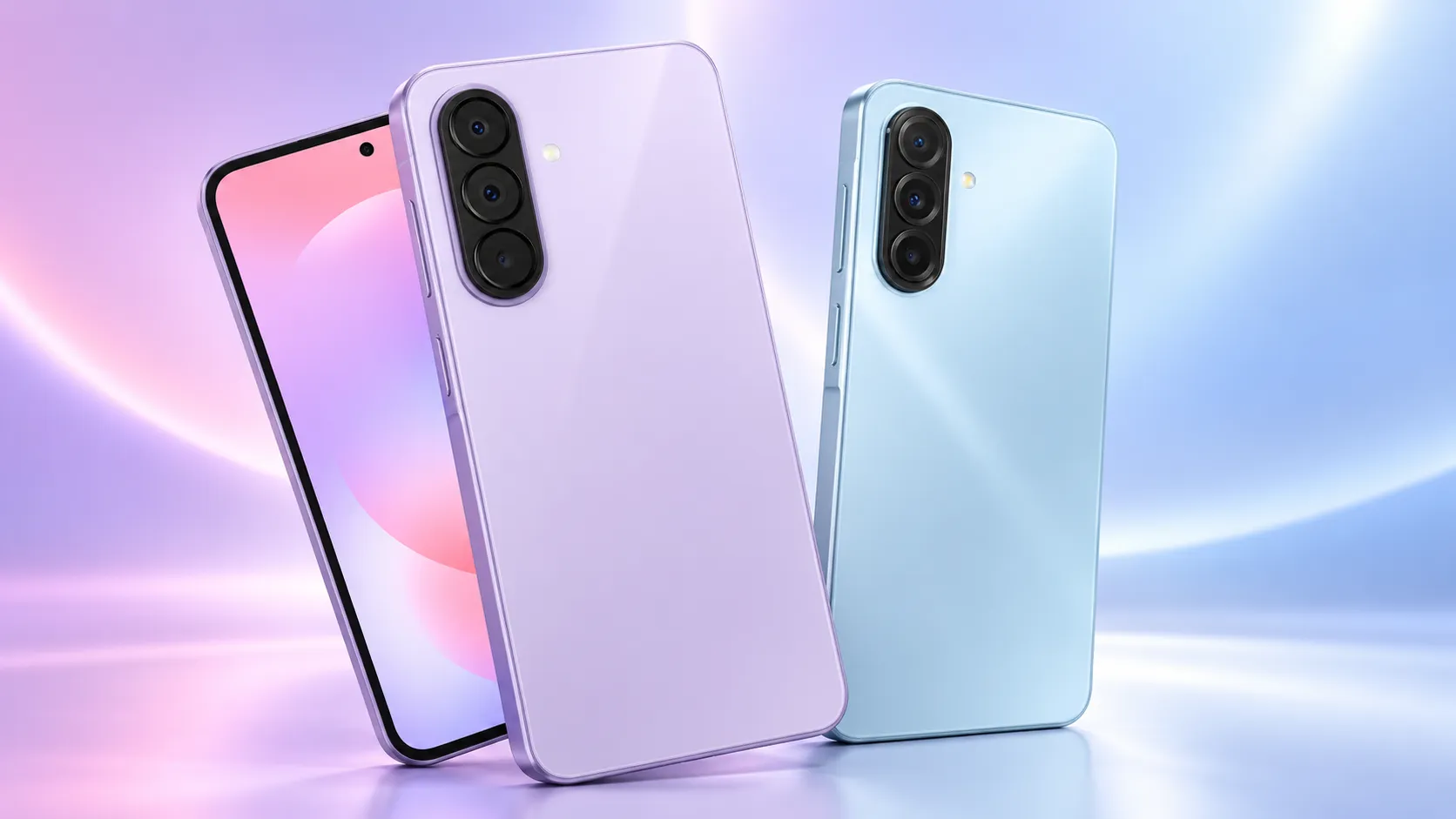
Galaxy Z Fold 8 leaked renders: familiar silhouette, revised internals
Display dimensions are unchanged: 8 inches inside, 6.5 inches on the cover, both at 120Hz, reported across GSMArena, SamMobile, and Time.news. The device is expected to be thinner and lighter than the Fold 7, per GSMArena and IBTimes, though no confirmed measurements have emerged. Hinge geometry, exact chassis dimensions, and camera housing shape remain unestablished by available renders.
What renders can and cannot tell you matters here. They establish broad silhouette and screen proportions. They do not prove materials, crease visibility in shipping hardware, hinge tolerances, or final weight. The consistent read across multiple leak cycles is that Samsung is keeping the exterior form factor intact while concentrating the revision effort inside an approach that makes sense for a company spending years refining a chassis it doesn't want to abandon in the same generation it may be rebuilding the display stack.
The leak pattern also suggests something about the intended audience. Skeptics were rarely put off by the shape itself. They were put off by the crease felt every time a thumb crossed the screen, a battery that needed a midday top-up, and charging speeds slow enough to make that top-up genuinely annoying. The Fold 8 appears designed to close those gaps, not redesign around them.
Crease and battery: where the meaningful changes are
The crease problem gets its most serious engineering response yet. At CES 2026, Samsung Display staged a side-by-side "Crease Test" comparing its new foldable OLED panel against the current one, claiming the newer version delivers "seamless text across the fold," as SamMobile reported from the show floor in January. Multiple leaks since then identify this panel as the Fold 8's likely display, though that decision has not been confirmed.
The engineering involves overlapping changes rather than a single fix:
- A dual-layer ultra-thin glass (UTG) structure, placing UTG at both the top and bottom of the panel instead of just the top, reportedly reduces crease visibility by around 20% versus the Fold 7, according to SamMobile in January.
- A laser-drilled metal support plate introduces micro-perforations that spread mechanical stress across the substrate during folding rather than concentrating it along a single line, reported by GSMArena this week and Geeky Gadgets earlier this month.
- A reformulated optical clear adhesive (OCA) layer makes the panel less rigid at the fold point, per Trusted Reviews and 9to5Google in January.
These changes likely work in combination. The perforated support structure also improves screen resilience over repeated folding, per Geeky Gadgets, which matters because a Galaxy Z Fold 8 crease-free display that degrades faster is not an upgrade. The crease also affects more than aesthetics: text is harder to read across a visible fold line, running a finger over the screen feels wrong, and for a $2,000-plus device, the flaw has consistently signaled that foldables aren't yet mature. Reducing it meaningfully changes the daily experience in ways that a spec bump does not.
One honest caveat: "completely crease-less," as Trusted Reviews described the CES demo, and "approximately 20% less visible," per SamMobile, are materially different outcomes. As of January, 9to5Google reported that Samsung had not finalized its panel choice, partly because the new technology adds cost, with RAM shortages applying further pricing pressure. That same report expected the decision to land around the end of Q1. That deadline has now passed, but no confirmation has appeared in the sources available here. Oppo's Find N6 has already demonstrated a near-invisible crease in a shipping product, per Time.news. That's the benchmark Samsung will be judged against regardless of what it claims at launch.
The battery situation is simpler to describe and harder to excuse. The Galaxy Z Fold 2 shipped with a 4,500mAh cell in 2020, then the Fold 3 dropped to 4,400mAh the following year and stayed there across the Fold 4, Fold 5, Fold 6, and Fold 7, per 9to5Google and Android Police. Wired charging stayed at 25W throughout that same run, per SamMobile. The Fold 7 takes close to 90 minutes to charge from empty at that speed, with a 50% top-up requiring around 30 minutes, Android Police reported in December.
Both streaks appear set to end. Battery certification data surfaced by GalaxyClub and reported by SamMobile earlier this month points to a 5,000mAh marketed capacity, roughly 13-14% larger than the Fold 7 and the largest battery in the Galaxy Z Fold lineup's history. Wired charging is expected to jump to 45W, consistent across GSMArena, Time.news, and Android Police. That should be enough to noticeably cut both quick top-up and full charge times, per Android Police.
The competitive context is worth keeping in mind. Chinese rivals are currently shipping foldables with batteries above 7,000mAh in comparably thin devices, as 9to5Google noted. The Galaxy S26 Ultra, launched earlier this year, supports 60W charging, per SamMobile, so the Fold 8's rumored 45W ceiling already trails Samsung's own slab flagship. These are real improvements over every prior Fold. They position Samsung as catching up, not leading.
The camera picture: progress claimed, evidence still thin
Leaked specs point to a 200MP main sensor using a 1/1.3-inch type sensor, a 50MP ultrawide, and a 10MP telephoto with 3x optical zoom, per GSMArena this week and Time.news today. If accurate, the main sensor would represent a step up from the Fold 7's configuration and would help address the camera hardware gap that SamMobile identified in January as one of foldables' three core disadvantages against standard flagships. Buyers have historically paid flagship prices for foldable phones and received something less than flagship camera hardware. A 200MP main sensor at least closes part of that expectation gap on paper.
The telephoto spec is disputed. An earlier rumor pointed to a more meaningful zoom upgrade; the latest leak contradicts it, as GSMArena noted. There's no available information on image processing improvements or under-display camera changes, both of which remain open questions on imaging. The 200MP headline is credible as a spec; whether it translates to meaningfully better photos inside a folding form factor is a question for hands-on testing, not leaks. The camera story, like the battery story, reads as a correction of prior underperformance rather than a push to lead the field.
The chipset picture is more settled. Snapdragon 8 Elite Gen 5 for Galaxy, 12GB or 16GB RAM, 256GB to 1TB storage, and a vapor chamber for cooling appear consistently across GSMArena, SamMobile, and Time.news. Samsung's flagship foldable gets Samsung's flagship chip. No surprises there.
What's still unsettled, and what it means for a wait-or-watch decision
Two categories of unknowns are worth separating before drawing conclusions.
What's unresolved about the Fold 8 itself:
- Whether the crease-reduction panel makes the final cut remains genuinely uncertain. Cost pressure was still a live variable in January, per 9to5Google, compounded by anticipated price increases from ongoing RAM shortages.
- No confirmed chassis dimensions exist yet, despite the repeated expectation that the device will be thinner and lighter.
- Real-world battery life, thermal behavior under sustained load, and how the lighter body interacts with the larger cell are all untested questions that specs cannot answer.
- Pricing is unconfirmed. The Fold 7 launched at $2,000 in the US and €2,100 in Europe, a $100 increase over the Fold 6, per Time.news. The new display technology is expected to push costs higher, per 9to5Google. On a device already priced above $2,000, another increase changes the buying calculation considerably.
What those unknowns mean for the decision:
If the crease and battery were the specific reasons for skipping prior Fold generations, the Fold 8 is the first model where the leak cycle is actually addressing those objections. The display engineering effort alone, three overlapping structural changes working in combination, is more substantive than anything Samsung has applied to the fold mechanism since the category launched. The battery and charging improvements are overdue, but they're real.
If the goal was a fundamentally new form factor, a dramatically different industrial design, or specs that outpace the foldable market rather than catch it, the evidence so far doesn't support that read. The leaks suggest continuity in everything visible and revision in everything underneath.
Samsung's summer launch will resolve the most consequential open questions: confirmed dimensions, pricing, and whether the crease-reduction panel actually ships in production hardware. Those answers, not the leaks, are what will determine whether the Fold 8 converts the holdouts it appears to be designed for.


Comments
Be the first, drop a comment!