




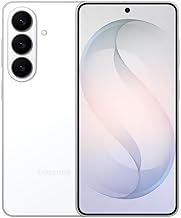

Samsung Galaxy S26 vs Galaxy S25: Which Is the Better Buy?
Six months into the Galaxy S26's life, price has done something spec sheets never could: it has flipped the whole comparison on its head. SlashGear checked retail listings today and found the Galaxy S26 selling for $774.99 at Amazon and Best Buy, and for just $712.50 at Walmart, undercutting the $799 the Galaxy S25 charged at its own launch (SlashGear). Retail pricing shifts by the week, so treat those numbers as a snapshot rather than a promise, and check current listings before you buy. But the snapshot alone wrecks the easy assumption that newer always costs more.
The Galaxy S26 launched on March 11, 2026, starting at $899 for a 256GB model. The Galaxy S25 launched a year earlier at $799 for 128GB, or $859.99 for 256GB (Tom's Guide, five months ago). Engadget's verdict at the time was blunt: buyers could grab last year's phone for "99 percent the same" experience, for $99 less (Engadget, five months ago).
This comparison leans on independent lab testing and current pricing to answer two separate questions: what should a new buyer choose today, and does an existing Galaxy S25 owner have any real reason to trade up? The answers turn out to be different for each.
Galaxy S26 vs Galaxy S25: specs and key differences
The biggest change on paper is storage. The S26's base model ships with 256GB and 12GB of RAM, doubling the S25's 128GB starting tier (Engadget; Tom's Guide). For most buyers, that jump in storage will matter more than any benchmark number.
The benchmarks still tell a clear story. The US Snapdragon 8 Elite Gen 5 version of the S26 posted 3,531 single-core and 10,778 multi-core scores in Geekbench 6, well clear of the S25's 2,916 and 9,886 (Tom's Guide). Graphics show a similar gap, with 3DMark Wild Life Extreme scores of 7,059 versus 5,841. Gamers and anyone running heavy multitasking will notice the difference.
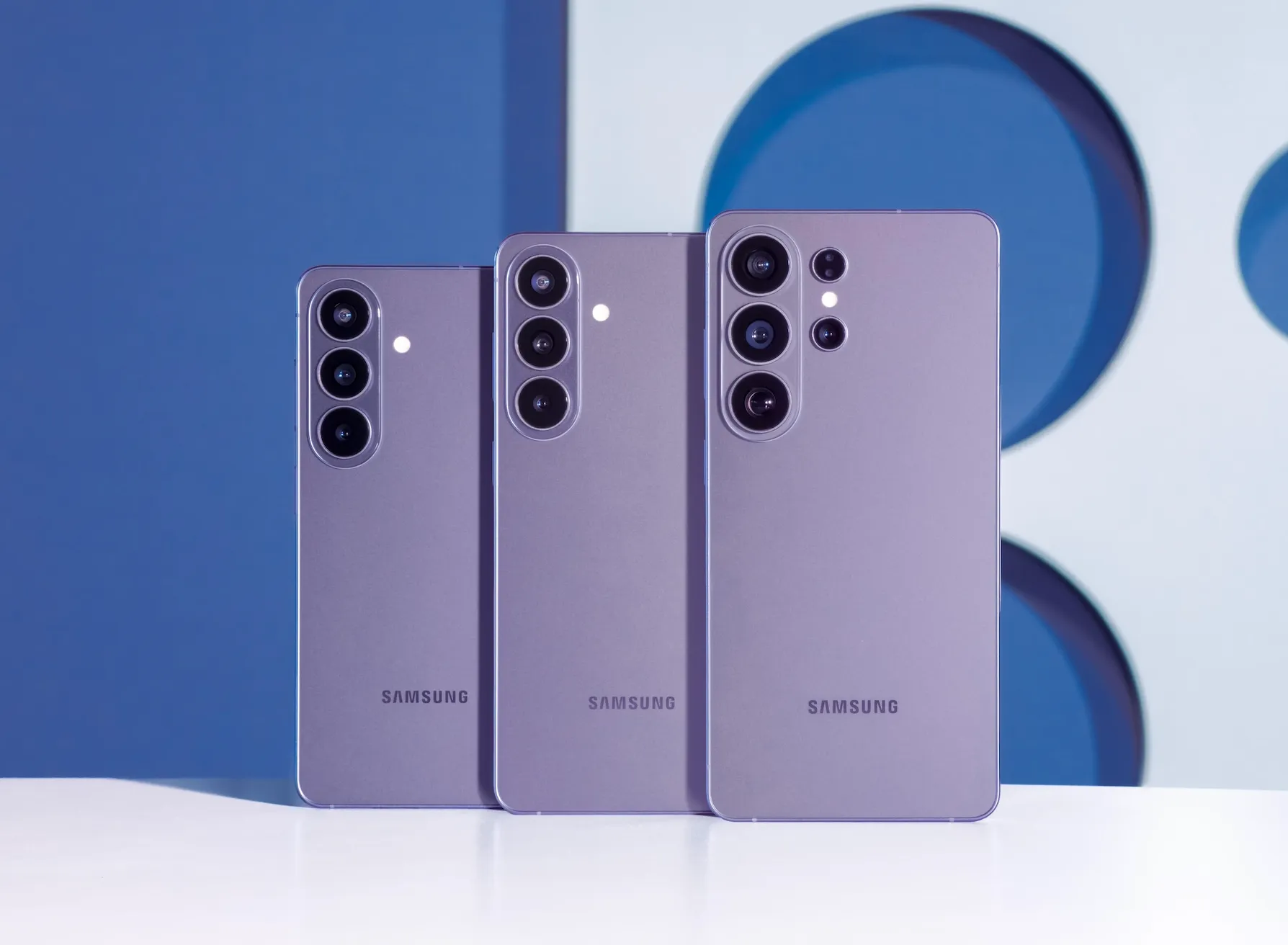
Outside the US, China, and Japan, though, the S26 ships with Samsung's own Exynos 2600 instead of Snapdragon, so the size of that performance jump depends on where the phone was bought (GSMArena; Engadget). The S26 also grew slightly, to a 6.3-inch display and 167 grams, up from the S25's 6.2 inches and 162 grams (SlashGear), though both use the same Dynamic AMOLED panel technology and 120Hz refresh rate.
Everything else stays close to identical. Charging tops out at 25W wired and 15W wireless on both phones, both carry an IP68 rating and Gorilla Glass Victus 2, and the camera hardware and daylight results are closely matched between generations (SlashGear; Tom's Guide). The upgrades cluster in performance and storage, not in the things a buyer notices every time they pick up the phone.
Galaxy S26 vs S25 battery and performance: what the testing shows
Samsung grew the battery from 4,000mAh to 4,300mAh, a bump of roughly 7.5 percent (SlashGear). On paper, that should mean more screen time. In Tom's Guide's lab, it didn't.
Running a controlled test that continuously refreshes a webpage over 5G, Tom's Guide clocked the Galaxy S25 at 11 hours and 54 minutes, beating the Galaxy S26's 11 hours and 28 minutes by 26 minutes (Tom's Guide). Engadget's own testing turned up the same pattern, describing the S26's shorter battery life as "a disappointing discovery from Samsung's first 2nm chip" (Engadget, five months ago). Neither outlet pins down exactly why the bigger cell came up short; it stands as an unresolved wrinkle in an otherwise straightforward spec upgrade.
Charging speed didn't move at all to compensate. Both phones cap at 25W wired and 15W wireless, unchanged year over year (GSMArena). Paired with the runtime results, the S26's power story doesn't show up in daily use, only on a spec sheet.
Display brightness tells a similarly murky story. Tom's Guide recorded 1,950 nits on the S26 against 1,789 on the S25 (Tom's Guide), a gap that sounds meaningful until you remember brightness figures shift with test conditions and viewing angle. A bigger spec-sheet number doesn't guarantee a visibly brighter phone in your hand.
That raw benchmark lead matters most to gamers and heavy multitaskers. For most buyers, battery life is the more revealing test, and on that measure the newer, pricier phone lost.
Is the Galaxy S26 worth buying over the Galaxy S25? Software and AI features examined
Software is where Samsung wants this argument to end. The S26 ships with Android 16 and One UI 8.5, which brings a more personalized Now Brief, proactive Now Nudge suggestions, an AI document scanner, and a Bixby built to hold more natural conversations, with support for Gemini and Perplexity built in (Tom's Guide). New camera tools include Horizon Lock stabilization, an Autoframing mode, and an Object Aware Engine aimed at improving front-camera portraits (SlashGear; Engadget).
The Perplexity integration is the headline addition, and also the shakiest one. Engadget's hands-on testing found it missing Samsung Browser support at launch, unresponsive to "Hey Plex" voice commands, and offering little the reviewer couldn't already get from Gemini (Engadget, five months ago). That's not a minor rollout hiccup. It's the centerpiece AI feature arriving unfinished.
There's also a shelf-life problem with treating software as a reason to upgrade. Tom's Guide points out that the One UI 8.5 beta has already brought some of these features to the Galaxy S25, and that a public release is likely to put the two phones on more even footing (Tom's Guide). Samsung hasn't said whether every S26 feature will remain exclusive, and based on past cycles, this software lead looks temporary rather than permanent. Paying an extra $899 today for capabilities that may reach an S25 down the line is a thin argument on its own.
Galaxy S26 or Galaxy S25: which offers better value in 2026?
Strip away the software promises and the case comes down to arithmetic, and the arithmetic looks different depending on who's asking.
For someone shopping new in 2026, start with launch prices: the S26's $899 starting point is only $40 more than a 256GB Galaxy S25 cost at launch, for a faster chip and a larger battery (Tom's Guide). As noted above, current retailers have already pushed the S26 below the S25's original launch price entirely, which erases much of the rationale for hunting down the older phone at full price (SlashGear).
That price relationship points to a workable rule, even if it isn't a precise one. SlashGear's own guidance is to buy the S25 only when it carries a genuine discount; if the two phones cost roughly the same, the S26's faster chip and bigger battery make it the better buy (SlashGear). Neither source in this research hands down an exact dollar figure for what counts as "genuine." But the S26's current street price of roughly $712 to $775 is a useful benchmark: for the S25 to be the smarter Galaxy S25 vs S26 2026 pick, it needs to sell for meaningfully less than that range, not just a few dollars under the S26's list price. A five- or ten-dollar gap doesn't offset half the storage and a slower chip; a gap of $100 or more is a different conversation entirely.
Long-term software support cuts slightly against the "just buy the discounted S25" logic. Samsung backs the S26 with up to seven major Android upgrades, one of the longest commitments in the industry (GSMArena). Anyone planning to hold onto a phone for the long haul is buying more years of support with the newer model, even if this year's feature set doesn't feel dramatically different.
Current owners face a much simpler calculation than any of this. Tom's Guide doesn't hedge: "there's little point in upgrading… the improvements you'll gain are not worth spending an additional $899" (Tom's Guide). Nothing in the battery testing, the camera comparisons, or the unfinished AI rollout changes that math. An S25 owner isn't leaving much on the table by sitting this generation out.
Which one should you buy
Line up the evidence and the Galaxy S26 wins the spec sheet: more storage, more RAM, and a clear benchmark lead over the Galaxy S25 (Tom's Guide). But two of its headline upgrades don't hold up under independent testing. The bigger battery lost to the smaller one in Tom's Guide's runtime test, and the flagship Perplexity integration was still missing basic functionality when Engadget reviewed it (Tom's Guide; Engadget).
Price is what actually settles this for most shoppers. Check live listings before deciding: if the S25 isn't selling for notably less than the S26's current street price, the newer phone's extra storage and speed make it the safer purchase. If the S25 is discounted substantially below that range, it remains close to "99 percent the same" phone for meaningfully less money (Engadget).
One UI 8.5's eventual public rollout to the S25 should narrow the software gap further, though Tom's Guide stops short of putting a timeline on when that happens (Tom's Guide). That leaves price, not features, as the variable most likely to decide this comparison for a while yet. Whichever phone is cheaper on the day you actually buy is probably the one worth choosing.


Comments
Be the first, drop a comment!