





Samsung Galaxy S27 Pro Exynos Leak Reveals Regional Chip Split
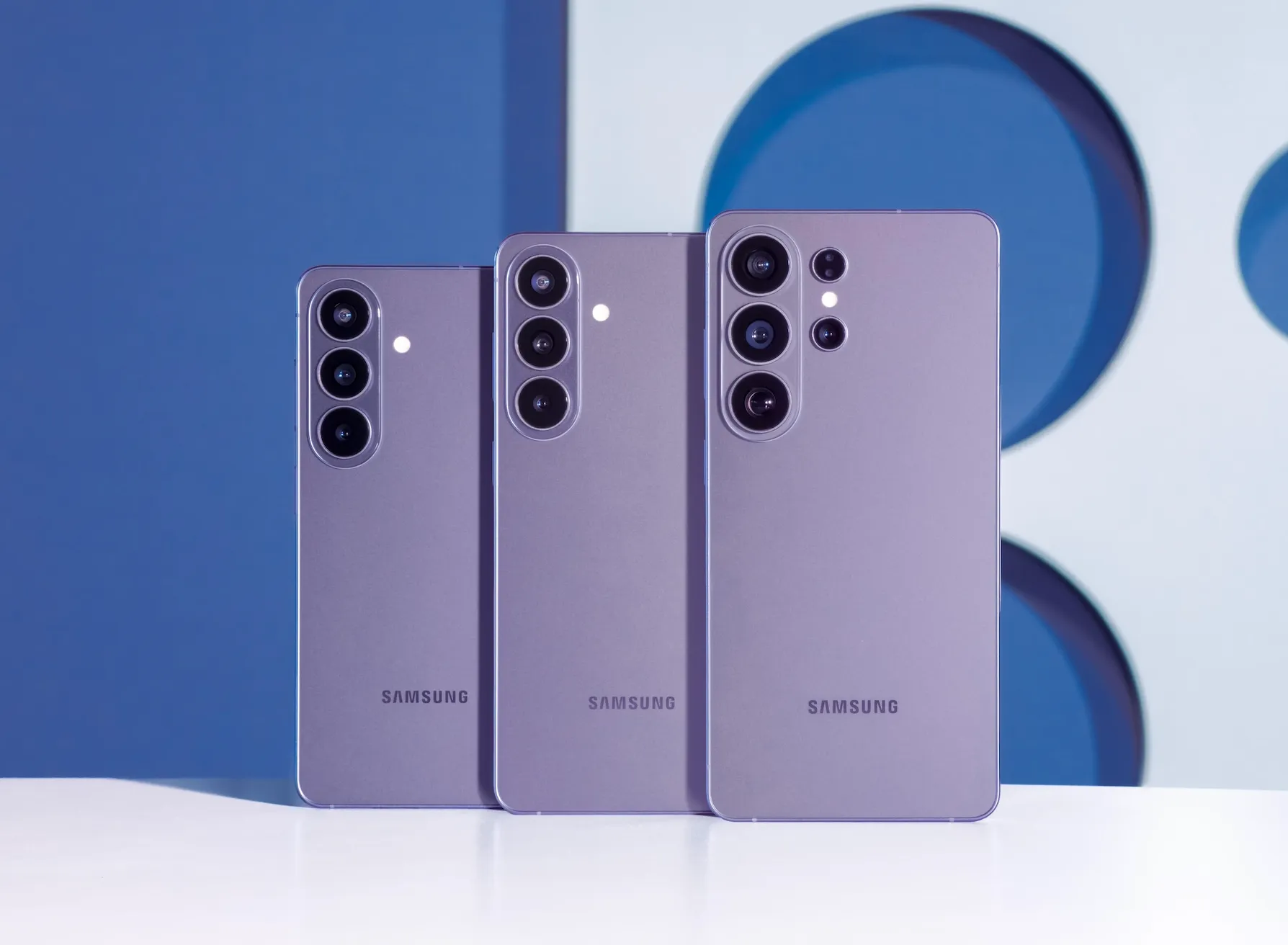
A new leak suggests Samsung is preparing to give the Galaxy S27 Pro near-Ultra camera hardware and an Ultra-exclusive display feature, then power it with a Samsung-made Exynos chip across Asia, Europe, Australia, Africa, and Latin America. The Samsung Galaxy S27 Pro Exynos leak, reported this week by Android Authority and SamMobile, would make "Pro" a materially different product depending on which continent you buy it on. Snapdragon would go to US buyers only, per Android Authority, or to all of North America, per SamMobile. The sources agree on the direction. They don't agree on where exactly the line falls.
One detail gives this more weight than a standard leak cycle. Samsung's President for System LSI, Park Yong-In, publicly confirmed three weeks ago that the company is developing the Exynos 2700, describing it as progressing toward "top-tier smartphones" with no setbacks, according to SamMobile. It was the first time any Samsung executive acknowledged the chip by name. That statement gives the reported regional split a harder floor than rumor alone provides.
One contradiction belongs near the top: a SamMobile report from May placed the S27 Pro in the globally Snapdragon column alongside the Ultra. July reporting from the same outlet reversed that, putting the Pro in the Exynos pool for most markets. That flip is part of the story, not a footnote.
Samsung Galaxy S27 Pro Snapdragon vs Exynos: what the leak actually says
The Galaxy S27 Ultra would reportedly use Snapdragon in every market, with no Exynos variant planned. The three remaining models S27, S27 Plus, and S27 Pro would run Exynos 2700 across South Korea, India, Europe, the UK, Australia, Africa, and Latin America, per this week's reporting from Android Authority and SamMobile.
The North American boundary is where accounts split. SamMobile places Canada, Mexico, and the US in the Snapdragon column for non-Ultra models. Android Authority frames it as US-only. China is the most unstable variable: May reporting from SamMobile put China in the Snapdragon column alongside the US and Canada, while July accounts from the same outlet drop it from the regional breakdown entirely. The exact size of the Exynos pool is still in flux; the directional story is not.
The pattern itself isn't new. The S26 and S26 Plus already run Exynos outside the US while the S26 Ultra ships with Snapdragon worldwide, Android Authority noted this week. What changes with the S27 generation is applying that split to a model carrying explicit "Pro" branding a tier that doesn't exist in the S26 lineup, positioned as a compact near-Ultra alternative. The tier itself is new; the chip strategy behind it is an extension of existing practice.
Samsung's reported motivation traces back to a South Korean publication cited by SamMobile this week: the company reportedly wants to expand the share of Exynos chips across its smartphone lineup. Deploying Exynos 2700 across three S27 models would increase internal chip volume and support Samsung Foundry's 2nm production utilization. That's the strategic rationale. Whether the chip can meet the expectations the Pro badge sets for buyers in Exynos markets is a question the leak doesn't answer.
Galaxy S27 Pro Exynos 2700: what the hardware split means in practice
The S27 Pro's leaked spec sheet borrows heavily from the Ultra. It reportedly carries the same triple rear-camera configuration a 200MP primary sensor alongside two 50MP lenses plus a new 16MP front camera upgrade shared between both models, according to Android Authority this week. Privacy Display, the anti-side-viewing panel technology that debuted as an S26 Ultra exclusive, is also expected to extend to the Pro, per Android Authority this week.
The size and battery tradeoffs are one kind of compromise. The Pro is rumored to come in at just under 6.5 inches with roughly a 5,000mAh battery versus the Ultra's larger footprint, per SamMobile. A smaller screen and battery reflect form factor decisions. Running Exynos in most markets while the Ultra gets Snapdragon globally reflects a supply chain and strategy decision. Those are different categories of tradeoff, and the spec sheet doesn't flag which is which.
Matching megapixel counts don't establish performance parity. Camera output quality is downstream of the chipset's image signal processor, the sensor's actual characteristics, and Samsung's tuning none of which are visible on a spec sheet. The same applies to modem performance, sustained CPU and GPU loads, and AI workloads. A shared 200MP figure says nothing about how those systems perform when the chips driving them are different.
Whether the Exynos 2700 can make this work
Samsung's design choices for the Exynos 2700 suggest the company is engineering directly at the problem it needs to solve. The chip is reportedly Samsung Foundry's second-generation 2nm mobile processor, built on the SF2P process node, using a Side-by-Side package arrangement that places the application processor and DRAM adjacent under a specialized Heat Path Block, according to Android Authority and SamMobile this week. Thermal management is historically where Exynos has lost ground to Snapdragon flagships under sustained load. The architecture is a direct response to that track record.
The manufacturing baseline is also meaningfully better than when Exynos acquired its skeptical reputation. Samsung's 2nm yields, which stood near 20 percent in late 2025, had reportedly climbed to an estimated 55 to 60 percent by early 2026, per NineScrolls six weeks ago. Still behind TSMC, but a sharp recovery from the manufacturing difficulties that drove customer losses in 2024. The chip that would go into most of the world's S27 Pro units is being built on a stronger production foundation than its predecessors.
None of this confirms performance. Park Yong-In's statement about targeting "top-tier smartphones" is an executive commitment, not a benchmark. There are no comparative performance figures, thermal test results, modem evaluations, or battery-life measurements for the Exynos 2700 against the rumored Qualcomm Snapdragon 8 Elite Gen 6 Pro for Galaxy. Architectural improvements and improved yields narrow the gap on paper. Real-world data from shipping hardware is what would close it.
What the leak cycle leaves unresolved
The May-to-July reversal on the Pro's chip assignment is the clearest signal that Samsung's lineup planning is still in motion. A phone reportedly locked to Snapdragon worldwide in May is Exynos in most markets by July. Treating any current leaked spec as settled gets ahead of the evidence.
What's confirmed:
- Samsung's System LSI president confirmed Exynos 2700 development, describing it as targeting top-tier smartphones (SamMobile, three weeks ago).
- The S26 generation already runs Exynos outside the US for non-Ultra models, making the S27 approach an extension of existing practice (Android Authority, this week).
What's reported but unverified:
- Galaxy S27 Ultra uses Snapdragon worldwide. Galaxy S27, S27 Plus, and S27 Pro are expected to use Exynos 2700 in Asia, Europe, Australia, Africa, and Latin America; Snapdragon in the US only, per Android Authority, or in the US, Canada, and Mexico, per SamMobile, this week.
- S27 Pro spec sheet reportedly mirrors the Ultra in camera resolution and Privacy Display.
What's still unresolved: No Exynos 2700 benchmark data exists in any form. China's regional allocation is inconsistent across sources and reporting periods. The North American Snapdragon boundary shifts depending on which outlet you read and when.
The S27 series is expected early next year, per SamMobile. Between now and then, the metrics worth waiting for are sustained CPU and GPU performance comparisons, thermal behavior under load, battery efficiency, and modem quality the exact categories where Exynos and Snapdragon have diverged most visibly in past generations. Samsung's spec sheet won't answer those questions. The leak cycle has already produced one major reversal on the Pro's chip assignment; regional SKU confirmation and independent performance data are what turn this story from a directional signal into a buying decision.







Comments
Be the first, drop a comment!