



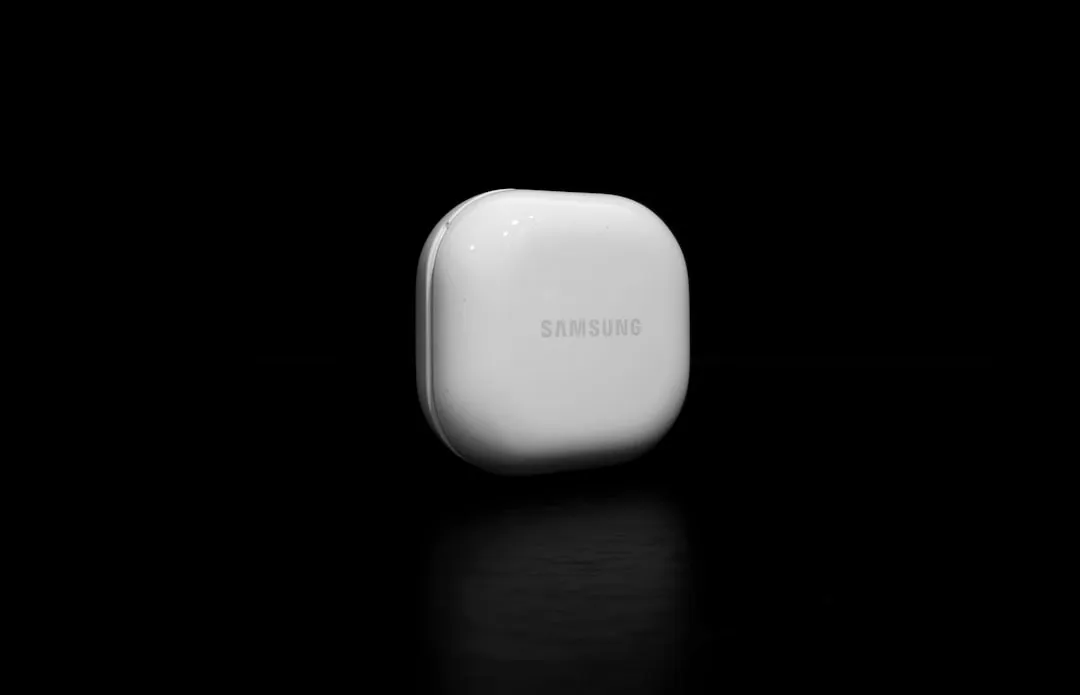
Three separate data trails now point to the same unreleased Samsung product: a clip-style open-ear earbud that, if the Samsung Galaxy Buds Able leak holds up, would be the company's first entry into a form factor where Bose, Sony, and Anker already have established products. It could also be a mechanical answer to a fit problem that has followed the current Buds lineup since launch.
What the Samsung Galaxy Buds Able leak actually shows
The evidence chain started with an APK teardown in early April, which surfaced text strings referencing a device called the Galaxy Buds Able with model number SM-U600. Samsung typically uses "SM-R" prefixes for its earbuds and codenames based on historical composers, so the "U" designation and the "Able" name both sit outside its usual pattern.
Days later, a battery component labeled EB-BU600AAY reportedly turned up in India's Bureau of Indian Standards certification database, a sign the device has cleared at least one component-level regulatory checkpoint, per the same Android Authority report.
Then SammyGuru uncovered a firmware icon inside One UI showing two dome-shaped units with a clip mechanism. Android Authority noted the icon closely resembles Sony's LinkBuds Clip and the Anker Soundcore AeroClip. Nothing in Samsung's current catalog looks like it.
Software strings, a component certification, firmware imagery, three independent data points all pointing to the same product. That's what separates this from a routine Samsung rumor. The name "Able" may still be a placeholder; Android Authority flagged that possibility explicitly. No price, launch date, or full specification has been confirmed.
How Samsung open-ear earbuds would differ from the current lineup
The Galaxy Buds 4 Pro ($249) uses a canal-fit design with silicone tips and a two-way speaker system: an 11mm woofer with an effective speaker area nearly 20 percent larger than the previous generation, paired with a 5.5mm planar tweeter, per Samsung Newsroom. The standard Galaxy Buds 4 ($179) takes a different approach: an open-fit design with no ear tips, trading isolation for comfort. Both launched alongside the S26 series in late February.
Neither uses a clip. The Buds 4's open-fit design is notable, but it's structurally different from a clip-on open-ear device; it doesn't anchor to the ear cartilage, and the open-fit design is still a passive one rather than a mechanical clip.
The clip-style open-ear category itself splits into two formats: hook-style designs that loop around the outer ear, like the Nothing Ear Open, and clip-style designs that clamp to the outer ear cartilage and position the driver near the canal opening, like the Bose Ultra Open Earbuds. Leaks place the Buds Able in the clip category, per Android Police. Samsung has no product in either camp. That's the gap Buds Able would fill, as Android Authority observed a month ago.
The fit problem and who this product would actually serve
The core appeal of clip-on open-ear earbuds is that ambient awareness doesn't require a software toggle. For users who find transparency modes processed or unreliable — Android Police describes them as "iffy" — a design that simply doesn't block the ear canal is a different category of solution.
Fit retention is where Samsung's current earbuds have a specific, documented vulnerability. One Android Police reviewer who tested both Galaxy Buds 4 models wrote that fit was their biggest problem with both pairs: "keeping them still was a constant battle" during physical activity. Samsung's own marketing for the Buds 4 series cited analysis of hundreds of millions of ear data points and more than 10,000 design simulations, per Samsung Newsroom. The distance between that claim and a reviewer's hands-on experience is pointed.
Clip-style designs address grip through the mount rather than tip selection. That same Android Police reviewer, who has tested both Buds 4 models and dozens of open earbuds, wrote that every clip-style pair they'd tested kept a rock-solid grip at the gym and during sprints, a consistency they couldn't say for standard earbuds, regardless of tip size. If Buds Able delivers on its apparent form factor, Android Police suggests it would likely have a far more reliable grip than the Buds 4 family.
One additional unconfirmed claim: SammyGuru has reported the Buds Able will use bone conduction technology, a detail picked up by Gizmodo and Android Authority about a month ago. Bone conduction could reduce sound leakage and points toward a fitness-focused use case, per Gizmodo. It traces back to a single source without technical corroboration, so it warrants tracking rather than counting on.
The harder question: can Samsung make open-ear audio work?
Clip-style design addresses fit. It doesn't automatically address sound quality.
Open-ear earbuds tend to deliver thinner audio than canal-fit alternatives because the driver sits adjacent to rather than inside the ear canal. Android Police put it plainly: "open earbuds often sound pretty poor." Clip-style designs generally fare better than hook-style ones because they can position the driver closer to the canal opening, per the same reviewer, but the gap relative to a well-sealed canal-fit earbud remains.
ANC is a harder constraint still. Getting noise cancellation to function when sound enters freely around the earbud is a genuine engineering problem. The rarity of open-ear earbuds with ANC "suggests it's not a feature companies deem important for this form factor," Android Police noted. Whether that reflects physics, market appetite, or both, the result is the same: such products are rare.
Samsung's audio engineering history is relevant context, though not a guarantee. The Buds 4 Pro pairs a dedicated DAC with each of its two drivers, something the Android Police reviewer called a rarity even at the premium end, and described the Buds 4 Pro as "some of the best noise-canceling audio products I've tested." That same reviewer concluded: "If anyone can make open earbuds sound good, it's Samsung, and if it replicates its Buds 4 Pro dynamics in the Buds Able, they could be must-buy open earbuds." That's one reviewer's opinion, but it's grounded in hands-on experience with both product families.
What's confirmed and what to watch for
The reported picture: a device using the Galaxy Buds Able name, or at least that as a working codename, has appeared in reported Samsung software references and a reported component certification. It carries a clip-on open-ear design visually distinct from anything in the current Buds family, and a battery component has cleared certification in at least one market. The model number prefix and design direction have appeared consistently across three separate disclosures over roughly seven weeks.
What isn't confirmed: the "Able" name may be a placeholder, per Android Authority. No price, launch date, or full specification has surfaced. A summer Unpacked appearance has been floated by Gizmodo but remains speculative. Bone conduction is reported but unverified.
The more interesting open question isn't whether this product ships the leak trail suggests it's real enough, it's whether it represents a genuine commitment to the clip-style open-ear category or another limited experiment that quietly disappears. Samsung has the audio hardware pedigree to do something compelling here. Whether that translates across a fundamentally different form factor is what a launch would actually tell us.




Comments
Be the first, drop a comment!