





Motorola Razr Fold vs Samsung Galaxy Z Fold 7: Challenger or Proven Pick?
Motorola's first book-style foldable goes on sale May 21 at $1,900 with 512GB of base storage. The Samsung Galaxy Z Fold 7 has been on shelves since last July at $1,999.99 for 256GB at the entry tier, per CNET and the Samsung Newsroom. That $100 price gap and doubled base storage is the opening move in a clear attempt to undercut Samsung's most documented weaknesses in this category: battery capacity, charging speed, and out-of-box value.
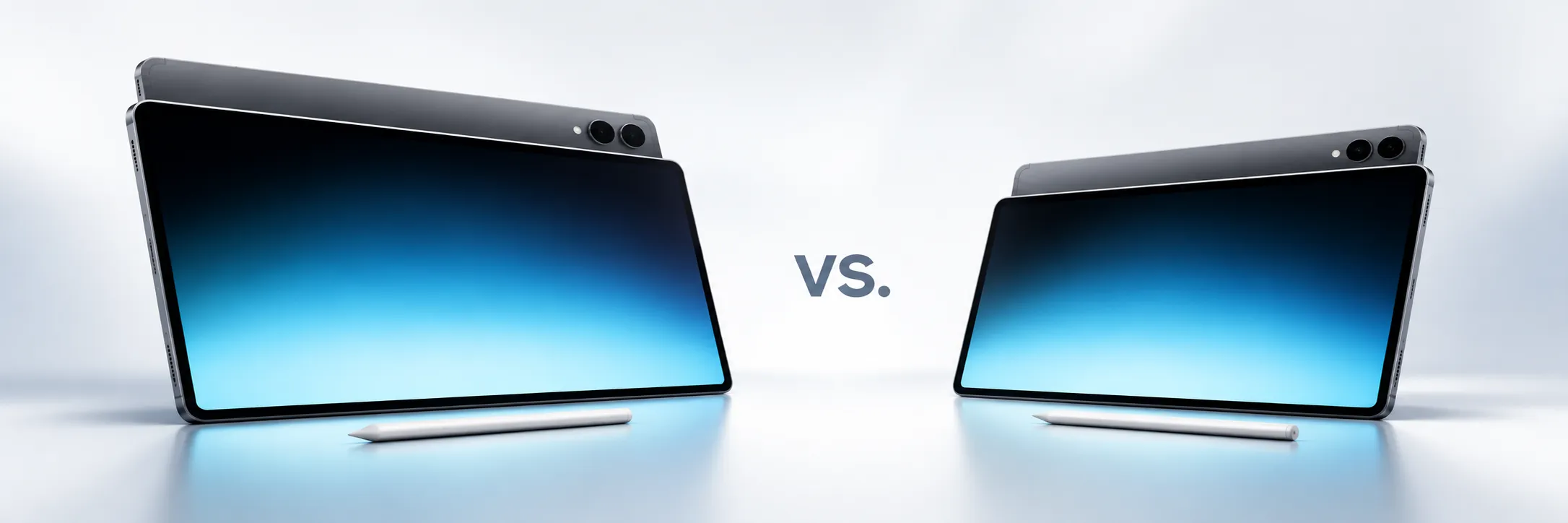
The Motorola Razr Fold vs Samsung Galaxy Z Fold 7 comparison is, on paper, unusually clear-cut. Motorola leads on battery, charging, display brightness claims, and storage value at launch price. Samsung appears to hold the edge on hardware refinement, camera depth, foldable-specific software maturity, and service infrastructure. What this piece cannot settle, because no independent testing of the Razr Fold exists yet, is whether those spec advantages survive contact with real-world use, or whether the first-versus-seventh generation gap shows up where it matters most: hinge durability, thermal management, camera quality, and software polish.
This is a pre-review comparison of specifications, software track record, and ownership factors. Treat it as a framework for what to watch when hands-on results arrive, not a purchase verdict.
Timing matters here. Book-style foldables are projected by Counterpoint Research to account for roughly 65% of the global foldable market in 2026, up from 52% the year before, with manufacturers pushing harder into premium, productivity-focused hardware, 9to5Google reported earlier this year. Motorola has chosen this exact moment to enter the category for the first time.
Motorola Razr Fold vs Samsung Galaxy Z Fold 7 specs: where Motorola leads on paper
The battery and charging gap is the most concrete advantage Motorola brings to this comparison. The Razr Fold carries a 6,000mAh battery with 80W wired and 50W wireless charging. Samsung's Z Fold 7 runs a 4,400mAh dual-cell system with 25W wired charging, a limitation that CNET identified as one of the device's most significant shortcomings, even though it managed a full day in testing. Motorola's battery is 36% larger, and its wired charging delivers more than triple the rated wired charging power. For a power user running two large displays through a demanding workday, that arithmetic is difficult to dismiss.
Display specs tell a more complicated story. The Razr Fold offers a 6.6-inch cover display at 165Hz and an 8.1-inch inner screen at 120Hz, with claimed peak brightness of 6,000 to 6,200 nits. The Z Fold 7's 6.5-inch cover and 8-inch main display both run at 120Hz, with a confirmed 2,600-nit peak backed by Samsung's Vision Booster technology, per CNET and the Samsung Newsroom. Motorola's brightness figures are striking: more than double Samsung's number. But they originate from Motorola's own product materials. Whether they hold under independent measurement, and how the two displays compare on color accuracy and crease visibility, cannot be determined until hands-on testing.
The memory and storage picture is more straightforward. The Razr Fold ships standard with 16GB RAM and 512GB storage. Samsung's base Z Fold 7 comes with 12GB RAM and 256GB; reaching 512GB costs more, and the 16GB RAM tier only appears at the 1TB configuration, CNET notes. A buyer comparing entry-level configurations gets more RAM and twice the storage from Motorola at a lower price. That's a genuine difference, not a rounding error.
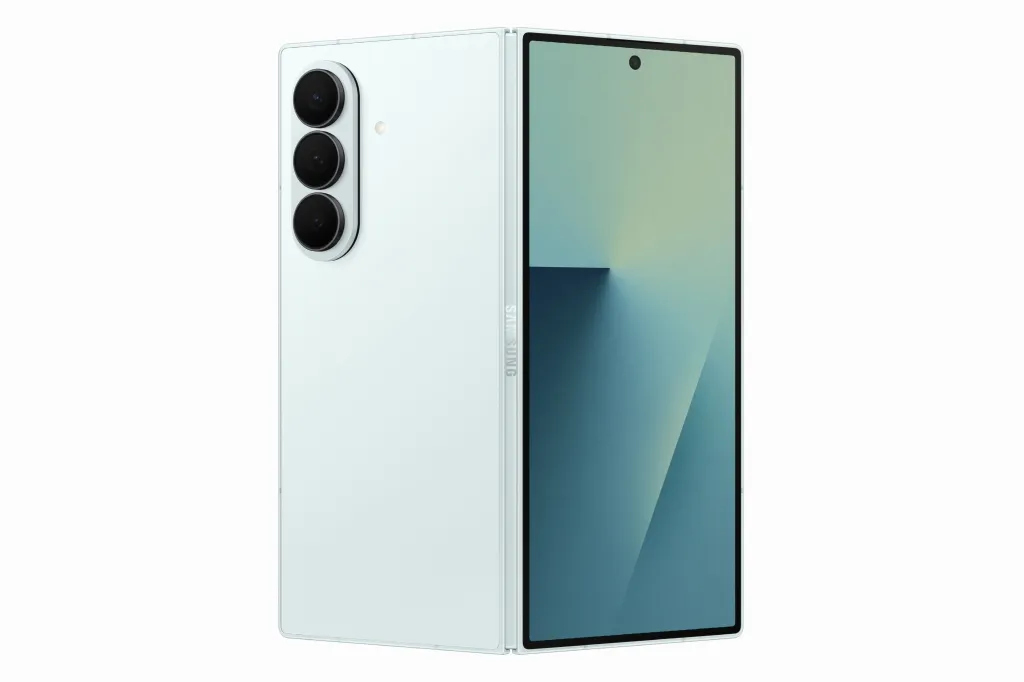
One significant gap in Motorola's disclosures: the company has not published physical dimensions or weight for the Razr Fold, per CNET. Samsung's Z Fold 7 weighs 215g, measures 8.9mm folded and 4.2mm unfolded, and features a redesigned Armor Flex hinge that is 27% thinner and 43% lighter than its predecessor, per Geeky Gadgets and the Samsung Newsroom. Those dimensions push the Z Fold 7 closer to slab-phone territory than earlier book-style foldables. Portability is a primary selling point in this category, and the absence of equivalent data from Motorola is worth noting before drawing hardware conclusions.
Camera and software: Samsung's depth meets Motorola's unknowns
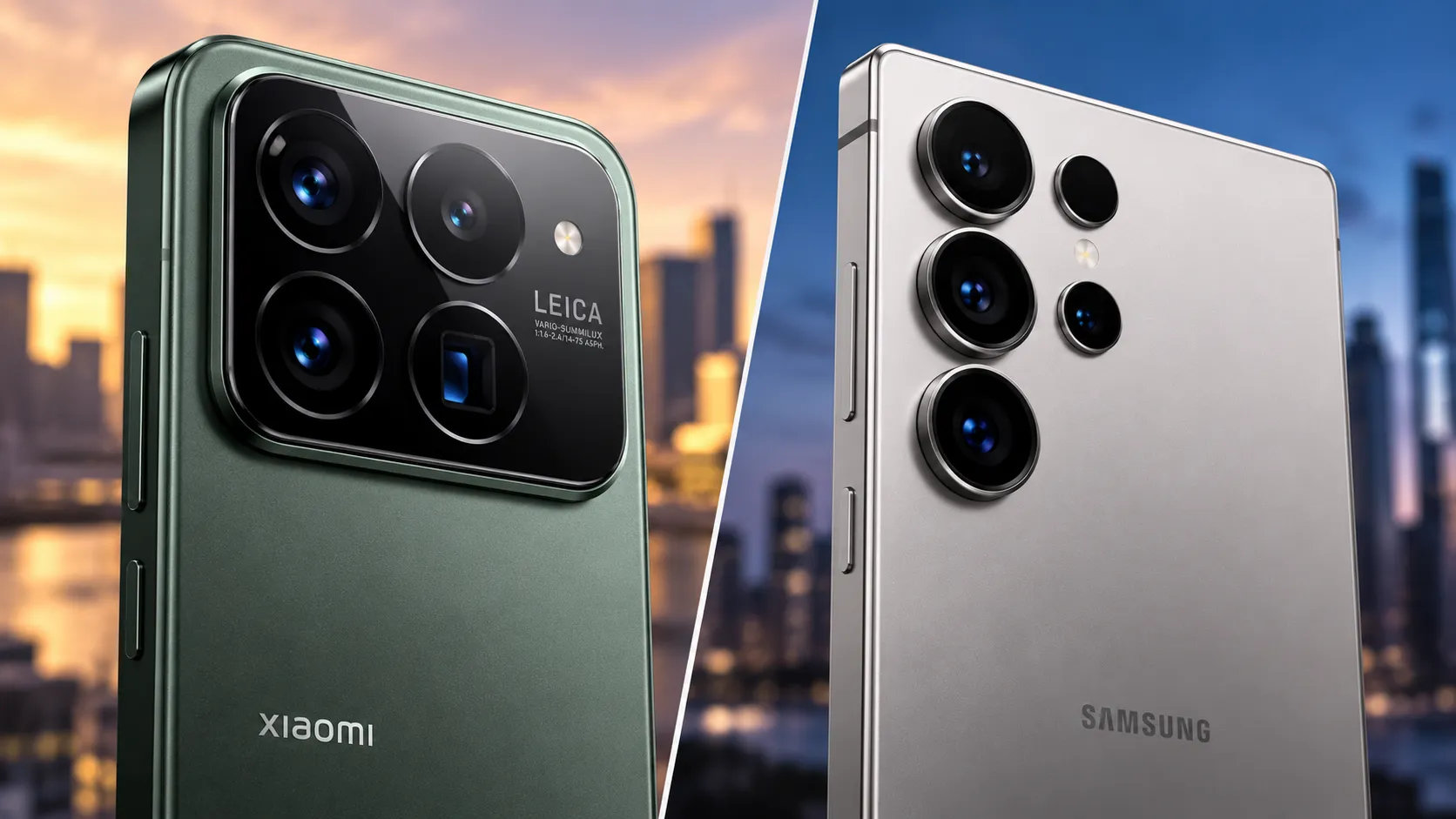
The two phones take philosophically different approaches to rear cameras. The Razr Fold uses a uniform system: three 50MP lenses covering wide, ultrawide, and telephoto, plus a 32MP cover selfie and 20MP inner selfie. Samsung runs an asymmetric configuration: a 200MP main sensor, a 12MP ultrawide with autofocus, and a 10MP telephoto, with 10MP selfie cameras on both screens, CNET reports. Megapixel counts alone tell you almost nothing useful; sensor size, aperture, computational processing, and lens quality determine actual output. But these represent genuinely different theories about where image quality comes from.
Samsung's camera claims are detailed and come from a platform Samsung has iterated in public across several generations. According to the Samsung Global Newsroom, the Z Fold 7's 200MP main sensor captures images 44% brighter and four times more detailed than the Fold 6, with 10-bit HDR video, LOG format support for post-production editors, and a generative AI editing tool that reportedly delivers an 18-fold reduction in mis-generation errors compared to its predecessor. The ultrawide lens gained autofocus for the first time in the series, enabling macro photography. These are Samsung's claims, made in Samsung's marketing materials. They do, however, describe a system with multiple hardware cycles and a documented iteration history behind it. Motorola's camera has neither.
There is no independent testing of the Razr Fold's camera at this stage. Low-light performance, zoom quality, video stabilization, and the practical performance gap between the two chipsets Motorola's Snapdragon 8 Gen 5 versus the Snapdragon 8 Elite for Galaxy in Samsung's device are all unresolved, as CNET notes. Comparing cameras right now means comparing claim documents.
The software gap is where Samsung's iteration advantage becomes concrete and observable. Both phones ship with Android 16 and promise seven years of OS and security updates, CNET reports. The version numbers match. The experience behind them doesn't. Samsung's One UI 8 includes foldable-specific multitasking layouts, Flex Mode optimizations for app use across the hinge, and DeX support for desktop-style output to an external display, per the Samsung Newsroom. These features have been refined across multiple hardware generations. Since this is Motorola's first book-style foldable, it is building its large-format software foundation from scratch, and that gap is likely to show up in daily use well before any spec comparison becomes relevant.
Value and long-term ownership: what the sticker price misses
The entry configuration comparison is real and worth taking seriously. At $1,900 for 512GB, Motorola's starting point costs $100 less and delivers double the base storage of the $1,999.99 Z Fold 7 at 256GB, per CNET and the Samsung Newsroom. For a buyer in an ecosystem-agnostic position comparing configurations on a spreadsheet, that advantage is real. For a buyer already embedded in Samsung's Galaxy ecosystem, with SmartThings, Galaxy Watch integration, and DeX as part of daily life, the switching cost may exceed the price delta.
The stylus situation represents a concrete opening for Motorola that Samsung created itself. The Razr Fold supports Motorola's Moto Pen, sold separately for $100. Samsung removed S Pen support entirely from the Z Fold 7, as both CNET and Geeky Gadgets note. For buyers who relied on the S Pen for annotation or note-taking on a large inner display, this is a step backward from Samsung. The caveat is significant: nothing is known yet about the Moto Pen's latency, palm rejection, or software integration depth, all areas where the S Pen set a high bar over several generations. The use case exists; whether Motorola's execution meets it remains unverified.
Durability data is one-sided in Samsung's favor. The Z Fold 7 carries an IP48 water resistance rating and earned an EU durability grade of "A," though its repairability score landed at "C," with battery and display assemblies secured with strong adhesives that complicate repairs, Geeky Gadgets reports. No equivalent durability or repairability data exists for the Razr Fold. On a $1,900 device with moving parts, that unknown carries real weight.
Samsung Care+ with Theft and Loss covers cracked screen and battery repairs for $0, accessible at more than 700 authorized service locations nationwide, per the Samsung Newsroom. For an expensive foldable with a hinge, that network is a meaningful ownership advantage: the difference between a next-day fix and an extended mail-in process. Motorola's service coverage for a brand-new, first-generation form factor is unestablished.
Motorola Razr Fold vs Samsung Galaxy Z Fold 7: first-generation risk vs mature execution
Foldable phones carry mechanical risks that conventional slabs don't. Hinges cycle hundreds of thousands of times. Crease behavior changes with temperature and extended use. Flexible displays flex in ways flat glass was never designed to. Samsung has spent seven generations working through those failure modes. The Z Fold 7's Armor Flex hinge is 27% thinner and 43% lighter than its predecessor, a refinement that only exists because earlier versions had problems worth solving, Geeky Gadgets reports. Motorola is starting that learning curve now. The Razr Fold may be well-engineered; there is simply no field evidence yet.
Timing adds a layer of complexity that affects both devices. Samsung is expected to announce its next foldable generation within months, though it hasn't confirmed any details, CNET notes. A Z Fold 7 purchased today is a late-cycle acquisition. Motorola's Razr Fold is entering as a first-generation product with no track record in this category. Neither position is ideal. The Z Fold 7 case gets stronger if Samsung discounts it ahead of a new launch; the Razr Fold case gets stronger once independent reviews confirm the hardware performs as advertised.
The buyer framework breaks down into three paths:
- Buy the Razr Fold if battery life and charging speed are non-negotiable priorities, maximum base storage at the lowest entry price matters to your decision, stylus support has a place in your workflow, and you're willing to accept first-generation software and unproven durability.
- Buy the Galaxy Z Fold 7 if you want the most refined foldable hardware and software currently available, a 200MP main camera in a system Samsung has iterated across multiple generations, and access to a broad service network for what is likely a two-year-plus device investment.
- Wait if camera quality and hinge durability are your primary deciding factors. Independent Razr Fold reviews will resolve most of the open questions within weeks of the May 21 launch, and Samsung's next-generation announcement may shift Z Fold 7 pricing in the meantime.
What this comparison actually tells you
Motorola has built the Razr Fold around the most documented frustrations with book-style foldables: a 6,000mAh battery against Samsung's 4,400mAh, 80W charging against 25W, and double the base storage at a lower starting price, per CNET. That's a deliberate product strategy, not a coincidence, and it deserves to be taken seriously.
Samsung's counterargument isn't just specs. It's seven generations of hinge engineering, a 200MP main camera in a system Samsung has iterated publicly across multiple hardware cycles, One UI 8's foldable-specific software depth, and a service network spanning more than 700 authorized locations, per the Samsung Newsroom. Maturity costs money. At roughly $2,000 for a device most buyers will carry for two or three years, it may be worth it.
Counterpoint Research projects book-style foldables will represent roughly 65% of global foldable volume this year, up from 52% in 2025, according to 9to5Google. Motorola has entered that market at a genuine moment of category expansion. Whether the Razr Fold holds up under the scrutiny of independent testing is the question that will define whether this is a genuine challenger or an impressive spec sheet. That answer arrives in a few weeks.


Comments
Be the first, drop a comment!