





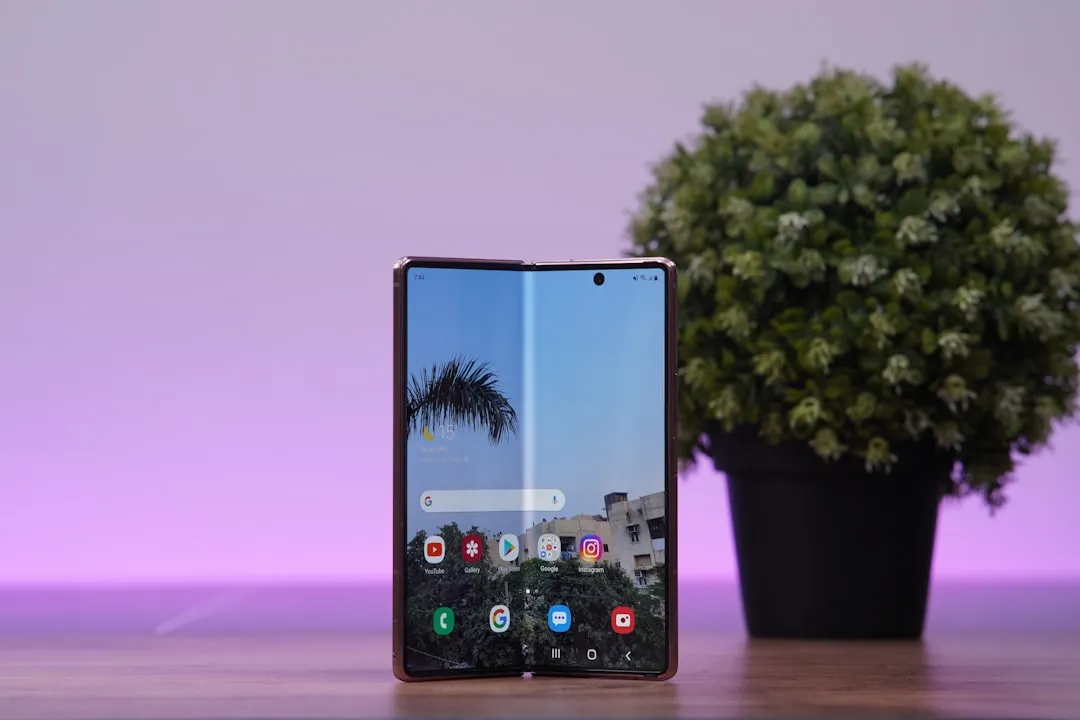
Galaxy Z Fold 8 Crease-Less Inner Display and Wider Screen Explained
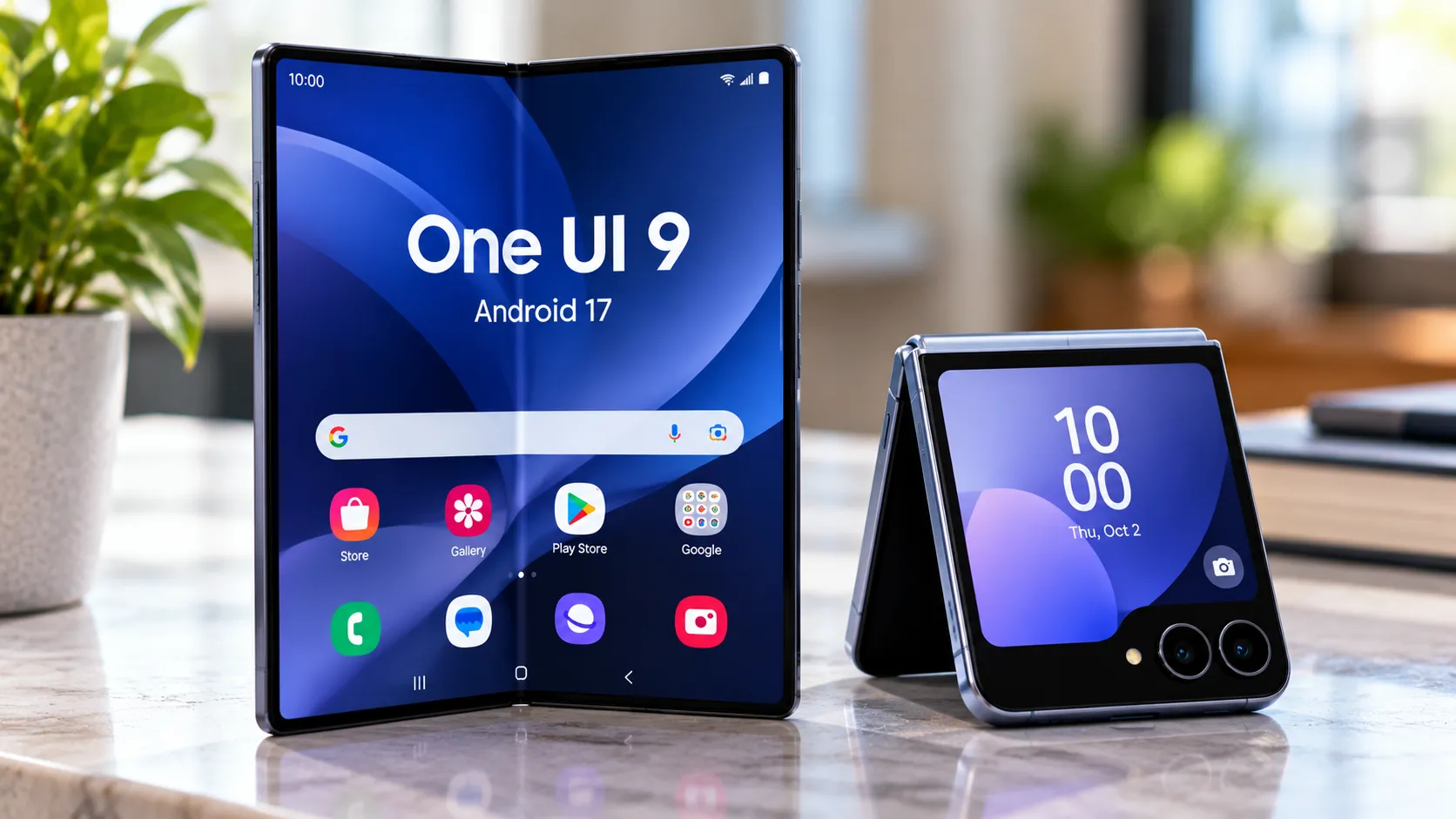
Samsung's upcoming Galaxy Z Fold 8 may ship with a crease-less inner display and a fundamentally wider screen ratio, according to leak reporting from the past two months. If both changes land as rumored, they would address the two most persistent complaints about foldable inner screens: the ridge that runs down the center, and proportions too tall and narrow to feel like a real tablet. Samsung is expected to announce the lineup at Galaxy Unpacked on July 22.
There's a catch. The tipster making the strongest crease claim has also, separately, said the improvement over the Fold 7 might be modest. Those two positions don't reconcile, and the announcement is three weeks away.
What's actually being reported
Samsung Display accidentally showed a crease-less foldable OLED panel at MWC earlier this year, and leak reporting from last month suggests both the Fold 8 and a second, wider book-style model are expected to use it, according to SamMobile.
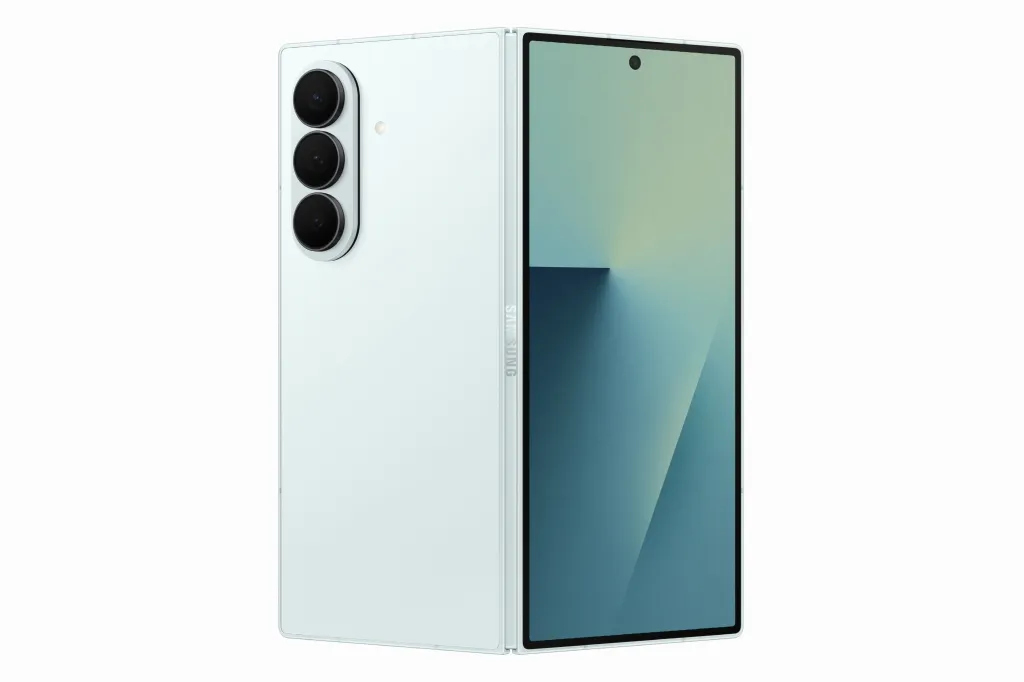
The second model, referred to in leaks as either the Fold 8 Wide or Fold 8 Ultra, reportedly carries a 7.6-inch inner display with a 4:3 aspect ratio, a shape closer to a compact tablet than anything Samsung has shipped in a Fold before, SamMobile reported six weeks ago. This piece treats it as the wider model throughout, since neither name is confirmed.
Tipster Ice Universe, who has a credible record on Samsung hardware, claims crease control on the Fold 8 series will match OPPO's Find N6. OPPO marketed the Find N6 specifically on the near-invisibility of its fold line, achieved through a high-resolution 3D printing process that fills the microscopic surface gaps created by flexing, SamMobile noted last month. An earlier post from the same tipster, however, said the crease improvement may not be significant compared to the Fold 7. That directly conflicts with the newer claim, and what remains unknown is whether Samsung's method targets surface feel, visual appearance, or both.
On proportions: the Fold 7's inner display runs at roughly a 3.33:3 aspect ratio, squarer than a phone but still noticeably taller than wide, per SamMobile two months ago. The standard Fold 8 is expected to ship with a wider ratio than any previous Fold model. The wider second model goes further: leaked dimensions put it at approximately 124mm tall and 161mm wide when open, with a 4:3 inner display, SamMobile reported two months ago.
The leak record suggests Samsung is running two distinct foldable philosophies in parallel this year: a standard Fold for buyers who want the familiar form with incremental improvements, and a wider model that represents a more deliberate break from the traditional Fold shape.
What changes on the Galaxy Z Fold 8 inner display if the leaks hold
A flatter crease and a wider canvas aren't improvements in the abstract. They address specific use cases where the current Fold geometry underperforms.
Reading and web browsing: On a tall, narrow inner display, long-form text either requires constant scrolling or renders in a column narrow enough to feel like a news ticker. A 4:3 canvas renders full paragraphs at natural widths. The crease running vertically through the center becomes less intrusive when both halves of the screen have enough horizontal real estate to read from independently.
Split-screen and multitasking: Two apps side by side on a 3.33:3 inner display give each app a strip roughly the width of a standard phone. On a 4:3 surface that is also wider in absolute terms, each app gets something closer to a tablet pane, enough horizontal space to show a full email, a mapped route, or a document without collapsing to a mobile layout.
Video: The 4:3 ratio isn't ideal for widescreen content, and 16:9 video will still letterbox. It works considerably better for anything shot at standard aspect ratios, including most short-form video, video calls, and photo review.
The crease has a cost beyond the visual. A 2025 UX framework published in the International Journal of Industrial Engineering identified screen continuity as one of the hinge's primary roles in foldable experience, the sense that the display reads as one surface rather than two halves, Liu, Dong, & Rau found. A visible crease breaks that continuity even when the display is technically whole. Reducing it changes how users perceive and interact with the open screen, not just how it photographs.
None of this is confirmed behavior on Fold 8 hardware. These are the use cases the rumored changes would improve if the reporting holds.
The constraint Samsung can't ship around
Better display geometry creates a new problem Samsung doesn't control. Apps that were barely optimized for the old Fold's proportions may handle the new ones worse before they handle them better.
A 2024 study tested 20 popular apps across three foldable devices and found the Samsung Galaxy Z Fold 4 showed inconsistent behavior or state loss in nine of them, with common failures including apps that didn't resize when the phone was unfolded and apps that lost their state entirely during the transition, effectively restarting when the screen changed, per the research.
The same 2025 UX framework identified state consistency and interface adaptation across folding states as essential to the foldable experience, separate from hardware quality, Liu et al. concluded. A flatter, wider display doesn't automatically inherit well-adapted software. The framework also found meaningful ergonomic differences between users with different hand sizes, with significant variation in fatigue and applied pressure depending on how hinge and dimensions work together. A shorter, wider device will distribute those forces differently from what current Fold owners are used to.
A wider inner display may actually make app continuity failures more visible. On the narrow Fold 7, a poorly adapted app might display awkwardly but remain functional. On a 4:3 canvas, the same app's failure to fill the available space becomes hard to miss. No sourced reporting covers One UI optimizations specifically for the wider inner display, and there's no public confirmation that app continuity problems documented on older Fold hardware have been addressed at the platform level for the Fold 8.
What Samsung is choosing not to do
The Fold 8 series appears to be a focused display upgrade, not a thorough one.
Privacy Display, the anti-peeping screen technology that debuted on the Galaxy S26 Ultra earlier this year, is not expected to appear on either Fold 8 model, SamMobile reported last month. S Pen support, which earlier speculation raised as a possibility, is also reported to be absent, SamMobile noted six weeks ago. Whether the crease-less panel comes with brightness improvements remains unconfirmed, per SamMobile.
The omissions point to a consistent priority: the two changes that most directly affect how the open screen feels to use. Buyers who wanted a stylus or a privacy screen on a foldable will need to wait.
What July 22 needs to answer
The most consequential questions aren't ones leaks can settle.
On the crease: the same tipster has offered two contradictory positions, one claiming OPPO-level improvement, an earlier one suggesting marginal progress over the Fold 7, SamMobile reported last month and six weeks ago. The announcement won't end the debate; hands-on time will.
On the software side, app continuity failures on foldables were documented as recently as 2024, with no public confirmation they've been resolved for the Fold 8 generation. A wider canvas makes those failures more conspicuous, not less.
The things worth watching at launch aren't on the spec sheet: how visible the crease is under angled light, whether apps resize cleanly during fold and unfold, how split-screen content lays out on the wider model, and how the shorter body feels closed in one hand. Those are the tests that will determine whether Samsung's display bets this year actually translate into a better experience, or just a more interesting one.

Comments
Be the first, drop a comment!