





What Galaxy S26 Ultra Privacy Display Poll Results Actually Mean for Buyers
A poll embedded in an Android Authority column from last month drew 7,036 votes on a single question: are you satisfied with the Galaxy S26 Ultra Privacy Display? Strip out the 35% who hadn't used the phone, and 68% of actual owners said yes. That's the strongest positive signal yet for Samsung's most debated flagship feature, and it tells a more specific story than it first appears.
The same Samsung Galaxy S26 Ultra privacy screen was called "a painful downgrade" by Android Police shortly after launch, nearly three months ago. Early buyers reported eye strain, nausea, and returns. Measured brightness fell versus the S25 Ultra. The poll didn't disprove any of that. What it revealed instead is that most buyers are apparently willing to live with the tradeoffs the Privacy Display introduces. A meaningful minority is not.
That distinction matters more than the headline number. The polling shows tolerance, not enthusiasm. The Galaxy S26 Ultra Privacy Display clears a satisfaction threshold for the majority of users, but partly because most people use it occasionally, if at all, while the real cost lands hardest on those genuinely affected by dimmer screens, altered reflectivity, or display-flicker sensitivity. What follows examines what the polls actually measured, what they missed, and why broad acceptance of a feature isn't the same as evidence the compromise was worth making.
What the Galaxy S26 Ultra Privacy Display poll results prove and what they don't
The headline finding holds on its own terms. The Android Authority poll, whose results were published today, found 44% of all respondents satisfied with the S26 Ultra's screen, 20.5% dissatisfied, and 35% who had never used the device. Remove non-owners and the satisfied share rises to 68%, with 32% dissatisfied, roughly a 2:1 split among people with actual hands-on experience.
A separate PhoneArena poll from about three months ago pointed in the same direction for a different question: 45.58% of respondents said they weren't experiencing display issues, while 22.62% said quality hadn't met their expectations. That poll mixed owners with prospective buyers, so it's better read as a measure of sentiment around the controversy than as evidence of owner experience specifically.
Real owner comments in the Android Authority piece reflect genuine satisfaction. One commenter who upgraded from the S22 Ultra described the S26 Ultra screen as visibly brighter and more color-accurate. Another said they had no issues with the privacy feature or brightness whatsoever.
The polls establish something real, but the gap in what they measured is equally important. None of them asked how often owners actually activate privacy mode. A user who triggers the feature twice a week during their commute and otherwise ignores it has every reason to report display satisfaction. They're absorbing the hardware compromise without regularly confronting it. The Galaxy S26 Ultra Privacy Display poll results confirm the controversy didn't produce mass defection; they don't establish that the Privacy Display was a meaningful reason anyone bought the phone.
One more piece of context worth noting: an Android Authority survey from about three months ago found only 28% of respondents cited display specs as a primary purchase driver, while 33% said they didn't care about 10-bit performance at all. The majority of buyers weren't evaluating the screen with the same intensity as the reviewers criticizing it, which makes broad satisfaction numbers easier to achieve and harder to interpret.
How the Samsung Galaxy S26 Ultra privacy screen works and what it costs
The hardware approach is genuinely novel. Android Police reported nearly three months ago that Samsung's Flex Magic Pixel system splits the OLED panel into two sets of subpixels: standard wide pixels that scatter light across a broad viewing cone, and narrow pixels fitted with internal louvers that channel light almost straight forward. Switching on privacy mode deactivates the wide pixels entirely, so anyone looking from the side sees black while the person directly in front of the screen sees normally.
Software automation makes it practically useful. The feature can trigger for specific banking apps, when notifications appear, or when the user enters a PIN. Gizmodo's long-term review, published today after several months of testing, found that per-app and per-notification use is where it earns its keep most reliably.
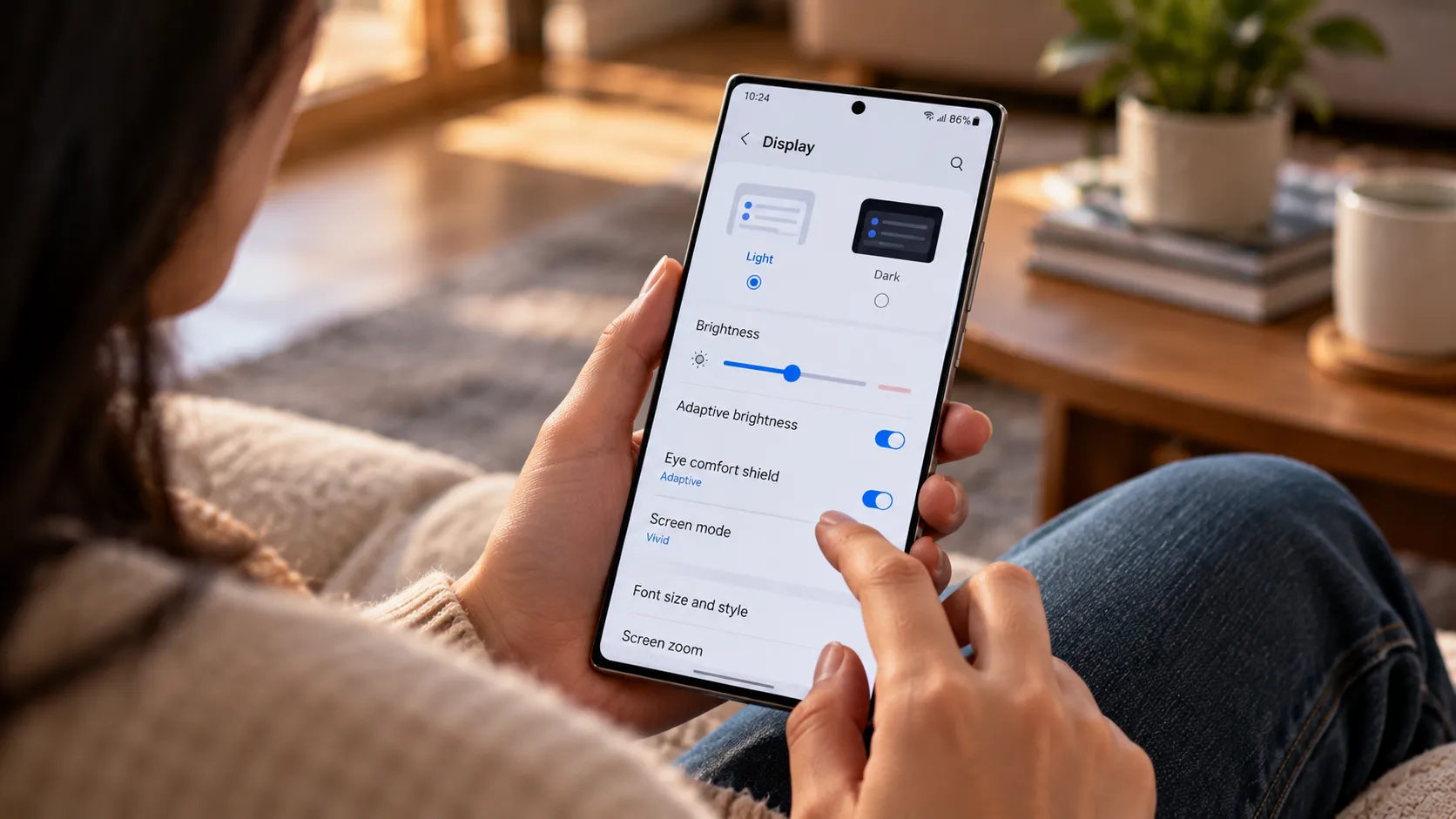
The two modes carry meaningfully different costs. Gizmodo described a standard mode that lightly tints the screen to narrow the effective viewing angle, and a maximum privacy protection mode that makes side-viewing nearly impossible but causes a significant drop in both brightness and pixel clarity, a tradeoff the review called real and noticeable. For most use cases, the standard mode is sufficient.
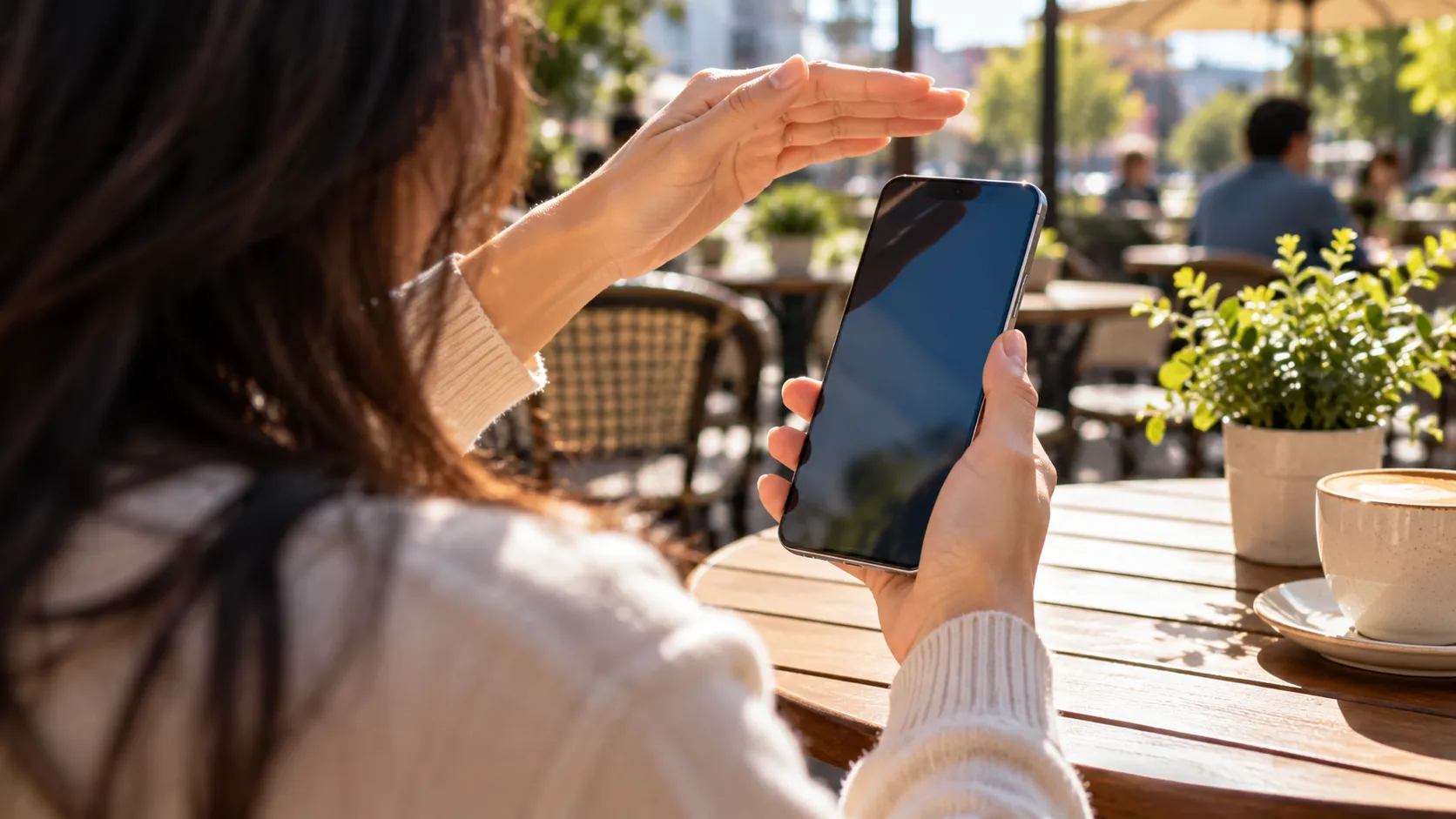
The brightness regression is measurable. Android Central testing, cited by Android Police, found the S26 Ultra peaks at least 300 nits lower than the S25 Ultra at maximum brightness. A column published by Android Authority last month put the S26 Ultra at around 2,600 nits peak versus the Pixel 10 Pro's 3,300 nits, a 700-nit gap that was noticeable enough in direct UK sunlight to make outdoor photography more cumbersome on the Samsung.
The hardware tradeoff exists whether or not users think about it, but the most obvious penalties surface when privacy settings are active. A buyer who enables Galaxy S26 Ultra maximum privacy protection only for banking apps and rarely runs that mode will never stress-test the compromise. That structural reality goes a long way toward explaining the poll numbers, not because owners are wrong, but because most of them aren't regularly in the conditions where the tradeoff bites.
The case against: when the tradeoff isn't abstract
The most serious criticism isn't about preferences. Android Police reported early adopters describing eye strain, dizziness, and nausea, and offered a mechanical explanation rooted in the dual-subpixel design. When the phone tilts slightly during normal use, the narrow subpixels can momentarily fall outside the viewer's direct sight line and then snap back, creating a subtle flicker or shimmer that forum users named the "punch effect," one that may force continuous micro-adjustments in eye focus.
Migraine reports surfaced, though causation remains unproven. An Android Authority columnist writing last month reported that extended use triggered migraines, and cited accounts of customers returning the device over similar symptoms. The same column was clear-eyed about the limits of that evidence: no hard data ties those symptoms specifically to the Privacy Display hardware. The culprit could be the brightness reduction, Samsung's 480Hz PWM frequency, the weakened anti-reflective coating, or some combination of all three.
The eye care issue runs deeper than the privacy feature itself. An Android Authority survey from about three months ago found more than 70% of respondents wanted better eye care features from Samsung, and flagged the 480Hz pulse-width modulation frequency as a source of frustration for multiple users, a concern that exists independently of whether anyone activates privacy mode.
The 32% dissatisfaction figure among actual owners deserves context, not dismissal. For any flagship phone priced above $1,000, one in three owners reporting display dissatisfaction is a meaningful segment. Self-selection cuts in both directions, so the real-world figure could be higher or lower depending on who chose to respond, but it's not a number to wave away.
What remains genuinely unresolved: no independent lab testing in the available reporting establishes standardized flicker measurements, PWM behavior with privacy mode active versus inactive, or viewing-angle performance under controlled conditions. The criticism is credible and grounded in plausible mechanics. The full causal picture hasn't been documented rigorously.
Is the Galaxy S26 Ultra Privacy Display worth it for most buyers?
The reporting suggests a predictable split in user experience. Buyers who primarily use their phone indoors for content, messaging, and apps, and who activate privacy mode occasionally for sensitive tasks, are likely to land in the satisfied majority. The feature serves them well when they need it and recedes when they don't.
The group that should pay closer attention before buying: people who frequently use their phone outdoors in bright conditions, anyone with documented sensitivity to display flicker or PWM, and chronic migraine sufferers. Android Police flagged this group explicitly, and the brightness gap versus competitors like the Pixel 10 Pro is large enough in direct sunlight to affect practical usability, not as a theoretical concern but as a documented real-world experience.
Gizmodo's verdict after months of use, "nice to have, not essential," describes a feature that adds genuine value in specific scenarios without transforming the ownership experience. That's a reasonable outcome for a hardware innovation at this stage. It also means the people most likely to notice the downside are exactly those who stress the display hardest.
For buyers in the higher-risk group, an in-person test matters more than the topline poll result. Test it outdoors if outdoor use is part of your day. Run maximum privacy mode for a few minutes and note how the brightness drop registers. The polling majority is probably right that most people will be fine, but "most people" stops being a useful reference point the moment you already know you're sensitive to the specific factors the critics identified.
What the data actually settles
The poll confirms tolerance, which is not nothing. Sixty-eight percent owner satisfaction means the Samsung Galaxy S26 Ultra privacy screen controversy didn't produce broad buyer regret. From a product-strategy perspective, Samsung may consider that good enough.
The question the polling can't answer is whether buyers would knowingly accept the same brightness and comfort penalties again if the Privacy Display were the explicit choice on the table. The surveys measured display satisfaction broadly. They didn't ask owners whether the privacy feature was worth what it cost them in peak brightness, anti-reflective performance, and potential flicker sensitivity.
What Samsung's next move with Flex Magic Pixel should probably depend on is the signal buried in the Android Authority survey data from about three months ago: more than 70% of readers want better eye care features. That's a clear indication the direction of travel should be toward reducing display-related discomfort, not compounding it. If a future iteration delivers comparable privacy protection without the brightness regression and flicker concerns, satisfaction numbers will mean something more than managed tolerance.
Until then, "most users are fine with it" is an accurate headline that tells only part of the story.

Comments
Be the first, drop a comment!