



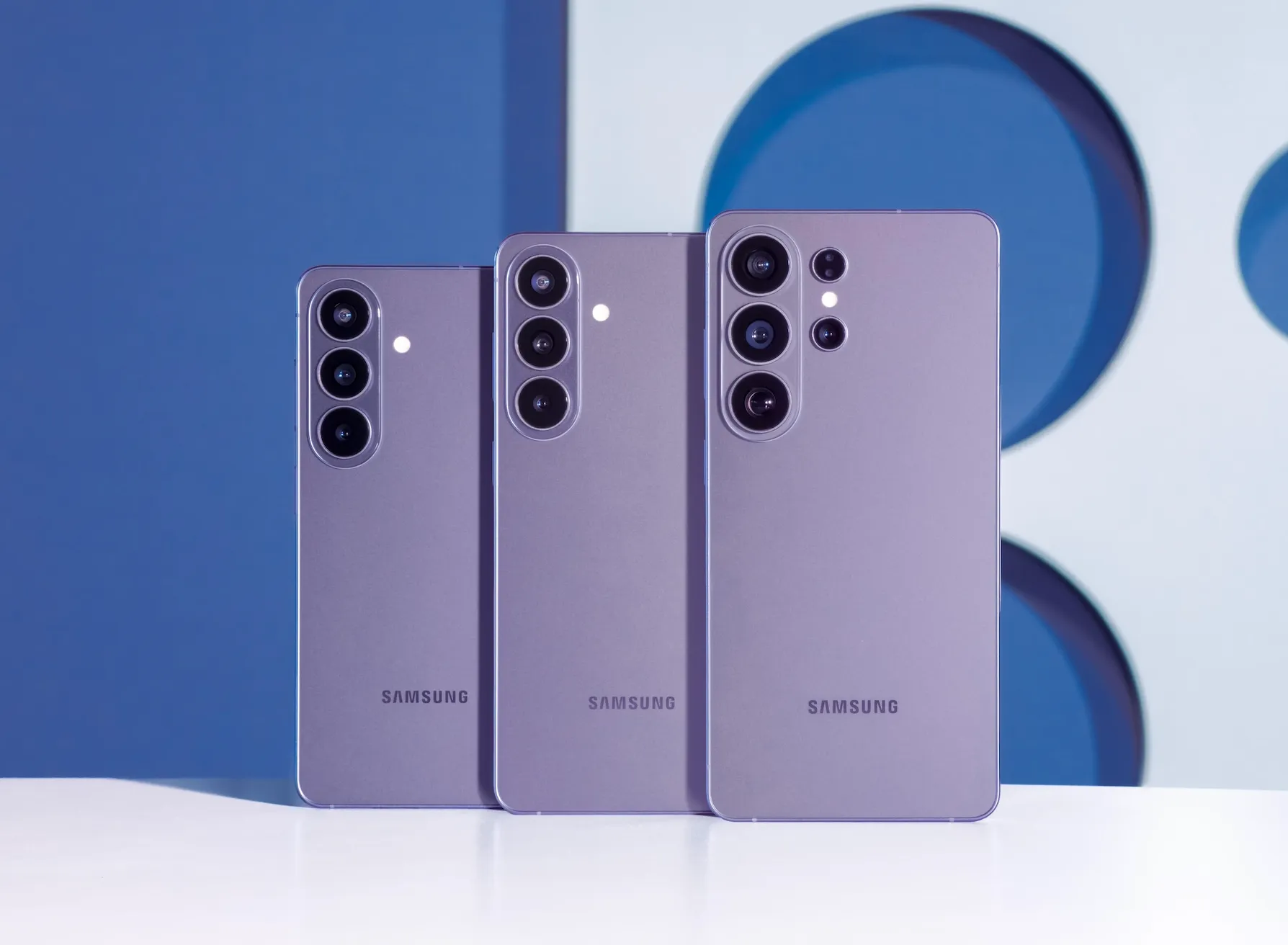
The scam call epidemic has become one of the most persistent annoyances in smartphone ownership, and if you're a Galaxy user, you've probably wondered when Samsung would finally catch up to Google's anti-spam arsenal. The Galaxy S26 might just be the device that changes the game. According to reports, Samsung appears poised to adopt Android's CallCore framework—a powerful feature that's been exclusive to Pixel devices until now.
The update expands how Samsung phones address robocalls, spam, and scam attempts. Beyond basic call blocking, the feature introduces additional tools aimed at improving communication security and filtering unwanted calls.
What exactly is Android CallCore and why does it matter?
If you've ever used a Pixel phone, you've likely experienced the magic of Call Screen—that AI-powered assistant that answers calls for you and filters out the junk before it ever reaches your ears. Behind that feature sits Android CallCore, the underlying framework that makes advanced call management possible. Research reveals that CallCore provides a standardized API that enables deep integration between the operating system and telephony functions, allowing for real-time call analysis and intelligent screening.
Let's break it down: Unlike traditional caller ID services that rely on crowdsourced databases or subscription models, CallCore leverages on-device machine learning to identify suspicious patterns and behaviors. The framework operates at the system level, meaning it can intercept and analyze calls before they trigger your ringtone—think of it as a bouncer for your phone, checking IDs before letting calls through the door. This system-level access provides a layer of protection that third-party apps simply can't match because they lack the deep telephony permissions CallCore enjoys.
Here's what makes this particularly powerful: CallCore examines call metadata like number patterns, call duration predictions, and behavioral signatures—such as rapid-fire dialing across number ranges—that indicate robocall operations. When a call comes from a number that's contacted thousands of other users in the past hour, CallCore's pattern recognition flags it before your phone rings once. This is the technology that's kept Pixel users relatively shielded from the scam call onslaught, and now Samsung users might finally get the same treatment.
How Samsung's implementation could differ from Google's approach
But Samsung rarely adopts Google features without putting its own spin on them—sometimes for better, sometimes for worse. Reports indicate that Samsung's adoption of CallCore could integrate seamlessly with One UI's existing communication features, potentially creating a more unified experience than what Pixel offers.
Samsung already has Smart Call, its current spam detection system, but it's been criticized for being less effective than Google's solution and for requiring users to agree to data sharing with third parties. Smart Call currently requires manually enabling spam protection for each region and often misses sophisticated scams that spoof local numbers—a frustration many Galaxy users know all too well. The transition to CallCore could mean Samsung replaces or supplements Smart Call with a more privacy-focused, on-device solution that doesn't route your call history through external servers.
This One UI integration sets the foundation for something bigger: Samsung's entire Galaxy ecosystem. Given Samsung's ecosystem approach, we might see CallCore integration extend to Galaxy tablets and even Galaxy Watches, creating a comprehensive anti-scam shield across all your devices—something Google hasn't fully explored with its own hardware lineup. Imagine answering a screened call on your Galaxy Watch with a transcript of the AI's conversation already displayed, or having your Galaxy Tab automatically block the same scammer that just tried your phone. That's the kind of cross-device intelligence Samsung's ecosystem could enable, turning CallCore from a single-device feature into a coordinated defense system.
The privacy angle: on-device processing vs. cloud-based solutions
Here's where things get interesting from a trust perspective. Traditional caller ID and spam detection services—including Samsung's current Smart Call—typically route call metadata through cloud servers, raising legitimate privacy concerns about who has access to your call history and contact patterns. Every time someone calls you, services like these send information about that call to remote servers for analysis. It's effective, but it means your calling patterns are being tracked and stored elsewhere.
According to reports, CallCore's architecture takes a fundamentally different approach: the analysis happens locally on your phone rather than on remote servers. The ML models run directly on your device's processor, examining calls in real-time without sending data anywhere. This aligns with the broader industry shift toward edge computing and privacy-first design—the same philosophy behind Apple's on-device Siri processing and Google's Federated Learning approach, where AI improves without centralizing user data.
For Samsung, which has faced scrutiny over data handling practices in the past, adopting CallCore could be a significant trust-building move with privacy-conscious consumers. The framework also gives users more granular control over how calls are screened and what information is shared, research shows. Users should be able to toggle whether CallCore analyzes all unknown numbers or only those not in their contacts, and choose whether to save screening transcripts locally or delete them immediately after each call.
Bottom line: if Samsung implements this correctly, Galaxy S26 users could get powerful spam protection without sacrificing their call privacy—a combination that's been elusive in the Android ecosystem outside of Pixel devices.
Comparing CallCore to existing solutions: what changes for users
If you're currently using a third-party call blocking app or relying on your carrier's spam protection service, you might wonder what CallCore actually brings to the table. The key difference is integration depth and real-time responsiveness. Third-party apps operate with limited system permissions and can't always intercept calls before they ring through. Apps like RoboKiller and Nomorobo can only access calls after your phone starts ringing, adding 2-3 seconds of delay before they can even begin analysis.
Carrier-based solutions, meanwhile, vary wildly in effectiveness and often come with subscription fees or limited free tiers. AT&T's Call Protect, Verizon's Call Filter, and T-Mobile's Scam Shield each take different approaches with different success rates, and they typically require you to opt into multiple services and manage separate settings.
CallCore overcomes both limitations by operating at the system level with full telephony access. This means it can analyze calls in milliseconds and make screening decisions before your phone ever makes a sound. The result: fewer false positives (legitimate calls being blocked) and fewer false negatives (scam calls getting through). For Galaxy S26 users, this could translate to a dramatically cleaner call experience without the need for multiple overlapping protection services.
Here's what you need to know: Right now, you might be running a third-party app, paying for your carrier's premium tier, and manually blocking numbers—that's three different databases, three privacy policies, and three potential failure points. CallCore consolidates this into one system-level solution that works automatically in the background. You'll likely still want to keep your contacts updated and report spam when it does slip through, but the baseline protection should be significantly stronger than what current Galaxy devices offer.
What this means for Samsung's competitive position
Let's talk market dynamics for a moment. Google's Call Screen feature has been one of the Pixel line's most praised capabilities, frequently cited in reviews and user testimonials as a reason to choose Pixel over other Android phones. By bringing CallCore to the Galaxy S26, Samsung effectively neutralizes one of Google's key differentiators in the premium Android market.
For Google, this represents a calculated trade-off: wider CallCore adoption strengthens Android's competitive position against iPhone's integrated spam filtering, even if it reduces Pixel's uniqueness. The real winner is the Android ecosystem itself, which gains a standardized defense against an escalating problem that affects hundreds of millions of users worldwide.
This improved user experience has significant competitive implications beyond just Samsung versus Google. The move also puts pressure on other Android manufacturers to follow suit, potentially creating an industry-wide standard for call protection. OnePlus and Xiaomi have relied on third-party partnerships with services like Truecaller and Hiya—if Samsung proves CallCore's superiority, these manufacturers will face user pressure to follow suit, potentially making CallCore a standard Android feature by 2026.
For consumers, this competition is unequivocally positive—it means better protection across the board regardless of which Android device you choose. Research indicates that Samsung's massive market share means CallCore adoption could bring advanced spam protection to hundreds of millions of users who've been underserved by existing solutions. If Samsung executes this well, it could set a new baseline expectation for what smartphone call management should look like in 2025 and beyond—making robust AI-powered spam protection a standard feature rather than a Pixel exclusive.
The road ahead: implementation challenges and user expectations
Of course, realizing this competitive advantage depends on flawless execution—and that's where things get complicated. Samsung will need to ensure CallCore integrates smoothly with carriers worldwide, each of which has different technical requirements and regulatory environments. Carriers like Verizon have proprietary call management systems that may conflict with CallCore's network-level interception. Samsung will need to negotiate API access and ensure CallCore doesn't interfere with carrier services like Number Share or Wi-Fi Calling—a complex technical and business challenge that could vary by region.
There's also the question of backward compatibility—will older Galaxy devices get CallCore through One UI updates, or will it remain exclusive to the S26 and newer models? The technical requirements for CallCore aren't trivial: it needs modern Android telephony APIs and sufficient processing power to run ML models in real-time. This likely limits it to recent flagship devices, though Samsung could potentially offer a simplified version to expand coverage.
Beyond technical integration, Samsung faces a human challenge: user adoption. Reports indicate that Samsung will need to communicate clearly about what data CallCore uses, how it protects privacy, and what users can expect in terms of accuracy and coverage. Even the best call screening technology is only effective if people understand how to use it and trust it enough to enable it. Samsung should include an interactive tutorial during first setup, showing users exactly what Call Screen sounds like and how to review blocked calls—Google's Pixel onboarding dedicates significant attention to Call Screen, and Samsung needs similar prominence.
The scam call landscape is constantly evolving, with fraudsters adapting their tactics to circumvent detection systems—spoofing local numbers, mimicking legitimate businesses, and using increasingly sophisticated social engineering. Samsung will need to commit to ongoing updates and improvements to keep the protection effective over time, with regular ML model updates delivered through Play Services to respond to new scam patterns as they emerge. The Galaxy S26 launch could mark the beginning of this journey, but the real test will be how Samsung supports and refines the feature in the months and years that follow.
Where do we go from here?
The potential addition of Android CallCore to the Galaxy S26 represents more than just a feature upgrade—it's a signal that Samsung is taking communication security seriously and willing to adopt Google's best-in-class solutions when they serve users better than proprietary alternatives. This move could finally give Galaxy users the robust scam call protection they've been requesting for years, closing a significant gap between Samsung and Pixel devices.
The implications extend beyond individual user experience to broader questions about platform standardization, privacy architecture, and competitive dynamics in the Android ecosystem. Reports shows that CallCore's on-device processing approach aligns with emerging privacy regulations and consumer expectations, positioning Samsung well for a future where data protection is increasingly paramount.
As we await official confirmation and details about the Galaxy S26's launch—likely at Samsung's Unpacked event in early 2025—one thing seems clear: the days of Galaxy users being second-class citizens in the fight against scam calls may finally be coming to an end. If CallCore appears in Samsung's presentation, expect immediate availability on the S26 with potential expansion to other flagship devices through One UI updates.
PRO TIP: In the meantime, Galaxy S24 and S25 users should continue using Smart Call or third-party solutions, but avoid committing to long-term subscriptions for premium call blocking services—CallCore may make them obsolete by mid-2025.
If you're tired of playing whack-a-mole with robocallers and spam, tired of missing important calls because you've learned not to answer unknown numbers, tired of subscription services that provide inconsistent protection, the S26 might just be worth the wait. And beyond spam calls, CallCore's framework could enable future features like AI-powered voicemail transcription, real-time translation during calls, or even fraud detection for suspicious caller requests—this is just the beginning of intelligent telephony on Samsung devices.


Comments
Be the first, drop a comment!