





Galaxy S24 S25 Battery Drain After April Update: What the Evidence Actually Shows
Samsung's April 2026 security patch arrived the way security patches always do: silently, pushed to devices overnight. What followed was considerably less quiet. Within weeks of the rollout, Galaxy S24 and S25 owners began flooding Reddit with a consistent complaint phones dropping from 75–90% charge to dead within a few hours of ordinary use, according to PhoneArena. That's not gradual degradation. That's a cliff.
Before that patch landed, the S25 had cleared 14 hours in PCMag's video streaming benchmark, an improvement over the S24 and consistent across the entire S25 lineup. That before-and-after gap is what this analysis is about.
One framing caveat upfront: the "nearly everyone is affected" narrative circulating online overstates what the evidence supports. There's no formal survey, no confirmed sample size, and no official word from Samsung. What exists is a credible volume of anecdotal reports, a suspicious timeline, and a plausible technical explanation for how a security patch could trigger this kind of regression.
What users are reporting and what the evidence can actually support
The complaints have a specific character. Reddit threads from Galaxy S24 and S25 owners describe sharp, sudden battery loss appearing in the weeks following the April patch, with some users reporting phones dropping from above 75% charge to zero within a few hours of normal use, per PhoneArena. Normal battery degradation fades gradually over months. This pattern looks like a regression, and the update is the most obvious variable that changed.
One detail adds diagnostic weight: battery complaints also surfaced from users of multiple generations of Samsung wearables during the same period, according to the same PhoneArena report. That cross-device pattern matters less as a parallel story than as a clue. If excessive drain is appearing across phones and wearables after Samsung's April rollout, it raises the probability that something in shared software infrastructure is involved, rather than a hardware fault specific to one device class.
The evidence has genuine limits. These reports are anecdotal, aggregated by one tech outlet, not a statistically representative sample. Samsung has not acknowledged a problem or identified a cause. Without controlled before-and-after diagnostics on the same hardware units, the connection between the patch and the drain is circumstantial. Compelling, but not confirmed.
The case for taking it seriously: the timing is specific, the symptom pattern is consistent, and the pre-update performance record makes a sudden regression look anomalous rather than expected.
What pre-update testing showed and why the gap matters
Before April, the Galaxy S25 had a well-documented performance baseline. PCMag measured 14 hours 15 minutes in its full-HD YouTube streaming test better than the S24's 13 hours 5 minutes on the same benchmark, and consistent across all three S25 variants, with every model clearing 14 hours. NotebookCheck logged 18 hours 2 minutes of Wi-Fi browsing and 26 hours 30 minutes of 1080p video playback under its own methodology. Both the S24 and S25 could also sit idle overnight with minimal battery loss, as MobileRadar noted in its comparative analysis. That last point matters because post-update battery problems often surface first as abnormal idle drain a useful early signal to watch for if you suspect your device is affected.
The hardware equation is unchanged. The S25 carries the same 4,000 mAh cell, 25W wired charging, and 15W wireless charging as the S24 before it, confirmed by both PCMag and NotebookCheck. Nothing physical in the device changed in April. The update did.
The S25's pre-update story wasn't uniformly strong, though. NotebookCheck observed early last year that the phone carries the same battery constraints as its predecessor and is losing ground to compact Chinese rivals on endurance. The device also overheated during stress testing, requiring a simplified CPU-only load test. The S25's baseline was acceptable, not exceptional context that matters when assessing how much a software regression could realistically hurt it. A phone operating near its limits has less room to absorb disruption than one running comfortably in reserve.
Galaxy S24 S25 battery drain after April update: what's most likely happening
Samsung relies on a larger battery combined with aggressive One UI power management to achieve its endurance figures a strategy that MobileRadar contrasts with Apple's approach of leaning on silicon efficiency and tight hardware-software integration. That architecture has a specific vulnerability: a security patch that disrupts the power management layer can produce outsized real-world battery losses without touching any hardware. The S25's 14-hour benchmark numbers were, in part, a product of careful software tuning. Disrupt that tuning and the numbers follow.
Several distinct mechanisms could plausibly explain what users are seeing. These are hypotheses based on common post-update failure modes, not confirmed causes from the current reporting but distinguishing between them matters because they point toward different fixes:
Post-update background indexing: Large system updates can trigger extended re-indexing or cache-rebuilding processes that run for hours or days after installation, causing temporary but severe drain that often resolves on its own or with a cache partition clear.
Modem or radio behavior change: A patch that alters how the phone manages cellular or Wi-Fi connections could significantly increase standby power draw, showing up as abnormal idle drain even when the screen is off.
Battery percentage misreporting: Some update-related bugs don't change actual consumption but corrupt the calibration between reported percentage and true charge level. The phone appears to drain faster when it may simply be reading the battery inaccurately.
Thermal management disruption: NotebookCheck flagged the S25 overheating under load even before April. A patch that worsens thermal regulation could increase power draw during any demanding task.
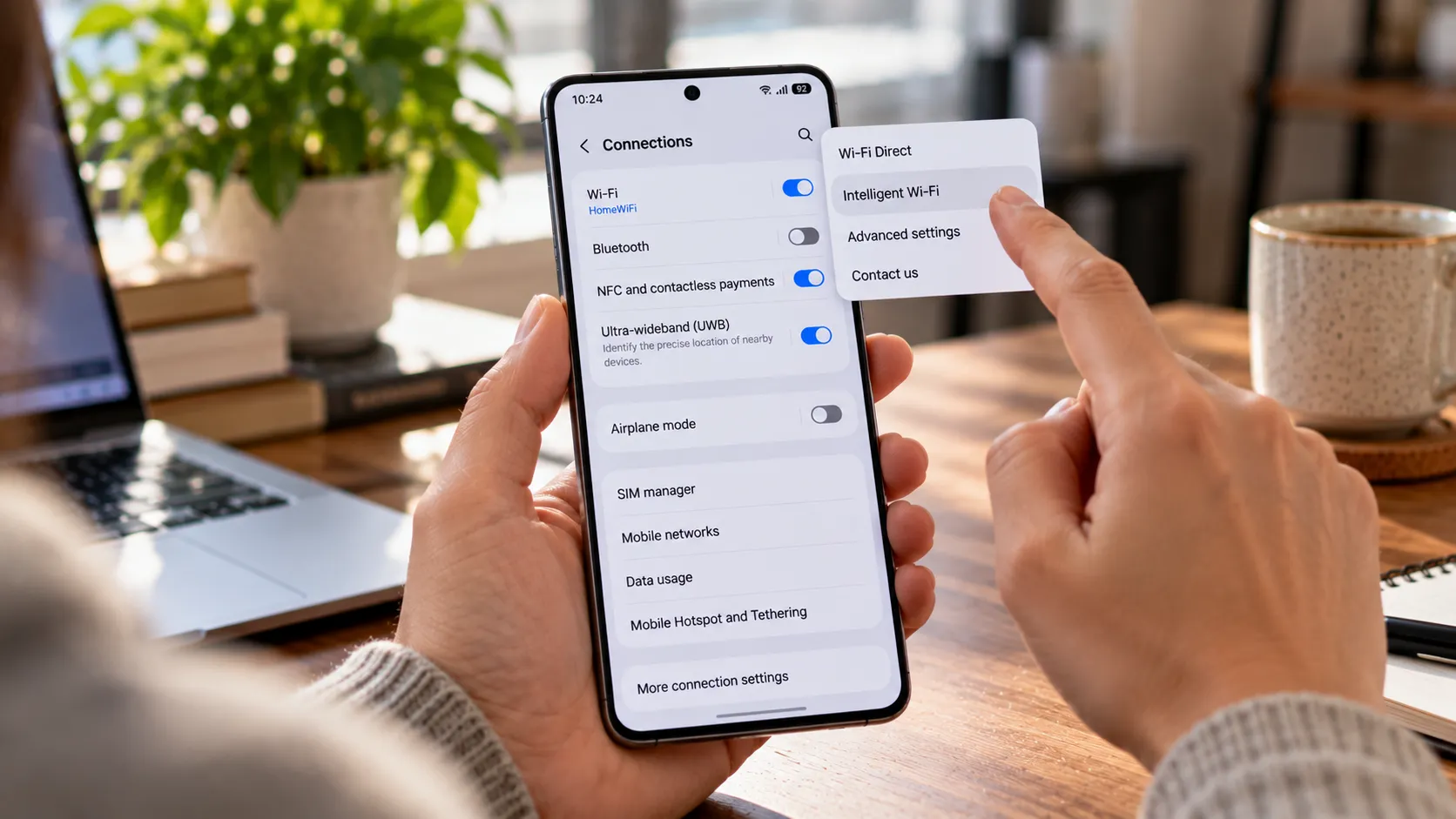
Users can get closer to an answer by checking Settings > Battery > Battery Usage and looking for any app or system process consuming an unusually high share. If the phone drains at similar rates with the screen on and off, that suggests a background process or radio issue. If drain concentrates during active use, it's more likely tied to display or processing behavior. That distinction matters when deciding which fix to attempt first.
What affected users can do now
The workarounds circulating in the community are low-effort enough to try before anything more drastic. Enabling Battery Saver mode reduces background activity and caps performance, which may compensate for whatever the patch disrupted, per PhoneArena. Clearing the cache partition accessible through the recovery menu eliminates corrupted temporary files that can persist after a major update and cause erratic system behavior. Neither fix addresses a root cause, but both reduce variables.
If the drain pattern suggests percentage misreporting specifically the phone dying suddenly from what appears to be a healthy charge level rather than fading from a low one a full discharge followed by a slow recharge to 100% is worth attempting. Some users report this recalibrates the reported reading, though community guidance on this varies.
Drain remains severe and neither workaround helps after 48–72 hours? Contact Samsung Support with specifics: device model, software version, when the drain began, and whether it's worse during idle or active use. That detail helps support staff triage the problem and creates a record of onset timing that may matter if a fix patch eventually ships. Document it before the timeline blurs.
What not to do: factory reset without first exhausting the above steps, or assume the battery has permanently degraded. If the drain is software-triggered which the current evidence suggests is the more likely scenario a Samsung patch should resolve it. The timeline for that patch is the open question.
What Samsung hasn't answered yet
As of late April, Samsung has not publicly acknowledged a battery issue tied to the April update, identified a technical cause, or committed to a corrective release, according to PhoneArena. That silence isn't necessarily damning. Companies typically investigate before communicating, and the patch only began rolling out earlier this month. It does, however, leave users without guidance on whether their experience represents a known bug or expected behavior.
The geographic and model scope is also unclear. The patch first deployed in South Korea before spreading to other regions, per PhoneArena, but whether carrier variants, regional software configurations, or specific hardware revisions are more or less affected is unknown. Complaints span both device generations, but the pre-update benchmark evidence skews heavily toward S25 data. Whether S24 owners are experiencing the same severity of regression, or whether the two populations have different underlying causes, is a question the current reporting can't answer.
The most useful thing Samsung could do right now is narrow the problem publicly: confirm which devices and software versions are affected, clarify whether the drain represents actual battery consumption or a reporting anomaly, and give users a timeline for a fix. Without that, owners are left choosing between workarounds, patience, and support calls.
Where the evidence lands
The timing points toward a software-linked regression. Galaxy S25 devices cleared 14 hours across the entire lineup in pre-update testing per PCMag, and both the S24 and S25 were handling overnight idle without unusual loss before April, as MobileRadar documented. The complaints appeared after the security patch landed. That doesn't confirm causation, but the correlation is specific enough to treat seriously.
What would actually strengthen the case: a pattern of Battery Usage screenshots showing Android System, modem processes, or background services consuming abnormally high percentages after the update, concentrated on devices running the same build number. That kind of data, if it emerged systematically from the community, would shift this from a credible anecdotal cluster to something closer to a reproducible finding. Right now, that evidence doesn't exist publicly.
The next few weeks are the real test. If Samsung issues a patch with an explanation, this becomes a resolved footnote. If the company stays silent while complaints grow, it becomes a harder trust problem particularly given that Samsung's approach to battery life leans on software tuning rather than silicon-level efficiency, as MobileRadar notes, which means a software regression hits harder here than it would on a device where endurance is baked into the chip. The S25 had acceptable headroom before April, not abundant headroom. The "nearly everyone is affected" framing is probably overblown. The underlying problem almost certainly isn't.








Comments
Be the first, drop a comment!