





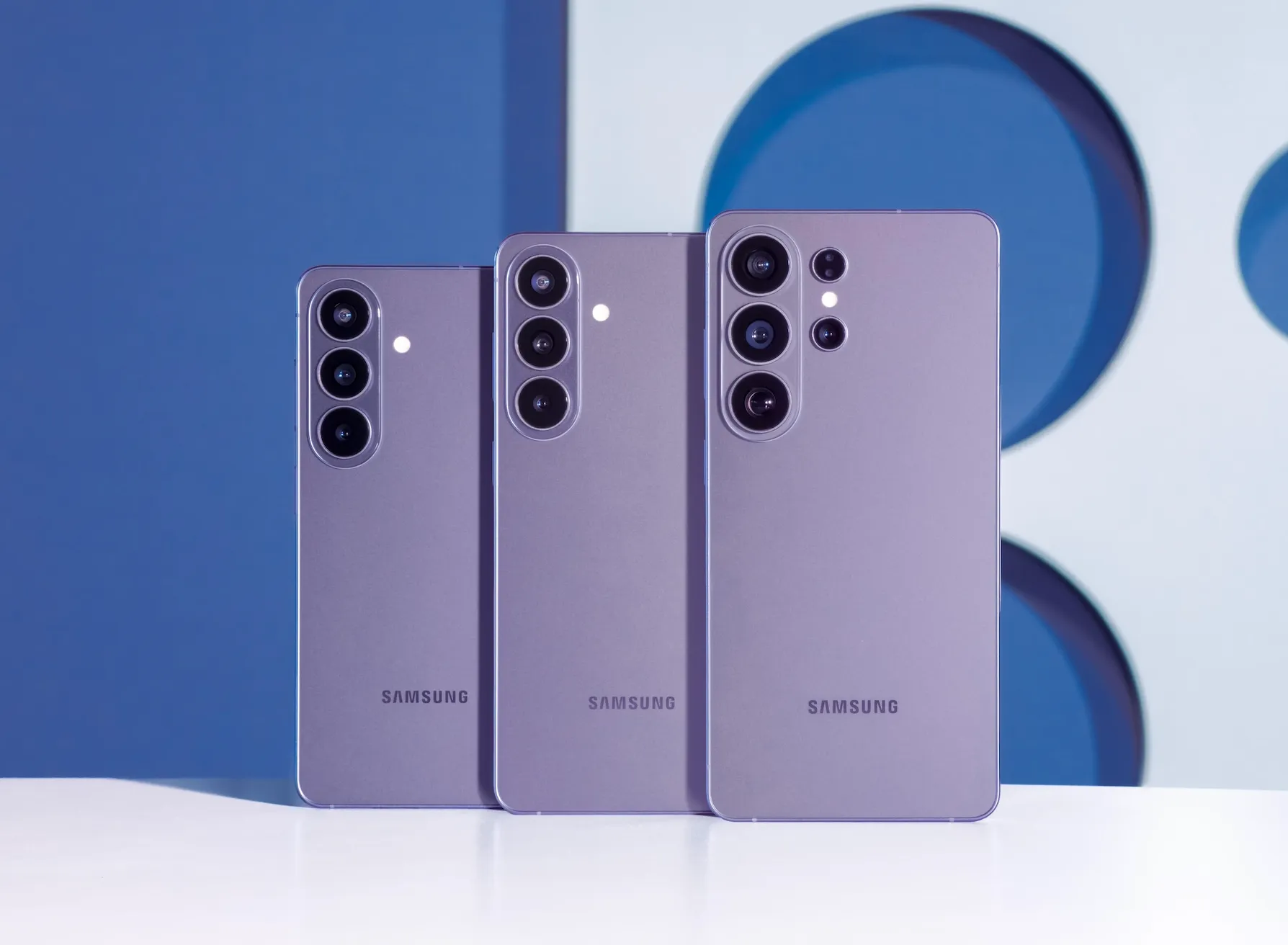
Samsung is reportedly considering cutting its free double-storage pre-order benefit by half for the upcoming Galaxy Z Fold8, Z Fold8 Ultra, and Z Flip8, according to industry sources cited by Chosun. Buyers who would previously have received the 512GB model at no extra cost when ordering the 256GB variant will now pay roughly half the normal storage premium. If confirmed, it would mark a broader reduction than Samsung's recent region-specific changes to the promotion.
Samsung's spokesperson declined to confirm the specific 50% figure. What follows is sourced entirely to industry insiders, not an official company announcement, and terms may shift once Samsung publishes the full preorder terms after its July 22 Unpacked event in London.
Galaxy Z Fold8 storage upgrade: what buyers actually lose
The Korean reference calculation is straightforward, although it is not confirmed Fold8 pricing. For the Galaxy S26 series, the price gap between the 256GB and 512GB models was 253,000 won across all variants. Under the previous program, pre-order buyers received that upgrade at no charge. Under the reported 50% subsidy, the equivalent out-of-pocket cost comes to approximately 126,500 won, Chosun reported. Those figures are Korean reference prices based on S26 pricing; actual amounts will vary by market and model.
For foldable buyers, that figure stings more than it would on a mid-range device. The Galaxy Z Fold8 is already the most expensive phone in Samsung's lineup. Buyers at this price point have historically been willing to pay for maximum storage, meaning the step from 256GB to 512GB is a decision many are going to make regardless. The free upgrade converted a purchase decision into a no-brainer. A 126,500-won charge turns it back into a real one.
The potential hit compounds from two directions. Industry insiders cited by Chosun suggest rising component costs could also push up launch prices on the new foldables. Higher base prices alongside a weaker pre-order incentive, on the most premium devices Samsung makes, is not a comfortable combination for early adopters.
It also remains unconfirmed whether the reduced benefit applies globally or only in Korea, and whether all three models receive identical terms.
Samsung's domestic pre-order window runs July 28 through August 3, with the Korean release on August 7. Official pre-order pages, expected around that window opening, should clarify regional scope, whether trade-in credits have been adjusted to compensate, and whether the reported launch price increases materialize.
Why Samsung is halving the storage upgrade benefit now
The cause is straightforward: memory semiconductor prices have surged across three consecutive quarters, raising the cost of the storage Samsung was previously absorbing entirely, Chosun reported. Memory prices climbed 40-50% in Q4 2025, continued rising through Q1 2026, and are projected to have increased a further 20% in Q2, according to Counterpoint Research data cited by Chosun.
Those aren't abstract commodity movements. Every time Samsung handed a pre-order customer a free storage upgrade, it absorbed the cost of a flash storage chip that had, by late 2025, become significantly more expensive than when the program launched. Across millions of pre-orders spanning multiple Galaxy generations, that absorbed cost compounds fast.
The impact on Samsung's phone division has been severe. Analysts cited by Chosun estimate that the Mobile Experience division may have recorded a roughly 1.5 trillion-won operating loss in Q2, potentially its first quarterly deficit. The broader Samsung picture looks entirely different: the company estimated Q2 sales of 171 trillion won and operating profit of 89.4 trillion won in its preliminary earnings guidance.
The irony is hard to miss. Samsung's chip division is one of the primary beneficiaries of the memory price inflation that is simultaneously pushing its handset division into the red. The same supercycle generating record semiconductor profits is the direct reason the Galaxy team can no longer afford to give storage away.
A promotion that was already showing cracks
The free double storage program launched with the Galaxy S23 in 2023 and ran through every subsequent Galaxy S and Z series launch, drawing consistent positive consumer response, Chosun reported. For the Galaxy S25 series in the US, it was a headline perk: base model buyers received 256GB for the price of 128GB, while Plus and Ultra buyers received 512GB, GSMArena reported eighteen months ago.
The S26 cycle, earlier this year, was the first sign the offer was becoming harder to sustain uniformly. Samsung confirmed the free storage upgrade in Europe and parts of Asia, including Malaysia, Germany, and the UK, but initially left North America out entirely, as Notebookcheck reported five months ago. Samsung ultimately made the upgrade available in many S26 markets, so the rollout was uneven rather than a clean rollback. Still, the regional hesitation was a signal worth noting.
The Fold8 situation is a sharper move. Base prices were already climbing before the storage perk reportedly followed them out the door: Samsung raised Galaxy S26 pricing by 99,000 won on the 256GB model and 209,000 won on the 512GB model at launch earlier this year, Chosun reported. The free upgrade had served as the most visible offset to that creeping cost pressure. For buyers who noticed prices going up, the storage perk was the thing that made the deal feel fair.
Cutting it across three foldable models at once is categorically different from selectively withholding it in one region during an S-series cycle. The S26 situation left room for interpretation. This one, if confirmed, leaves less.
There is also a strategic dimension worth noting. Pre-order incentives do not just reward early buyers; they shape launch momentum. Samsung's foldables compete in a niche where early sales figures and media narratives matter. A weaker storage perk on the Fold8 and Flip8 could dampen the pre-order numbers that Samsung typically uses to frame a successful launch. Whether the company offsets that with enhanced trade-in credits or alternative incentives will be one of the more telling signals when official terms drop.
What happens next
Samsung's official pre-order pages will resolve most of the open questions. They should confirm whether the 50% subsidy is real, how it varies by region and model, and whether any alternative incentives have been added to compensate.
Until then, the direction is clear. Anyone considering a Galaxy Z Fold8 or Flip8 pre-order faces a real storage upgrade cost where there used to be none. Based on Korean S26 pricing, that difference could be approximately 126,500 won for the step from 256GB to 512GB, per Chosun. The full terms remain Samsung's to announce after July 22. The reporting points to a likely explanation: memory costs have risen sharply enough, and the phone division's margins have compressed severely enough, that a three-year marketing staple has become too expensive to run at full value.




Comments
Be the first, drop a comment!