



Samsung Galaxy Tab notch leak: what it needs to justify the trade-off
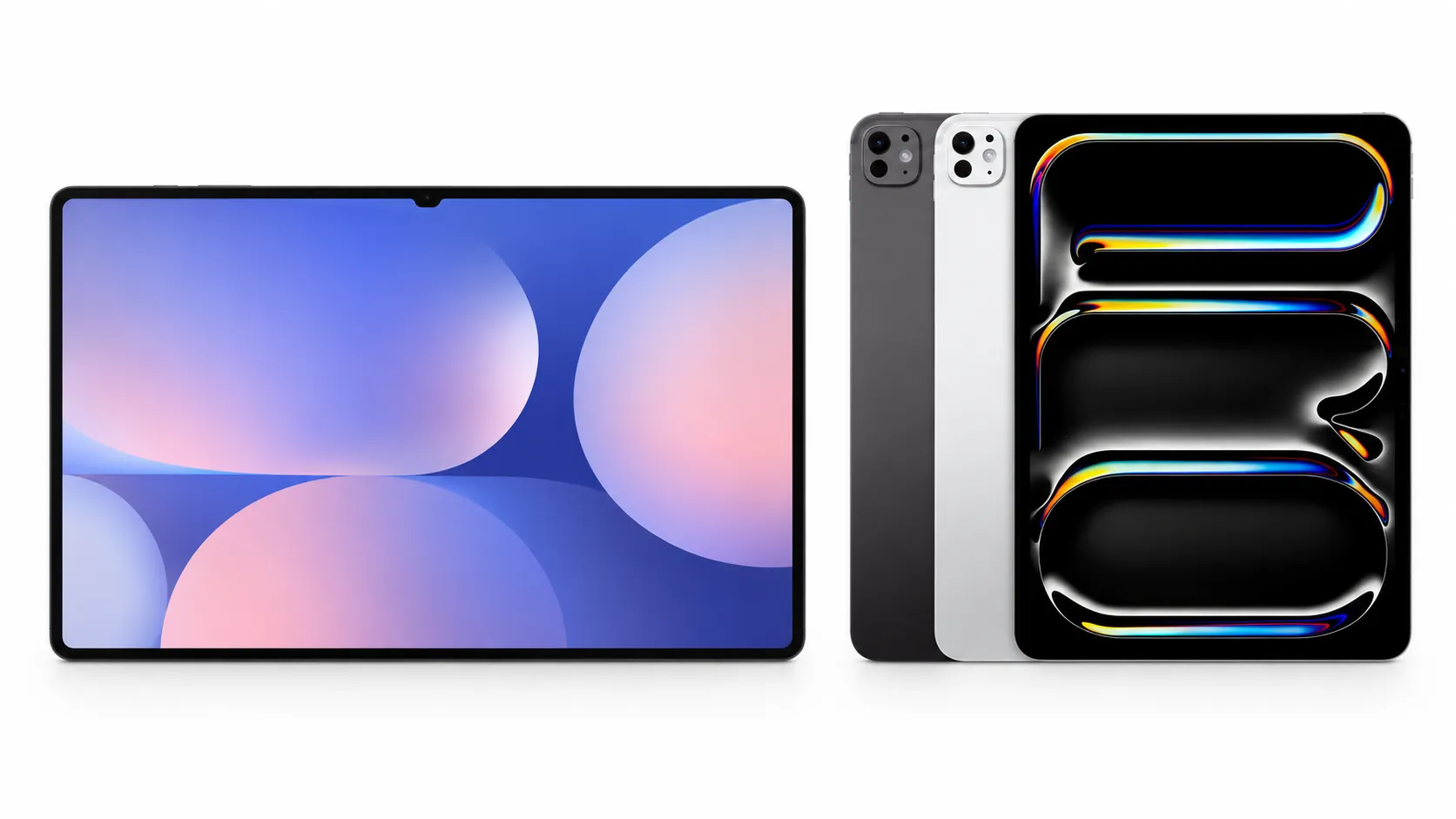
Leaked renders of what appears to be Samsung's next flagship tablet surfaced this week showing a notch cut into the top edge of the display. No Samsung Galaxy Tab S or Tab A model has previously shipped with a notch, which makes this a genuine departure from the company's established design language. The renders have not been independently verified, and Samsung has not commented.
The notch itself is not the story. The question is what it would have to deliver on a premium tablet to justify the visible trade-off.
What the renders show
The images circulating this week depict a top-center notch interrupting the display edge, visible in what appear to be portrait-orientation renders. Whether landscape-orientation views exist has not been confirmed from the available images. Additional design details, including port placement, rear camera configuration, and S Pen housing, are not clearly legible from the renders as described.
The source behind the images has not been identified in the available reporting, which matters. A leaker with a documented track record on prior Samsung tablet predictions, backed by a regulatory filing or supply-chain photograph, supports different levels of confidence than an unverified social post. Until provenance is established, treat the renders as unconfirmed but plausible, not as fact.
What the images cannot show: the sensors inside the notch, the biometric or imaging system it may house, or whether this is a final production design rather than an early prototype. That gap is precisely what makes the render interesting, and frustrating.
The engineering case and the test
Samsung had three realistic options at the premium tier. It could integrate front-facing sensors behind the display, as Apple did with the iPad Pro's slim top bezel and no cutout. It could use a punch-hole, placing a single circular aperture in the panel. Or it could use a notch.
Each option involves a physical constraint. A punch-hole aperture accommodates one lens cleanly. What it cannot easily accommodate is the component stacking that a depth-sensing biometric system requires, where a structured-light emitter, a receiver, and an infrared camera need to sit in close proximity with enough vertical depth to function. A notch provides that depth. Whether Samsung needed it here depends entirely on what is inside.
Apple's solution on the iPad Pro sets the current benchmark: front-facing biometrics and imaging hardware managed without any display cutout. That is the standard buyers at this price point now compare against.
So the test is concrete. A notch on a premium tablet is a defensible engineering decision if it houses front-facing hardware, biometric, imaging, or both, that could not have been achieved in a punch-hole or slim-bezel configuration. If the hardware inside is equivalent to what a punch-hole could have delivered, the notch is harder to justify to buyers. That test cannot be answered by render analysis. It gets answered at announcement, when Samsung names the sensor system, or it gets answered in teardowns.
Who pays the cost, and who might get something back
The clearest cost is geometric. On a phone held vertically, a top-edge notch sits near the screen's far periphery. On a large tablet held horizontally, that same notch migrates toward the center of the frame. During landscape video playback, it is not at the edge of attention. It is in the middle of it.
That is an observable physical trade-off, not an audience study. It applies to anyone watching video in landscape orientation on a large-screen tablet.
The plausible upside is narrower. If the hardware inside the notch delivers a wider front-camera field of view, better low-light performance, or more reliable biometric authentication than a punch-hole alternative, the users positioned to benefit most are those using the tablet for video calls, remote work, or similar active communication tasks. That is a different use pattern from passive video consumption, and a notch that costs something in one context could earn something specific in the other.
Whether that exchange is real depends on what Samsung actually put in the cutout. If it is a standard front camera and basic face detection, the cost is real and the return is not. If it is a depth-sensing biometric array plus a wide-angle camera system that meaningfully outperforms punch-hole configurations, the trade-off at least has a rationale. Render analysis cannot resolve this.
What to watch at announcement
The renders confirm a design choice Samsung has not made before on a tablet. They do not confirm why.
At announcement, one disclosure matters more than any other: what hardware the notch houses, stated with enough specificity to compare against what a punch-hole or slim-bezel integration could have delivered. Capability language without component detail is not an answer. "Improved video calls" is not an answer. A named sensor system, a measurable field-of-view specification, or a biometric standard that explains the physical footprint, those are answers.
When reviews arrive, the comparison to run is straightforward: front-facing camera quality and biometric performance against competing premium tablets that achieved their results without a display cutout. That single comparison answers the question the renders raised.
Samsung has not announced a launch event or timeline for this device.





Comments
Be the first, drop a comment!