



Samsung's approach to foldables just took an unexpected turn—and it's all about Apple. The Korean tech giant isn't sitting back waiting to see what Cupertino brings to the table; instead, they're going on the offensive with something called the "Wide Fold." Here's the thing: this isn't your typical Galaxy Z Fold evolution. Samsung is fundamentally rethinking what a foldable should look like, and the timing couldn't be more strategic.
Recent reports indicate Samsung is developing a device that diverges significantly from its traditional Galaxy Z Fold design philosophy, embracing a wider form factor that mirrors Apple's rumored approach. The stakes are high here—both companies are targeting Fall 2026 launch windows, setting up what could be the most significant foldable showdown we've seen yet.
What makes this particularly interesting is Samsung's recognition that maintaining their foldable market dominance (an estimated 64% of foldable shipments in Q3 2025, per Counterpoint Research) requires more than incremental improvements. It demands bold design innovation that anticipates and counters Apple's disruptive potential. Samsung's current advantage stems largely from being first to market, but Apple's entry threatens to reshape consumer expectations entirely.
What makes the Wide Fold different from Samsung's current approach?
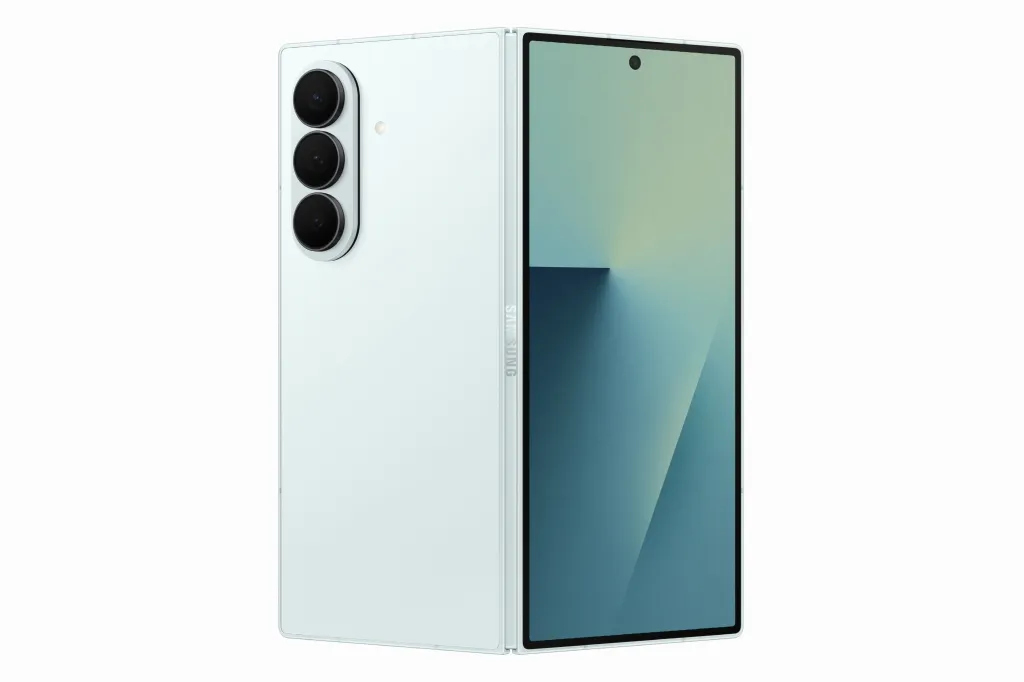
The Wide Fold represents a fundamental departure from Samsung's established foldable design language. Instead of the tall, narrow form factor that has defined the Galaxy Z Fold series, this new device adopts a "passport" type design with a 4:3 screen ratio when unfolded. We're talking about a completely different user experience here.
The dimensions tell the story: the device will feature a 5.4-inch cover display and expand to 7.6 inches when opened. While that might sound similar to current foldables, the aspect ratio changes everything. Instead of that narrow, book-like experience we're used to, you get something that feels more like opening a traditional notebook.
This design shift directly addresses the productivity challenges that have limited mainstream foldable adoption. The 4:3 aspect ratio excels for reading e-books and documents, viewing photographs, and creative tasks like design and image editing, making it more tablet-like in functionality. Picture trying to edit a PowerPoint presentation on current Galaxy Z Folds versus this new wide format—the difference would be transformational for business users who need desktop-class productivity on the go.
But here's the trade-off (because there's always a trade-off): traditional landscape and portrait videos would display with black bars at the top and bottom. Samsung is essentially betting that productivity workflows matter more than entertainment consumption for this market segment—a calculated risk that reflects their understanding of the premium foldable buyer.
What's strategically brilliant is Samsung's portfolio approach. The Wide Fold won't replace the Galaxy Z Fold 8 but will launch alongside it. Rather than abandoning their proven formula, they're expanding their foldable ecosystem to capture different use cases and user preferences simultaneously.
How does Samsung's strategy compare to Apple's foldable plans?
The competitive dynamics become fascinating when you examine how closely these specifications align. Rumors vary; sources report roughly 5.3–5.5" folded and ~7.5–7.8" unfolded for Apple's foldable—remarkably similar to Samsung's Wide Fold dimensions. This convergence isn't coincidental; both companies are clearly targeting the productivity sweet spot that iPad models have established with their near 4:3 aspect ratio.
Samsung's response demonstrates sophisticated competitive intelligence. By developing the Wide Fold, they're essentially creating a foldable that mirrors Apple's anticipated approach while leveraging their manufacturing expertise and market position. Leaks suggest it could include a Snapdragon 8 Elite Gen 5 and 12GB of RAM, but these are unconfirmed, ensuring performance parity with Apple's offerings.
The charging capabilities reveal Samsung's commitment to differentiation through features Apple traditionally underemphasizes. Reports say it may support up to 25W wireless charging; Samsung offers up to 25W Fast Wireless Charging 2.0 on some devices, though recent Z TriFold reporting lists 15W wireless on that model and addressing a potential competitive weakness before Apple can exploit it.
Market projections underscore why Samsung is moving aggressively. IDC projects Apple could capture more than 22 percent of global foldable smartphone unit shipments and 34 percent of the segment's total market value in its first year. That level of market disruption would fundamentally alter the foldable landscape, potentially relegating Samsung from market leader to just another Android manufacturer competing for the remaining 78 percent.
What's particularly clever is Samsung's timing strategy. By launching in Fall 2026 alongside Apple, they eliminate any first-mover advantage Apple might have gained. This simultaneous launch approach forces consumers to choose between established foldable expertise and Apple's ecosystem integration—a more favorable competitive position than playing catch-up to Apple's innovation narrative.
Will this wider design actually improve the foldable experience?
The practical benefits extend far beyond competitive positioning. A wider aspect ratio could address issues with current foldables, making them more suitable for multitasking and media consumption. Consider the difference when running multiple apps simultaneously—current foldables force users into awkward vertical arrangements that don't match natural workflow patterns.
The workspace transformation becomes apparent when you consider specific productivity scenarios. Imagine using Google Sheets or Microsoft Excel with the wider format versus current narrow foldables. The additional horizontal screen real estate allows for more columns to be visible simultaneously, reducing the constant horizontal scrolling that makes complex spreadsheet work frustrating on existing devices. Similarly, photo editing workflows benefit dramatically from the wider canvas, providing more space for toolbars while maintaining adequate image preview area.
However, the engineering challenges are substantial and reveal why Samsung hasn't pursued this approach before. The company has historically struggled with making foldables thin enough for mainstream adoption. The Galaxy Z Fold 7 achieved significant improvements, measuring just 4.2mm thick when open and 8.9mm thick when closed. The Wide Fold must match these achievements while accommodating different mechanical stresses from the wider hinge mechanism and altered weight distribution.
Samsung's cautious approach reflects these uncertainties. They could initially limit availability of this new form factor to select markets to gauge interest, suggesting the company wants real-world usage data before committing to global production scales. This measured rollout also allows Samsung to refine software optimization for the different aspect ratio without risking their entire foldable reputation on an unproven form factor.
The software adaptation requirements present another complexity layer. Android applications need optimization for this aspect ratio to avoid the letterboxing issues that plagued early tablet adoption. Samsung's experience with DeX and multi-window functionality provides some advantage here, but widespread app ecosystem support remains a question mark that could determine the Wide Fold's practical utility.
What does this mean for Samsung's foldable future?
Samsung's dual-foldable strategy for 2026 represents their most ambitious mobile portfolio diversification yet. The device could launch alongside the Galaxy Z Fold 8 and Galaxy Z Flip 8 next fall, creating three distinct foldable categories targeting different user needs and price points. This portfolio breadth positions Samsung to capture market segments regardless of how consumer preferences evolve.
The timing aligns with projected market expansion that makes multiple form factors economically viable. Worldwide foldable smartphone shipments are projected to grow 10 percent year-on-year in 2025 to reach 20.6 million units, with 2026 expected to see accelerated growth driven by both Apple's entry and Samsung's diversified offerings.
Looking ahead, foldable smartphones are forecast to account for more than 10 percent of the total global smartphone market value by 2029. This trajectory suggests foldables will transition from premium novelty to mainstream category, where having multiple form factor options becomes strategically essential rather than experimental luxury.
Samsung's manufacturing capabilities provide sustainable competitive advantages that the Wide Fold strategy leverages. The company's control over display production, hinge mechanisms, and assembly processes allows them to iterate rapidly across multiple form factors without the supply chain dependencies that constrain other manufacturers. This vertical integration becomes particularly valuable when competing against Apple, whose own manufacturing partnerships could be disrupted by Samsung's component supply decisions.
The Wide Fold also serves as insurance against potential misjudgments about optimal foldable design. Rather than betting everything on their traditional narrow approach, Samsung creates parallel development paths that allow them to pivot quickly based on market response. If the Wide Fold resonates strongly with productivity-focused users, Samsung can expand that line while maintaining their established form factor for entertainment-centric consumers.
The foldable arms race intensifies
Samsung's Wide Fold strategy reveals a company that understands the existential nature of Apple's foldable entry. Rather than incremental improvements, Samsung is fundamentally reimagining foldable interaction paradigms. The change in aspect ratio ensures Samsung's Wide Fold appears as if users are opening a notebook, improving the experience while establishing a distinctly different identity from Apple's anticipated approach.
This represents more than product development—it's market positioning for the post-Apple foldable era. Samsung recognizes that their current dominance stems partly from being the primary option for foldable-curious consumers. When Apple enters with their ecosystem integration and premium positioning, Samsung needs differentiated value propositions that go beyond "we were here first."
The success metrics for this strategy extend beyond immediate sales figures. Samsung's extensive experience in the foldable smartphone market gives it a significant edge over competitors, but Apple's track record suggests they can rapidly close experience gaps through superior software integration and user experience polish. The Wide Fold's success will be measured by its ability to establish Samsung as the innovative choice rather than the incumbent choice.
What makes this competition particularly intriguing is how it forces both companies to push foldable technology forward more rapidly than either might have alone. Samsung's dual-form-factor approach compels Apple to consider whether their rumored design adequately differentiates from Samsung's portfolio, while Apple's pending entry pressures Samsung to accelerate innovation cycles and manufacturing improvements.
As both companies prepare for their Fall 2026 launches, the foldable market stands at a transformation point. Samsung's Wide Fold isn't just another product—it's a strategic statement that the future of foldables will be defined by diversity and specialization rather than convergence on a single optimal design. The real test will be whether consumers are ready to embrace this level of choice in what has traditionally been a fairly standardized product category, and whether the productivity benefits of wider form factors can justify the engineering compromises required to achieve them.




Comments
Be the first, drop a comment!