



Samsung announced a new SmartThings platform update on October 5, 2026, built around a feature called SmartThings Now that moves automation suggestions to the top of the Home tab instead of leaving them buried in menus and submenus. The Samsung SmartThings Now update also redesigns the Home tab layout, adds a Floating Bar for one-handed use, and expands local hub-to-phone control.
Before getting excited about any of it, know what Samsung hasn't said. The announcement doesn't name a required app version, a country-by-country rollout timeline, or whether features like Family Care need a specific plan or hardware.
SmartThings now counts 470 million registered users and support from more than 430 Works with SmartThings certified brands.
What SmartThings Now adds to the Home tab
SmartThings Now shows up as cards at the top of the Home tab, building on the existing Home Insight feature to pair relevant information with a one-tap action. When your phone nears a home location you've already saved in the app, it suggests turning on lights or an air purifier, then asks if you want to turn that one-time action into a standing routine, according to the same announcement.
The feature also reviews the past week of activity to recommend Favorites changes. Samsung's example: as air conditioner use drops heading into cooler months, SmartThings Now might suggest dropping that card and adding one for an AirDresser instead. A Routine Insight card lets you review the past week's routine activity and delete anything you no longer use.
There's also a Family Care card. If someone you're monitoring, an older parent, say, shows no device activity for an extended stretch, caregivers get a card with options to check in or call. Samsung hasn't published what counts as "extended," how sensitive the detection is, or how false alerts get handled, so treat this as a notification tool to test rather than a monitoring system to rely on.
Jaeyeon Jung, who heads Samsung's SmartThings Team, framed the update as a shift away from making users hunt for features: "This update marks another step in SmartThings' ongoing efforts to move beyond a home experience where users search for and launch features," Jung said in the announcement.
Worth noting: SmartThings Now itself surfaces suggestions and prompts rather than silently acting on them. But if you turn a suggestion into a routine, that routine can run automatically afterward unless you've enabled SmartThings' optional confirmation setting.
Samsung SmartThings Now update: who gets the new Home tab features
The redesigned Home tab reorganizes dashboards, device cards, and service cards for easier browsing, with service cards using a denser layout to pack more status info, like numerical readings, onto one screen. A new Floating Bar puts frequently used controls within thumb's reach at the bottom of the screen, aimed at one-handed use on larger phones. Live Wallpaper now also shifts naturally throughout the day.
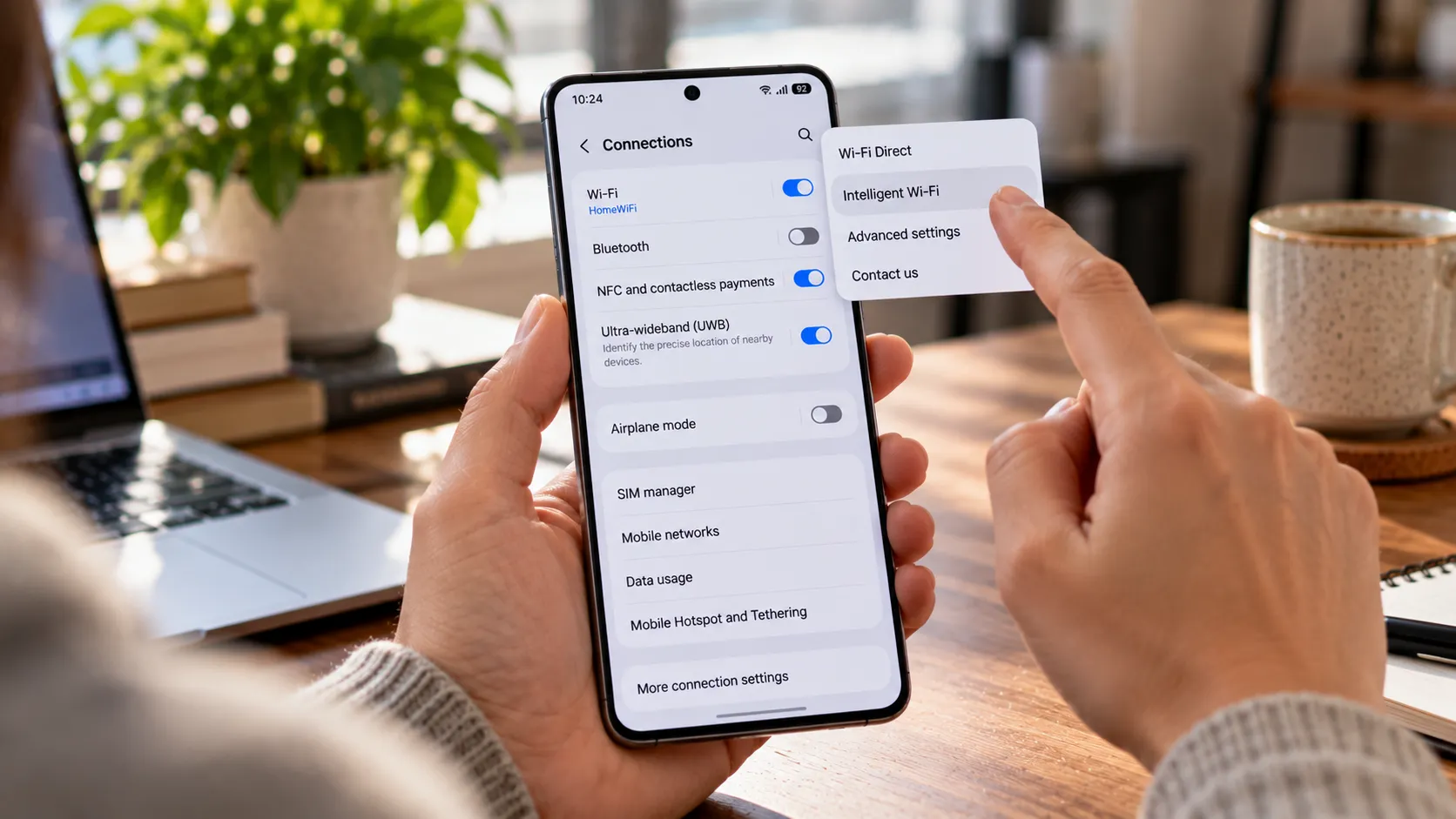
Local control is the more technical change. When your phone and SmartThings Hub share the same Wi-Fi network, commands go straight to the hub instead of routing through the cloud. Samsung positions this as a reliability upgrade for when the home network changes or the internet connection drops, and says local control can improve response times by approximately 30% compared with cloud-based control. Samsung says the figure comes from its own testing under controlled conditions and that actual performance may vary.
Local control works on Android and iOS through the SmartThings app, and requires SmartThings Station, a V2, V3, or V4 Hub, a hub-enabled Samsung Smart TV, or Family Hub. SmartThings automatically switches between local and cloud control depending on whether your phone is detected at home or away, and an updated Offline Device Diagnostics page can push new network information to all your registered devices at once if something drops offline.
The update also brings Matter 1.6 support, an upgrade from Matter 1.4, which Samsung added roughly 18 months ago. Samsung says the newer standard improves stability and Group Control performance, and adds four device categories: energy meters, closures, irrigation devices, and soil sensors.
Where this fits in Samsung's broader automation push
SmartThings Now isn't Samsung's first attempt at reducing manual setup before adding proactive suggestions on top. About 15 months ago, Samsung launched a Routine Creation Assistant that lets users type a request like "turn off all the lights when I leave the house" to generate a routine automatically, but at launch it was limited to Samsung account holders in Korea and the U.S. That's a useful reminder: Samsung's AI-flavored SmartThings features have a track record of rolling out to specific regions first, not everywhere at once.
Samsung has also framed its connected Bespoke AI appliances as "Home Companions," a branding the company introduced at its CES 2026 Deep Dive session to describe appliances, TVs, and mobile devices working together to "proactively respond to users." The Home tab cards, Matter support, and local control described above aren't shown to require Samsung-made devices to function.
What Samsung hasn't confirmed yet
What's locked down: the Oct. 5, 2026 announcement details SmartThings Now's card system, the Home tab redesign, local control, and Matter 1.6 support directly from Samsung, with no third-party reporting needed to confirm any of it.
What's missing from this announcement: a rollout schedule by country, a minimum app version, and any new eligibility requirements tied specifically to SmartThings Now's Family Care card or weekly-activity recommendations. Samsung has separately documented broader Family Care device and OS requirements.
Also unanswered: what behavioral data SmartThings Now uses to generate its suggestions and whether the weekly-activity analysis runs on-device or in the cloud. Samsung's existing Family Care documentation says care recipients can choose what information to share and stop sharing at any time.
If you want a safeguard while these questions get sorted out, SmartThings has a setting that requires approval before a routine runs automatically. Samsung's product copy calls this "Confirm to Run Actions," though a footnote in the same material labels the underlying setting "Check Before Running." Look for either name in your app's local device settings, since it's useful for anyone wary of automated routines firing unattended in a shared household.
Check the SmartThings app for an update and confirm your hub model if local control matters to you, since only Station, V2/V3/V4 Hubs, hub-enabled Smart TVs, and Family Hub qualify. Don't assume Family Care or the weekly Favorites recommendations are live in your region simply because the press release is global. Samsung's rollout history says otherwise. And before letting any new routine run on its own in a house with more than one person using it, go find that confirmation setting and turn it on.







Comments
Be the first, drop a comment!