





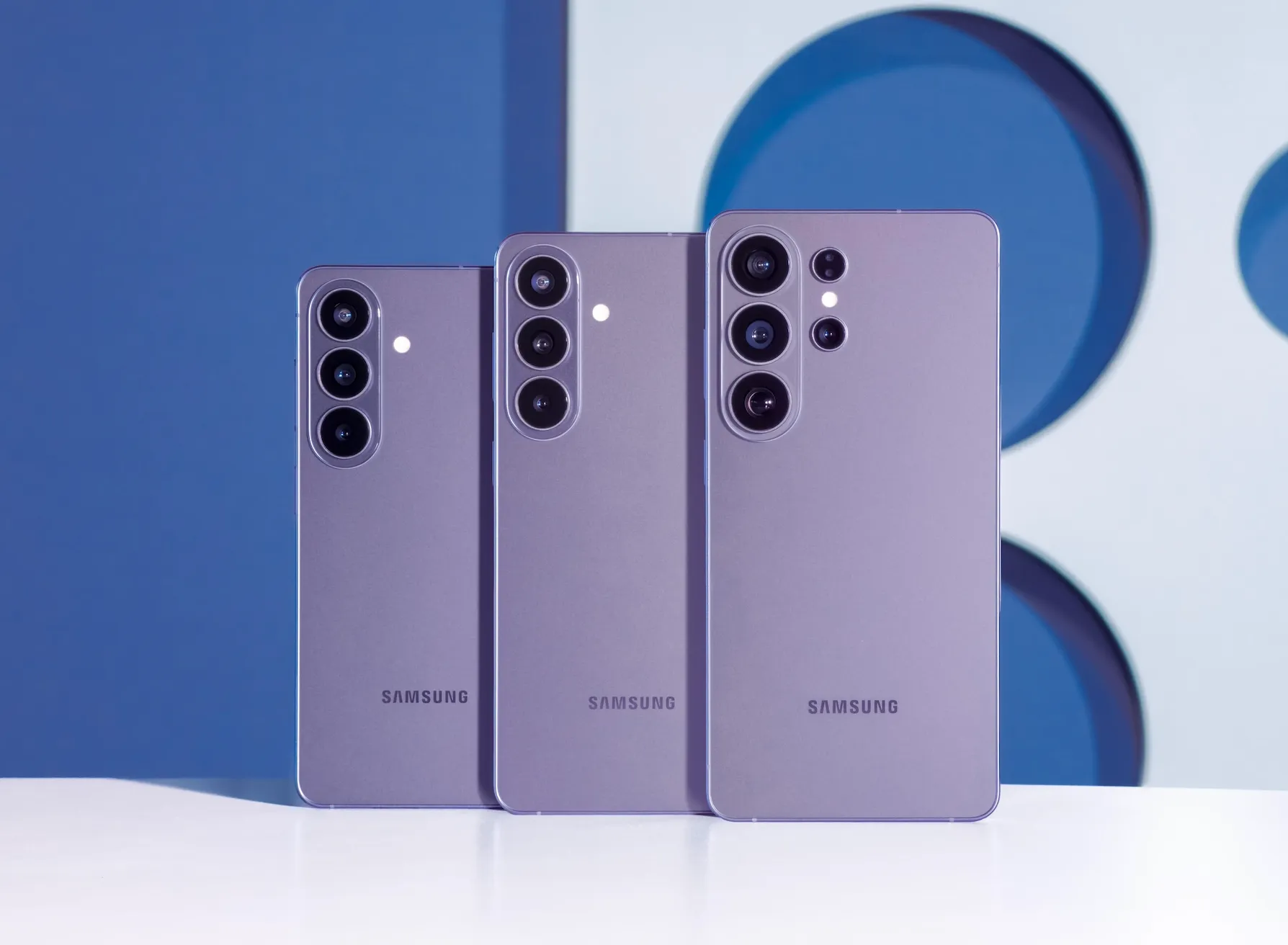
Samsung's internal testing reportedly found the Snapdragon 8 Elite Extreme Gen 6 overheating and throttling in Galaxy S27 Ultra prototypes, fueling talk of a switch to Samsung's Exynos 2700 chip.
The claim comes from unnamed industry sources relayed through several outlets, not an official Samsung statement, and Qualcomm has directly disputed it. If you're holding off on a purchase until the Galaxy S27 Ultra launches, these reported Galaxy S27 Ultra overheating issues are worth tracking, but there isn't enough confirmed evidence yet to change a buying decision today.
The story originated with South Korea's Seoul Economic Daily before spreading through outlets including Android Central and GSMArena. 9to5Google traced the claim to that single Korean report.
That matters because multiple articles describing the same unnamed-source report don't constitute multiple independent confirmations.
Qualcomm isn't staying quiet about it. A company spokesperson told 9to5Google that "recent reporting about thermal issues related to Snapdragon 8 Elite Extreme Gen 6 is inaccurate."
Qualcomm Chief Marketing Officer Don McGuire separately called the reporting "100% NOT accurate." In a subsequent response, McGuire said there are "no systemic thermal issues with the 8 elite gen 6," although that wording named the standard Snapdragon 8 Elite Gen 6 rather than the higher-clocked Extreme variant at the center of the original report.
Samsung hasn't publicly confirmed the reported testing results or an Exynos switch. That leaves a direct conflict between the original reporting and Qualcomm's denial, with no independent Galaxy S27 Ultra thermal data yet to settle it.
What Samsung's testing reportedly found
The chip at the center of the story is Qualcomm's Snapdragon 8 Elite Extreme Gen 6, its most powerful current mobile platform.
Qualcomm specifies two prime Oryon CPU cores running at up to 5GHz, alongside six performance cores. The company says the platform delivers 13% higher CPU performance and 44% higher GPU performance than the previous generation.
According to the Korean report, Samsung's internal validation found the Extreme chip exceeding its thermal limits and reducing performance during sustained high-load operation.
Those alleged results haven't been published, and Samsung hasn't confirmed them.
Reports also said Samsung wanted Qualcomm to resolve the alleged issue by around mid-October before the Galaxy S27 Ultra's processor decision had to be finalized. The precise timing varies somewhat among secondary accounts of the Korean report, so it shouldn't be treated as a publicly confirmed Samsung deadline.
An industry source cited in coverage of the original report said, in translation, that Qualcomm hadn't been definitively dropped and that alternatives would have to be considered if the issue couldn't be resolved in time for mass production.
Read plainly, that's a reported contingency plan, not confirmation that Samsung has already chosen Exynos 2700 for the Ultra.
Why sustained Galaxy S27 Ultra throttling would matter
Qualcomm says the Snapdragon 8 Elite Extreme Gen 6 offers a 13% CPU performance improvement, 44% higher GPU performance, and 40% better GPU power efficiency than the previous generation.
Those are Qualcomm's figures, not independent Galaxy S27 Ultra results, and they don't settle the question raised by the Samsung report: how much performance a finished phone can sustain once heat accumulates during a prolonged workload.
Thermal throttling is a normal protective behavior in modern processors when operating conditions require clocks or power to be reduced. The important question for a flagship phone isn't simply whether throttling can occur, but when it happens and how much performance is lost under realistic sustained workloads.
That's why independent testing on final hardware will matter more than either a leaked validation report or a peak benchmark result.
Short CPU benchmarks can establish peak performance, but they aren't substitutes for extended gaming, graphics, camera, AI, and stress testing accompanied by measurements of temperature, power consumption, and sustained performance.
None of the reporting so far provides that kind of independently reproducible testing on a retail Galaxy S27 Ultra.
Until it does, Samsung's alleged thermal problem remains an unconfirmed report that Qualcomm explicitly disputes.
Is the Galaxy S27 Ultra Exynos 2700 swap actually ready?
Samsung has reportedly begun mass production of the Exynos 2700 and plans to produce more units than it did of the previous generation.
Reporting also links the chip to Samsung's second-generation 2nm SF2P process. Samsung hasn't formally announced the Exynos 2700's complete specifications or confirmed that it will power the Galaxy S27 Ultra.
That distinction matters.
A chip entering production can make an Exynos-powered S27 series technically more plausible, but it doesn't establish which Galaxy S27 models or regions will receive it.
Reported preliminary benchmarks aren't enough to answer the thermal question either. Even if an Exynos 2700 engineering sample outscores a Snapdragon sample in Geekbench, that doesn't establish which chip will perform better inside a finished Galaxy S27 Ultra under sustained load.
Samsung's history also calls for caution when drawing conclusions from the chipset rumors.
The Galaxy S22 Ultra was sold with Exynos 2200 or Snapdragon 8 Gen 1 depending on the market. Samsung then moved the entire Galaxy S23 series to the Snapdragon 8 Gen 2 for Galaxy worldwide.
Earlier Exynos Galaxy flagships had faced criticism over efficiency, battery life, and sustained performance relative to Snapdragon versions. But Samsung didn't publicly establish thermal throttling or poor 4nm yields as the single reason it abandoned its usual regional Exynos/Snapdragon split for the S23 series.
That means the S23 decision shouldn't be presented as precedent proving that a reported thermal issue will automatically push the S27 Ultra from Snapdragon to Exynos.
What this means if you're eyeing the Galaxy S27 Ultra
Reports have linked the Exynos 2700 to several Galaxy S27 models, but the Galaxy S27 Ultra's final processor configuration remains unconfirmed.
Regional availability is also unsettled. Don't assume that an Exynos-versus-Snapdragon split reported for other S27 models will automatically apply to the Ultra.
The same caution applies to manufacturing and launch timing. Samsung hasn't publicly announced the Galaxy S27 Ultra's processor, final specifications, launch date, or regional chipset breakdown.
For buyers, that makes the decision simpler than the rumor cycle makes it look.
If you need a phone now, don't make a purchase decision around an unresolved S27 Ultra processor report.
If you're specifically waiting for the Galaxy S27 Ultra, wait for Samsung to confirm the hardware and then check independent testing of the retail device.
The useful tests won't just be peak Geekbench scores. Look for sustained gaming and graphics performance, repeated benchmark loops, surface and internal temperature measurements, battery consumption, camera workloads, and whether performance declines materially as the phone heats up.
Also check the exact chipset fitted to the model sold in your region rather than assuming every Galaxy S27 Ultra will use the same silicon.
Right now, three things are clear: Samsung's alleged Snapdragon thermal results haven't been published, Samsung hasn't announced an Exynos 2700 switch for the Galaxy S27 Ultra, and Qualcomm disputes the report.
Until final hardware and independent testing arrive, the Galaxy S27 Ultra overheating story remains exactly that: a disputed report, not a confirmed problem with the phone buyers will eventually receive.












Comments
Be the first, drop a comment!