



Planning to trade in your old Galaxy Z Fold or Flip when Samsung's rumored tri-fold device finally arrives? You might want to rethink that upgrade strategy. Early whispers suggest Samsung's most ambitious foldable yet—the Galaxy Z TriFold—could break from the company's usual trade-in playbook, potentially leaving loyal foldable fans without their go-to discount path. For a device that's almost certain to command Samsung's highest-ever smartphone price, the absence of trade-in incentives would mark a significant shift in how the company positions its ultra-premium hardware. Let's break down what this means for your wallet, Samsung's strategy, and the broader foldable market.
Why trade-ins have been the foldable buyer's best friend
Samsung didn't invent the smartphone trade-in program, but the company has turned it into an art form for its foldable lineup. Over the past five generations of Galaxy Z Fold and Z Flip devices, Samsung has consistently offered aggressive trade-in values that frankly blow past what you'd get selling your old phone anywhere else. We're talking $800, $900, sometimes even $1,000 credited toward a new foldable—often accepting devices worth far less on the open market and crediting buyers amounts that would maybe fetch half that in private sales.
Here's the thing: these promotions have been absolutely crucial to making foldables feel attainable. Yes, the Z Fold still costs $1,800 to $2,000 at launch, which is a lot of money. But when you can trade in last year's model for $900 off? Suddenly your effective upgrade cost drops to something that, while still pricey, starts to feel manageable for enthusiasts who want cutting-edge tech. Buy a Z Fold 4 at launch for $1,800, trade it in a year later for $900 off the Z Fold 5, and your effective upgrade cost is $900—still premium, but it's transformed what could be a niche luxury product into something approaching mainstream consideration.
This trade-in-driven loyalty has given Samsung a crucial advantage in the foldable category: a predictable installed base for app developers and accessory makers, creating the ecosystem network effects that make each new foldable generation more valuable than the last. It's kept existing foldable owners locked into Samsung's ecosystem rather than jumping ship to competitors like Google, OnePlus, or those impressive Huawei devices we keep seeing from overseas. Carriers and retailers have sweetened the pot further with bill credits, bonus trade-in bumps, and bundled accessory deals, creating this whole promotional ecosystem that's made annual foldable upgrades feel almost routine for some buyers.
This strategy has worked, plain and simple. Samsung has maintained dominant share in the foldable category in Western markets, even as Chinese competitors have pushed ahead on hardware innovation in some areas. Trade-in programs have been a key pillar of that dominance, giving people a financial reason to stick with Samsung generation after generation.
What no trade-in support actually means for the Z TriFold
If the early listing indications prove accurate, a Z TriFold without trade-in support would represent a fundamental repositioning. We're not talking about reduced trade-in values or tighter eligibility here. We're talking about the complete absence of the program that's basically defined Samsung's foldable sales strategy for years.
The immediate impact hits your upgrade math hard. Let's assume the Z TriFold launches at $2,500—a conservative estimate given the added complexity of a third folding panel and all that extra display real estate. Without a trade-in option, that's $2,500 out of pocket with your Z Fold 5 or Z Flip 5 providing no discount whatsoever. It just sits in a drawer or gets sold on the secondary market for whatever eBay or Swappa buyers will pay.
For context, year-old Z Fold resale prices vary widely; typical private-market/search averages were in the low-to-mid hundreds (often roughly $300–$700 depending on condition, carrier and storage), notably lower than many manufacturer trade-in offers, far below the $900 to $1,000 Samsung has been offering in recent trade-in cycles. You're effectively leaving hundreds of dollars on the table, except in this case, there's no table to leave it on because Samsung isn't offering one.
The absence of carrier promotions compounds the problem. U.S. carriers like Verizon, AT&T, and T-Mobile have built their foldable promotions around Samsung's trade-in framework, layering on bill credits and line requirements on top of that base discount. If Samsung doesn't offer a trade-in baseline, carriers lose their promotional anchor—and more critically, they lose the ability to spread device costs across 24-36 month billing cycles, which has become the primary mechanism for premium smartphone sales in the U.S. market. They could theoretically run independent programs, but history suggests they're unlikely to offer premium incentives without Samsung's participation. It's a whole promotional ecosystem that depends on Samsung setting the tone.
Reading the strategic tea leaves: luxury positioning vs. volume play
Samsung's potential decision to skip trade-ins for the Z TriFold tells us something important about how the company views this device. It's not a Z Fold 7 with an extra hinge. It's a halo product, a statement piece designed to showcase technical capability rather than drive volume sales.
Look at the parallels in Samsung's own portfolio. The company has never offered aggressive trade-ins on limited-edition or ultra-premium variants like the Z Fold Special Edition or high-end Galaxy S Ultra configurations in certain markets. These devices exist to anchor the brand's premium positioning, not to hit quarterly unit targets. The Z TriFold appears to be following that same playbook, and honestly, that makes sense from a brand strategy perspective.
This approach has precedent beyond Samsung too. Apple doesn't offer trade-in bonuses on its highest-tier devices—you get standard trade-in values, period. Luxury brands across categories—whether we're talking watches, cars, or fashion—rarely discount aggressively because doing so undermines the exclusivity that justifies the price. But here's where smartphones face a unique challenge: unlike a Rolex that appreciates or maintains value, smartphones face 12-24 month obsolescence cycles where a two-year-old device depreciates by 60-70%. This makes Samsung's luxury positioning for the Z TriFold particularly bold—or risky, depending on execution.
But there's genuine risk in that calculation. Samsung's foldables have succeeded in part because the company made them feel accessible through financing and trade-ins, even at premium prices. Strip away those on-ramps, and you're left with a device that's purely aspirational for most buyers—impressive to read about, sure, but completely out of reach financially. That might be fine for a limited-run halo product. But it sets a concerning precedent if Samsung starts applying similar logic to future mainstream foldables.
The question becomes: is Samsung testing the waters for a more segmented foldable strategy, or is this just a one-time experiment with an ultra-premium device?
What this means for your upgrade decision
Bottom line: if you're planning your foldable upgrade path, the Z TriFold may not fit where you expect it to. Here's how to think through your options based on what you're currently carrying.
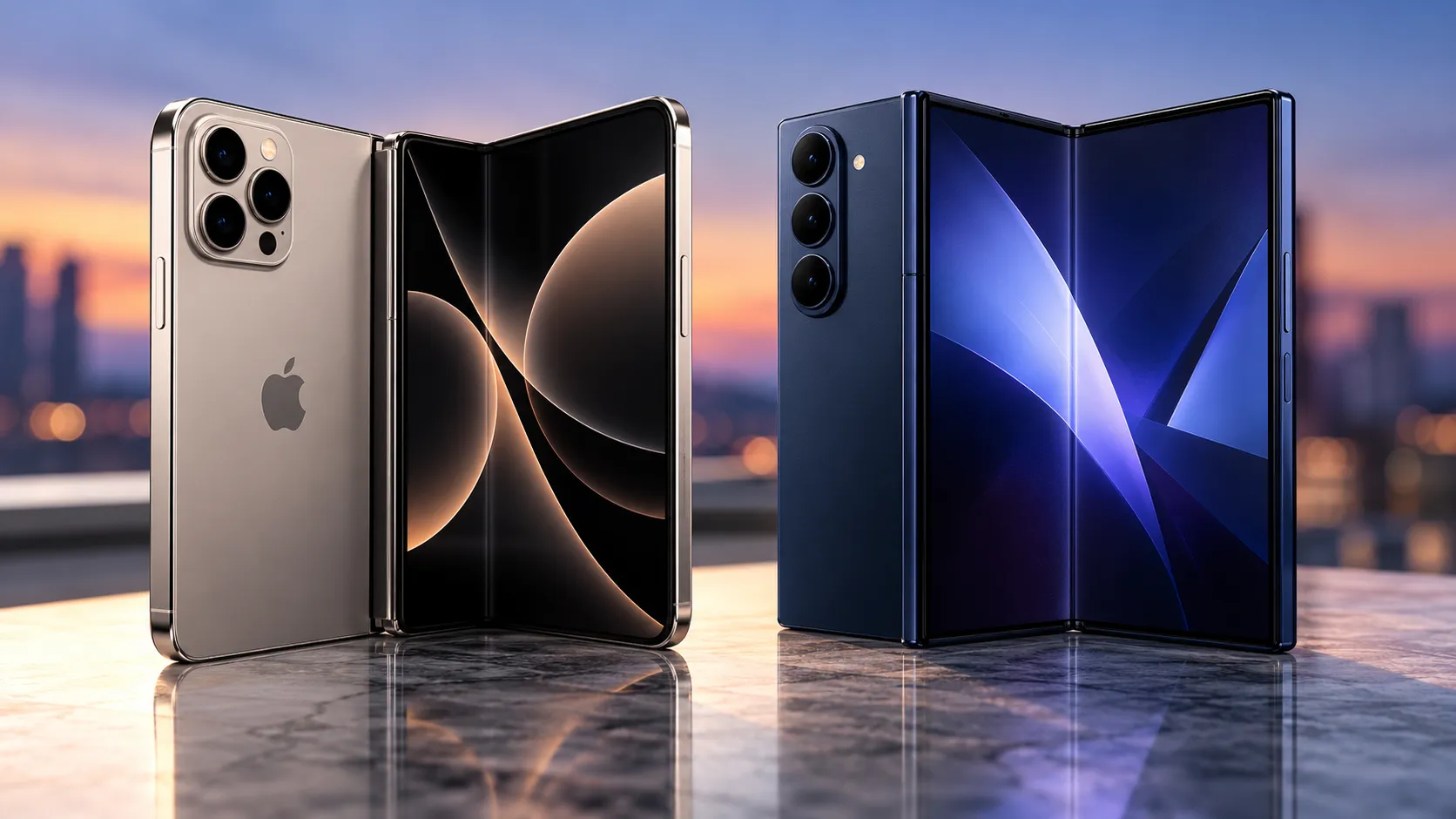
If you're holding a Z Fold 4 or older: You're likely due for an upgrade anyway, and the Z Fold 6 or upcoming Z Fold 7 will almost certainly maintain traditional trade-in support. Unless you absolutely need three screens for your workflow (and let's be honest, most of us don't), the conventional Z Fold line offers a more economical upgrade path with all those familiar promotional supports we've come to expect. You'll still get a cutting-edge foldable experience without the luxury tax.
If you own a Z Fold 5 or Z Flip 5: Your device is still current-generation capable. Without trade-in value to offset the Z TriFold's price, you're looking at a pure luxury purchase—potentially $2,500 or more for what amounts to incremental capability gains in most real-world scenarios. Ask yourself honestly whether that third screen solves an actual problem in your workflow or whether it's just cool tech that you want because it's new and innovative. There's no wrong answer, but it's worth being clear with yourself about which category you fall into.
If you're considering jumping from a traditional smartphone: The Z TriFold might actually make more sense for you than it does for existing foldable owners. You're not losing trade-in value you've come to expect over multiple upgrade cycles. And if you're ready to make the leap to foldables, going straight to the most advanced form factor has a certain logic to it—assuming you can stomach the price and you're genuinely excited about what three screens enable rather than just buying into the novelty.
PRO TIP: Before committing to any foldable purchase, check Samsung's trade-in calculator for your specific device and region. Values can fluctuate significantly based on timing and promotional periods, and what's true at launch may shift within weeks as Samsung adjusts its market strategy.
Regional considerations matter too, and this is something people often overlook. Samsung's promotional strategies vary significantly by market. South Korean buyers often see different trade-in structures than U.S. customers, and European markets have historically received fewer aggressive promotions across the board. Early listing data doesn't always reflect final regional pricing and promotional strategies, so it's worth waiting for official announcements before writing off trade-ins entirely. We've seen plenty of cases where early leaks suggested one thing and launch reality delivered something different.
Where Samsung's foldable strategy goes from here
The Z TriFold's apparent trade-in strategy—or lack thereof—raises bigger questions about Samsung's foldable roadmap going forward. Are we looking at a one-off experiment in ultra-premium positioning, or is this the beginning of a tiered approach where mainstream Z Folds get trade-in support while advanced variants don't?
Samsung faces competitive pressure from multiple directions right now. Chinese manufacturers like Huawei, Xiaomi, and Honor have pushed foldable innovation ahead of Samsung in areas like thinness, crease visibility, and battery life. These devices aren't widely available in Western markets yet, but that situation could change—and when it does, Samsung's trade-in advantages could become crucial competitive differentiators. Meanwhile, Google's Pixel Fold has established a real beachhead in the premium Android foldable space with tight software integration and competitive pricing—often supported by its own trade-in programs that mirror what Samsung has been doing.
If Samsung segments its foldable lineup into "accessible premium" (Z Fold and Flip with trade-ins) and "aspirational luxury" (Z TriFold without), it could theoretically maintain both volume sales and brand prestige. But execution matters enormously here. Price the Z TriFold too high without sufficient differentiation beyond "it has three screens," and it becomes a curiosity rather than a desirable product. Make it too successful, and buyers will start to resent paying more for the "good" foldable while the standard Z Fold feels like a compromise they're settling for.
The other wildcard in all this: what happens when competitors inevitably launch their own tri-fold devices? And they will—that's just how this industry works. If OnePlus or Google releases a three-screen foldable with aggressive trade-in support, Samsung's luxury positioning suddenly looks less like strategic brilliance and more like leaving money on the table—particularly given that software optimization matters more than hardware novelty in determining real-world foldable utility, an area where Google's tight Android integration gives it natural advantages.
Don't Miss: The key takeaway isn't whether the Z TriFold will be technically impressive—it almost certainly will be. The question is whether Samsung can justify luxury pricing without the promotional safety net that's defined foldable accessibility for years, and whether that positioning serves the company's long-term foldable ambitions or undermines them.
For now, we're working with early signals rather than official policy. Samsung hasn't confirmed the Z TriFold's existence, let alone its promotional strategy. Product leaks and listing data can be misleading, and plans change right up until launch. But if the no-trade-in indication holds when Samsung finally pulls back the curtain on this device, it's a clear signal that the company sees it as something fundamentally different from the foldables that came before. And that difference comes with a price tag that trade-ins won't be there to soften. Whether that's brilliant positioning or a strategic misstep probably depends on how well Samsung executes on making people actually want to spend that money without the discount safety net they've come to expect.


Comments
Be the first, drop a comment!