



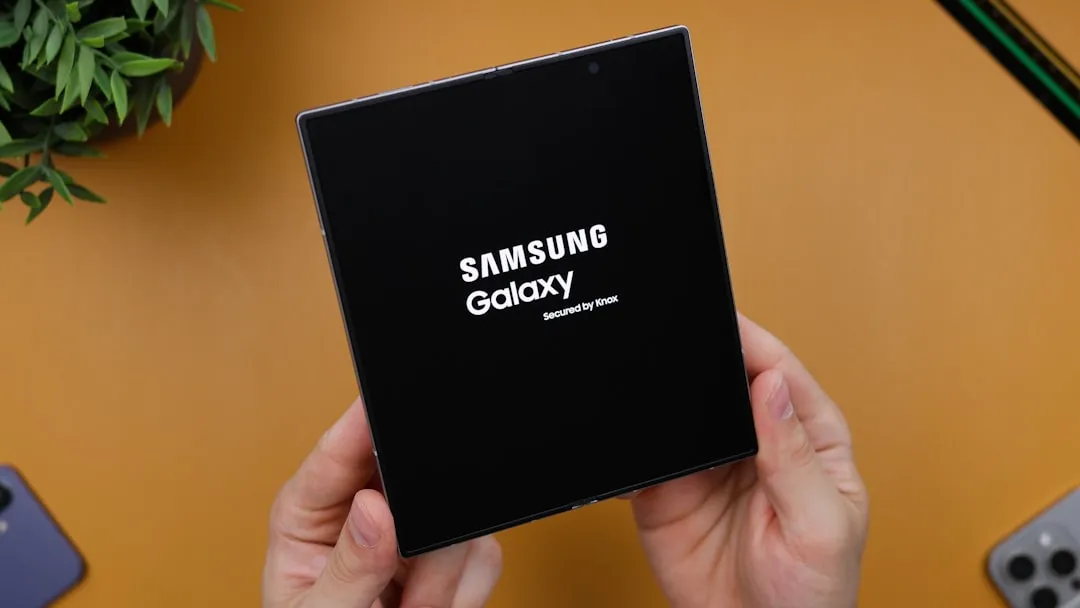
Samsung's latest foldable innovation has been making waves, but not for the reasons the company hoped. Recent durability testing of the Galaxy Z TriFold reveals some concerning weaknesses that potential buyers need to know about. While Samsung states a 200,000-fold rating, independent testing tells a different story. The device struggles when faced with real-world stress scenarios, particularly when subjected to bending forces in unintended directions. Testing shows the TriFold fails dramatically under moderate pressure, with pixels going dark and hinges snapping during standard durability assessments.
The engineering challenges here are significant. Unlike Samsung's proven single-hinge design, the TriFold's dual-hinge architecture introduces multiple failure points that must work in perfect harmony. Each additional hinge multiplies the mechanical complexity, creating more opportunities for wear, misalignment, and catastrophic failure.
What happens when things go wrong?
The Galaxy Z TriFold's vulnerabilities become apparent quickly during stress testing. Display pixels tear and go completely dark after a quick bend in the wrong direction, demonstrating the fragility that remains inherent in cutting-edge foldable display technology. What's particularly concerning is how rapidly the damage occurs—this isn't gradual degradation but immediate, catastrophic failure.
Even more alarming, the bottom portion of the right hinge snaps during bend testing, revealing a fundamental weakness in the dual-hinge design. The engineering challenge of creating two hinges that can withstand identical stress loads appears unsolved. When compared to its sibling, the Galaxy Z Fold 7 performed significantly better in similar bend tests with fewer wounds, highlighting how the TriFold's increased complexity directly compromises its structural integrity.
This performance gap isn't just about build quality—it reflects the inherent trade-offs of tri-fold engineering. Samsung has spent years perfecting their single-hinge mechanism, achieving a 500,000 fold rating on the Galaxy Z Fold 7. The TriFold's 200,000 fold rating represents a significant step backward in mechanical durability, suggesting the technology isn't quite ready for the complexity demands of tri-folding designs.
Real-world endurance testing reveals limitations
Extended testing by Korean YouTube channel OMG_electronics provides sobering insights into the TriFold's long-term durability. The device lasted only 144,000 folds in automated testing, falling short of Samsung's promised 200,000 cycle rating by 28%. This gap between marketing promises and real-world performance raises questions about Samsung's testing methodology versus independent verification.
Failure occurred when the hinge lost friction and wouldn't open and close properly anymore, marking the end of the device's functional life. This type of failure is particularly frustrating for users—the device doesn't break catastrophically, but gradually becomes unusable as the hinges lose their precision and tactile feedback.
Perhaps most telling about the progressive mechanical degradation, the first hinge began making audible creaks at just 61,000 folds, with the second hinge following suit at 121,000 folds. These early warning signs indicate that users would notice performance degradation well before complete failure. To put this in perspective, 61,000 folds represents roughly 20 months of Samsung's projected usage pattern—meaning you'd start hearing concerning mechanical sounds before reaching two years of ownership.
The degradation pattern also reveals asymmetric wear between the two hinges, suggesting manufacturing tolerances or design differences that cause uneven stress distribution. This engineering challenge highlights why Samsung's simpler dual-fold design has proven more reliable over time.
Environmental challenges compound the problems
The TriFold's mechanical vulnerabilities extend beyond pure stress testing to environmental factors that affect daily use. The device shows much less resistance to pocket sand compared to traditional smartphones, exposing a critical weakness in real-world conditions. The dual-hinge design creates multiple ingress points where particles can infiltrate the mechanism.
The device doesn't appear to handle dirt well during tests, which is particularly problematic given the TriFold's design philosophy. Every fold and unfold action creates multiple pathways for debris to enter moving parts, while the complex hinge geometry makes cleaning nearly impossible for users. The two hinges effectively double the vulnerable surface area compared to traditional foldables.
While both the TriFold and Fold 7 are rated IP48 for dust and water resistance, the ratings tell only part of the story. The IP48 rating indicates protection against objects larger than 1mm and water immersion up to 1.5 meters for 30 minutes. However, the "4" rating provides limited dust protection—fine particles can still penetrate the device, and the TriFold's additional complexity makes it more susceptible to this infiltration in practice.
The environmental challenges highlight a fundamental engineering tension: the more complex the folding mechanism, the more opportunities exist for environmental factors to compromise functionality. Samsung's IP48 rating represents the current limitations of sealing technology for complex foldable designs.
The bottom line: innovation meets reality
These durability challenges illuminate the inherent trade-offs in pushing foldable technology beyond proven limits. The Galaxy Z TriFold simply gives up during durability testing, demonstrating that while the engineering achievement is remarkable, the practical resilience requires further development.
The fundamental engineering challenge lies in the device's physical constraints. The device weighs 309 grams and measures 12.9mm thick when folded, creating an interesting paradox: you're carrying a heavier, bulkier device that simultaneously requires more careful handling than a traditional smartphone. This weight approaches that of many tablets while offering less durability than conventional phones.
Samsung plans to bring the device to global markets including the US by early 2026, but potential buyers should carefully evaluate whether the innovative form factor justifies the durability compromises and premium pricing around $2,500.
PRO TIP: If you're considering the TriFold, think carefully about your usage patterns. Heavy folders—those who frequently open and close their devices throughout the day—may hit those concerning degradation milestones faster than Samsung's testing suggests.
The TriFold represents Samsung pushing the boundaries of what's possible with current materials science and manufacturing techniques. The 10-inch display provides genuinely impressive screen real estate for productivity tasks, and the engineering achievement deserves recognition. However, the durability testing reveals that trifold technology isn't quite ready for mainstream adoption.
For early adopters who prioritize cutting-edge technology and don't mind the extra care required, the TriFold offers a unique experience that no other globally available device can match. For everyone else, the combination of reduced durability, increased weight, and premium pricing suggests waiting for the next generation may be the wiser choice. Samsung's proven dual-fold technology in the Galaxy Z Fold 7 offers a more mature, reliable alternative for those wanting foldable functionality without the tri-fold compromises.


Comments
Be the first, drop a comment!