





Galaxy Watch Fainting Prediction Explained: Lab Results vs. Real Life
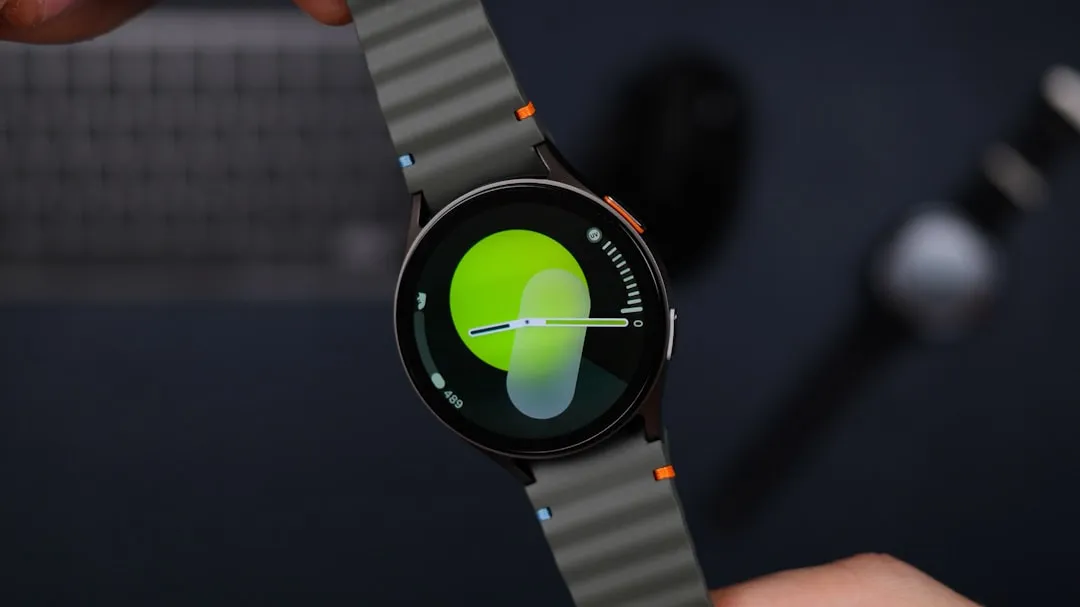
A peer-reviewed clinical study has validated the Galaxy Watch6's ability to predict vasovagal syncope up to five minutes before an episode occurs. That's a real finding, published this week in a credible cardiology journal. It is not, however, evidence that the watch on your wrist can warn you before you faint and Samsung's "world-first breakthrough" announcement does little to draw that distinction.
The study, conducted jointly with Chung-Ang University Gwangmyeong Hospital and published in European Heart Journal – Digital Health, a journal of the European Society of Cardiology, used the watch's PPG sensor and an AI model trained on heart rate variability data to predict fainting events, according to the Samsung Global Newsroom. The Galaxy Watch fainting prediction model was tested on 132 patients with suspected VVS symptoms, episodes were deliberately triggered using head-up tilt tests, and the algorithm flagged impending episodes ahead of time. Peer-reviewed publication is a meaningful credibility bar. So is understanding exactly what was tested.
What the Galaxy Watch fainting prediction study actually measured
The head-up tilt test is a standard clinical procedure: patients are secured to a motorized table, tilted upright at a steep angle, and monitored while their cardiovascular system responds. In susceptible individuals, this reliably provokes the blood pressure drop that causes VVS. It is controlled, repeatable, and specifically designed to produce the outcome being studied. That context matters enormously when reading the performance numbers.
Samsung foregrounds 84.6% overall accuracy, but the more informative measures are sensitivity and specificity. Sensitivity of 90% means the algorithm caught nine out of ten actual fainting episodes a strong result for a screening tool. Specificity of 64% means more than one in three alerts fired without an episode following, according to the same announcement. Think of it as a smoke alarm calibrated to catch every fire but one that trips on toast roughly a third of the time.
Those numbers come from a setting where episodes were induced on schedule under clinical supervision. The specificity figure is a meaningful qualifier, not a footnote, because real-world use is structurally different: a user would be wearing the watch continuously, VVS episodes would be infrequent and unpredictable, and the signal-to-noise ratio of passive monitoring is far harder to manage than a controlled hospital test.
The condition itself is common enough to make this research consequential. Up to 40% of people experience VVS at some point in their lives, and roughly one in three of those will have recurrent episodes, according to Professor Junhwan Cho of the Department of Cardiology at Chung-Ang University Gwangmyeong Hospital. Professor Cho noted that an early warning could give patients time to reach a safe position or call for help, which he said would significantly reduce secondary injuries from falls. The Korean newsroom specifically identifies patients who cannot perceive their own prodromal symptoms the dizziness, nausea, or visual changes that often precede an episode as the group that stands to benefit most. For that population, a working five-minute warning would be clinically significant.
What the study cannot tell us and what a real feature would require
Controlled provocation is the study's strength, and its main limitation. The algorithm was trained and evaluated on induced episodes in a hospital environment. Samsung's announcement does not describe how the model performs during continuous, passive wear the kind of always-on monitoring that a consumer feature would require. Real-world VVS is triggered by unpredictable factors: prolonged standing, heat, emotional stress, dehydration. Whether HRV patterns detected on a tilt table translate to useful signals during daily activity remains an open question, and the study does not answer it. For the research to advance toward a consumer application, a real-world deployment study with continuous passive monitoring would need to show comparable performance outside clinical conditions. Independent replication of the tilt-table results would also be a standard next step before regulatory bodies would take a submission seriously.
The false-positive rate raises a separate practical concern. Someone who rarely faints but receives erroneous alerts several times a week faces a compounding problem: the alerts themselves become noise. Alert fatigue is documented across medical monitoring applications users learn to dismiss notifications that are usually wrong, which means the alerts that are correct also get ignored. At 64% specificity in a low-frequency condition, that dynamic is a genuine design challenge for any future consumer feature.
There is also no shipping product here. Samsung's announcement carries no regulatory clearance, no FDA authorization, no Korean MFDS approval, and no consumer release timeline, per the announcement. Samsung says it plans to expand collaboration with medical institutions and continue advancing its wearable health monitoring capabilities. That describes a research program, not a product roadmap.
What regulatory clearance actually involves is instructive. Samsung's Irregular Heart Rhythm Notification feature, which received FDA clearance about three years ago, monitors heart rhythms passively in the background but only alerts the user after a series of consecutive irregular measurements not a single anomalous reading, according to the Samsung U.S. Newsroom. That confirmation-stacking approach is deliberate engineering: it suppresses false positives before any notification reaches the user. A Galaxy Watch vasovagal syncope prediction feature would need to solve the same problem at higher stakes, given that a fainting episode is acute and time-sensitive in a way that AFib pattern detection is not.
Where this fits in Samsung's health feature trajectory
What makes the fainting study genuinely notable, even at this early stage, is the category of claim it represents. Samsung's existing cleared health features detect patterns or flag chronic conditions after the fact. This study attempts something different: predicting an acute physiological event before it occurs. That is a harder problem, and demonstrating any predictive signal in a peer-reviewed trial is a meaningful first step.
Samsung's track record with health features follows a consistent arc. Sleep apnea detection received Korean MFDS approval in late 2023 and was described as a proactive tool for recognizing the disorder at its earliest stages, per the Samsung Global Newsroom. Blood pressure monitoring became available to U.S. users six weeks ago, accompanied by explicit disclaimers: the feature is not intended to diagnose or prevent high blood pressure, and it requires recalibration against an upper-arm cuff every 28 days, according to the Samsung U.S. Newsroom. Every cleared feature arrives with more caveats than its announcement implied.
The vasovagal syncope research sits at the earliest point in that same arc clinical validation, no regulatory submission yet, no consumer availability. The gap between a publishable finding and a cleared feature is substantial, and Samsung's other health features show that the company knows how to navigate it. Whether the specificity figures can be improved enough to survive real-world deployment is the central question that follow-on research will need to answer.
Who should actually be paying attention
The people with the most at stake in this research are not general consumers. They are patients with diagnosed or suspected recurrent VVS, particularly those who cannot reliably sense their own warning signs and currently have few reliable options for advance notice before an episode.
For that group, the study's limitations matter less as a reason to dismiss the work than as a description of what still needs to happen. Real-world validation with continuous passive monitoring. Independent replication of the core finding. A regulatory submission that requires the algorithm's performance to be scrutinized outside Samsung's own research environment. None of those steps have been announced, but the peer-reviewed publication means the underlying signal has cleared a credibility threshold that typical product claims never reach.
The Galaxy Watch6 detecting a VVS precursor signal during a tilt-table test is a real and publishable result, per the Samsung Global Newsroom. It is not the same claim as a watch that warns you before you faint in daily life. Samsung's framing collapses that distinction. The study design, read carefully, preserves it.




Comments
Be the first, drop a comment!