



Galaxy S26 Exynos 2600 vs Snapdragon 8 Elite: What the Data Shows
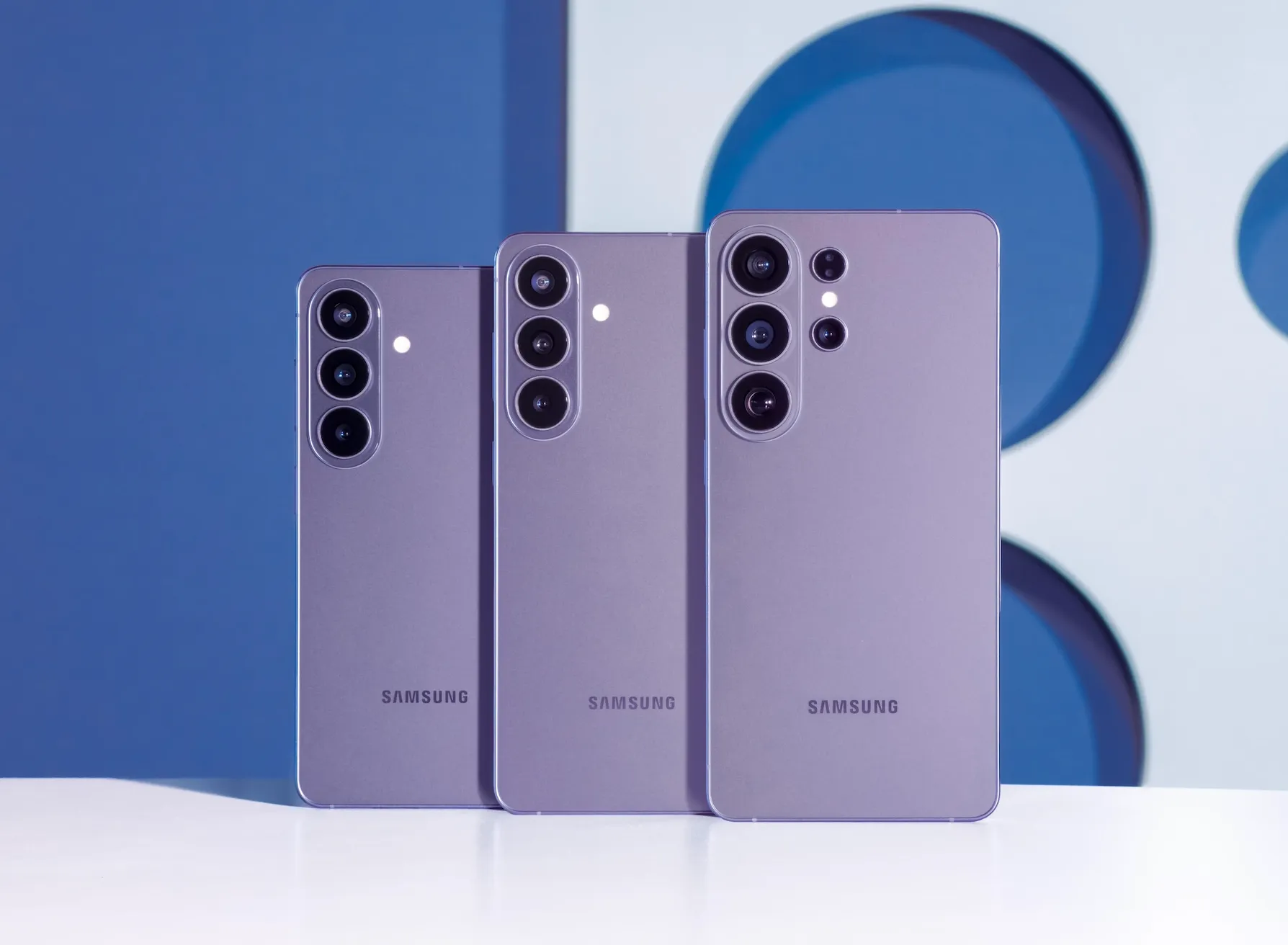
Samsung's own product lineup settles the Galaxy S26 Exynos 2600 vs Snapdragon 8 Elite debate more clearly than any benchmark. The Galaxy S26 Ultra ships with Qualcomm's Snapdragon 8 Elite Gen 5 in every market, without exception. The Galaxy S26 and S26+ get Samsung's new Exynos 2600 in Europe, South Korea, India, and parts of Asia. That division isn't accidental. It's the clearest signal Samsung has sent about where it ranks its own chip right now (Android Authority, February 2026).
The Exynos 2600 is not the embarrassment its predecessors were, though. It's built on Samsung's own 2nm gate-all-around process, the first commercially announced smartphone SoC built on a 2nm GAA process, arriving ahead of Qualcomm, Apple, and MediaTek (Android Police, December 2025). Its GPU posts competitive scores against Qualcomm's Adreno 840 in ray-tracing tests. It carries a novel on-die thermal design that Qualcomm won't adopt until its next generation.
The argument here is specific: Exynos 2600 represents a genuine technical comeback for Samsung, real progress on process, graphics, and thermal engineering, but it doesn't beat Snapdragon 8 Elite Gen 5 on the metric most tied to everyday performance. For buyers in Exynos markets deciding between a Galaxy S26/S26+ and an Ultra, understanding this split is the difference between knowing what you're getting and assuming the gap doesn't matter.
Samsung's lineup decision is the most legible signal
Start with the product structure, before any benchmarks.
The Galaxy S26 Ultra uses Snapdragon 8 Elite Gen 5 everywhere, US, Europe, Asia, every market (Android Authority, February 2026). The S26 and S26+ use Exynos 2600 in South Korea, India, and most of Europe, while US buyers and select others get Snapdragon across the standard lineup as well. There is no version of the Ultra running Exynos anywhere.
Part of this reflects supply constraint, not pure strategic confidence. Earlier reporting indicated Samsung would face limited Exynos 2600 quantities because 2nm yield rates at its foundry are still maturing, a known challenge with any new process node, and one that mirrors what Samsung encountered with the Exynos 990 years ago (Android Police, March 2025). TSMC's 3nm, which Qualcomm uses for the Snapdragon 8 Elite Gen 5, is a more established process with better-understood yields. The gap between a more advanced node on paper and a more reliable node in production is real.
Supply constraints and strategic confidence aren't mutually exclusive, though. Samsung could have managed Snapdragon allocation differently if it wanted Exynos in the Ultra. It didn't. That choice is the clearest statement Samsung has made about where it currently ranks its own chip relative to Qualcomm's.
What Exynos 2600 actually improved: process, GPU, and thermals
The Exynos 2600 makes a strong case for itself on three fronts, and each one is worth examining on its merits rather than Samsung's marketing copy.
The 2nm GAA process is the headline. Gate-all-around architecture surrounds the transistor gate on all four sides rather than three, allowing tighter control of current leakage and, in theory, better power efficiency at equivalent performance levels (Igor'sLAB, February 2026). The Snapdragon 8 Elite Gen 5 operates on TSMC's 3nm, a larger node numerically, though TSMC's execution track record makes the practical gap more ambiguous than the numbers suggest.
The GPU is the more directly testable improvement. The Xclipse 960 is Samsung's third-generation AMD-derived GPU, now built on RDNA4, the same architecture generation AMD used in its 2025 desktop discrete cards. Samsung claims compute performance doubles over the previous generation and ray-tracing throughput improves by 50% (Android Authority, February 2026). The chip also supports Exynos Neural Super Sampling (ENSS), an AI-based frame upscaling feature comparable in concept to what Qualcomm offers on the Adreno side (SammyGuru, February 2026).
Thermals are the harder-to-verify piece. Samsung embedded a copper Heat Pass Block directly on the Exynos 2600 die, a structure designed to pull heat away from the chip faster than conventional cooling allows (Igor'sLAB, February 2026). Qualcomm's current Snapdragon design doesn't include an equivalent, and Android Authority noted in February 2026 that the some early hands-on testing reported warmer sustained thermals. Whether HPB delivers meaningful real-world benefits under sustained load is still unconfirmed, but structurally it's an advantage Qualcomm won't match until the next generation.
Galaxy S26 Exynos 2600 vs Snapdragon 8 Elite benchmark breakdown
| Test | Exynos 2600 | Snapdragon 8 Elite Gen 5 | Gap | |---|---|---|---| | Geekbench 6 single-core | 3,105 | 3,670 | Qualcomm +18% | | Geekbench 6 multi-core | 10,444 | 10,981 | Qualcomm +5% | | Geekbench 6 OpenCL | 24,240 | 24,152 | Exynos +0.4% | | PowerBoard Vitro ray-tracing | 8,321 | 7,649 | Exynos +8.8% |
Geekbench 6 post-launch results put the CPU competition in plain terms. The Snapdragon 8 Elite Gen 5 scored 3,670 single-core and 10,981 multi-core. The Exynos 2600 scored 3,105 and 10,444, a gap of roughly 18% on single-core and about 5% on multi-core (Igor'sLAB, February 2026). NotebookCheck found the same directional result in February 2026, averaging the CPU gap at around 10% across its comparison set. The exact margin shifts by run and framing; the winner doesn't.
Igor'sLAB identifies single-core performance as the more practically relevant figure, the one that drives app launch speed, UI responsiveness, and browser rendering. An 18% gap there isn't invisible on a spec sheet.
On GPU, the picture splits depending on the test. In Geekbench 6's OpenCL benchmark, Exynos leads narrowly: 24,240 to 24,152 (Igor'sLAB, February 2026). In the PowerBoard Vitro ray-tracing benchmark, the Xclipse 960 scores 8,321 versus the Adreno 840's 7,649, roughly an 8.8% Exynos advantage in that specific test (SammyGuru, February 2026). MLPerf Mobile v5.0 results showed Exynos 2600 outperforming Snapdragon in language understanding and object detection tasks, though that data comes from thinner sourcing and warrants more caution than the Geekbench numbers (SammyGuru, February 2026).
One methodological caveat matters here: the primary post-launch Geekbench comparison didn't confirm whether the Exynos device tested was the S26 or S26+, and Vulkan GPU results, the API used by most modern Android games, weren't part of the same test round. Earlier data suggested Exynos leads Qualcomm in OpenCL but trails in Vulkan (Wccftech, February 2026). The GPU case for Exynos is real but narrower than the ray-tracing headline implies.
What the gap probably feels like in daily use
Benchmark numbers are useful for ranking chips. They're less useful for predicting whether you'll notice the difference while using a phone.
The 18% single-core deficit is most likely to show up in tasks that depend heavily on one core at a time. Camera processing is the obvious one. On a modern Samsung flagship, the moment you hit the shutter, the phone is doing HDR merging, noise reduction, and scene recognition in rapid succession. That workload is single-core intensive, and a gap of this size could translate to slightly slower photo processing speeds, especially on Exynos S26 units shooting in Pro mode or burst. Video exporting, game load times on titles with heavy asset streaming, and complex document rendering in productivity apps sit in the same category. These are the areas where the Snapdragon advantage is most likely to surface in actual use.
Where it almost certainly won't matter: messaging, social media scrolling, streaming video, web browsing at normal loads, camera preview. These tasks don't push a single core hard enough for an 18% peak difference to register. The multi-core gap is small enough that most users wouldn't notice it during everyday multitasking either.
Gaming is the genuinely uncertain category. The Exynos 2600's ray-tracing edge and the potential HPB thermal advantage could make it competitive or even preferable during extended gaming sessions, but that's the domain where sustained performance data, not short-burst benchmarks, tells the real story. That data hasn't been published yet.
What remains unanswered
Geekbench runs in short controlled bursts. It tells you about peak capability, not what happens after 20 minutes of gaming or a long video processing job. Sustained performance data, the conditions where HPB's thermal advantage would be most visible, hasn't been published for retail hardware as of early April 2026. Wccftech flagged this directly in February 2026: those numbers were forthcoming.
Several buyer-relevant questions remain open:
Battery life: No head-to-head runtime comparison between Exynos and Snapdragon Galaxy S26 units exists in current reporting. The Exynos 2600 uses an external modem, a first for Samsung's own chip, though not unusual given Apple and Google do the same. The real-world battery and connectivity implications of that choice on Samsung hardware are unverified (Android Police, December 2025).
Gaming frame stability: The ray-tracing benchmark win is encouraging, but extended gaming involves sustained thermal and GPU load, precisely the conditions HPB is supposed to improve and that short-burst tests don't capture.
Perceptible CPU difference: The 18% single-core gap is meaningful on paper. Whether a typical user notices it day-to-day depends heavily on how they use the phone, and the answer probably varies by person.
For buyers, the practical read is this: a Galaxy S26 or S26+ in an Exynos market delivers a chip with real architectural improvements over Samsung's recent past, a GPU that is competitive in several tests, and a thermal design that may prove meaningful once sustained testing arrives. What you're not getting is the chip Samsung reserved for its flagship model. That's the honest framing, and it's what the current data supports.
The bottom line on Samsung's chip split
The Exynos 2600 is the strongest case Samsung has made for its in-house chip in years. The 2nm GAA process is a real manufacturing milestone. The Xclipse 960, backed by AMD's RDNA4 architecture, is genuinely competitive in OpenCL and ray-tracing benchmarks and posts a narrow edge over Qualcomm's Adreno 840 in those tests. The HPB thermal system is a structural advantage the Snapdragon design doesn't currently share.
None of that has changed the practical hierarchy. Snapdragon 8 Elite Gen 5 leads by roughly 18% in single-core CPU performance (Igor'sLAB, February 2026), the metric most linked to everyday responsiveness, and it powers every Galaxy S26 Ultra sold worldwide (NotebookCheck, February 2026). Samsung's own product decisions are the most unambiguous statement available about which chip the company rates more highly at this moment.
The more forward-looking question is whether Exynos is closing the gap or simply narrowing it. The 2600 suggests closing is now at least plausible. What sustained performance data, battery life tests, and extended gaming benchmarks ultimately show will determine whether that optimism is earned or premature.






Comments
Be the first, drop a comment!