





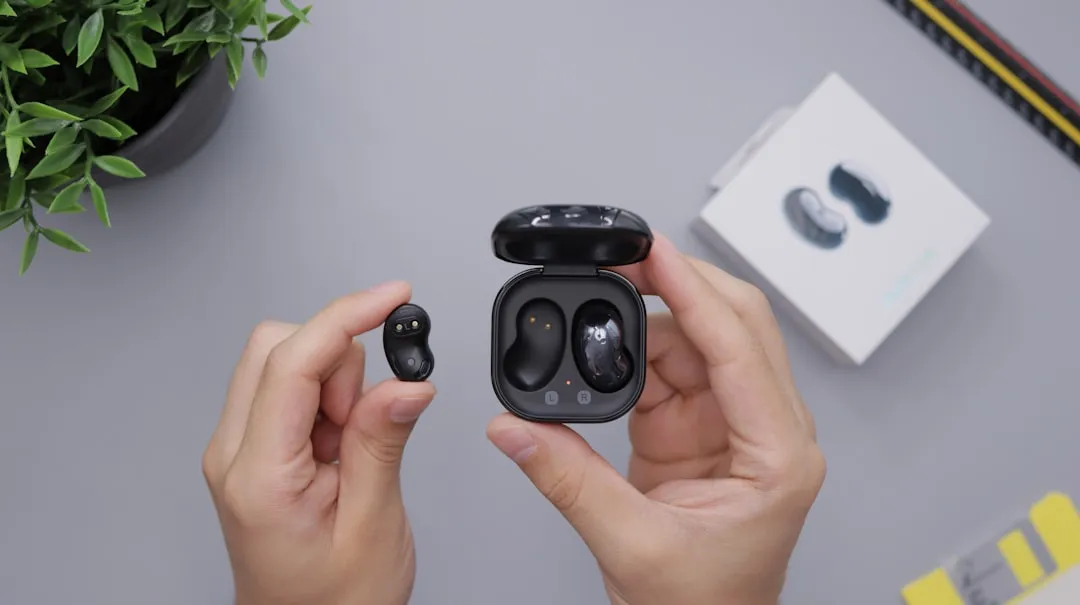
Samsung Galaxy Buds Able Spotted in App Code With Unusual Model Number
A device called "Galaxy Buds Able" has turned up inside Samsung's Galaxy Wearable app, carrying the model number SM-U600. Samsung has never used that designation for any audio product. The entry sits in the same structured device list as the Galaxy Buds 4 and Buds 4 Pro, which puts it well above the noise level of a stray code comment though it falls well short of a launch announcement.
Three tiers of certainty apply here. Confirmed: a real, structured device entry exists with a model number that breaks every pattern Samsung has established for its earbuds. Likely: this represents something different from a standard Galaxy Buds release. Possible but unconfirmed: it's Samsung's first move into bone conduction audio. Everything beyond that is speculation, and this article won't pretend otherwise.
Samsung has made no announcement and has not confirmed the device's existence, timeline, or specifications. iXBT Live reported on the leak yesterday.
What the evidence actually confirms: the app entry and its anomalies
APK teardowns, the practice of analyzing an app's code before a public update, can surface real in-development products. They can also surface dead ends. As Android Authority noted in its report this week, work-in-progress code entries may never reach public release. A structured device list entry carries more weight than a stray string, but it is not a product announcement.
With that caveat on the table, the specific anomalies here are worth documenting carefully.
The abbreviated name breaks the pattern Samsung uses for every other product in the same list. The Galaxy Buds 4 shortens to "Buds4" in the app; the Galaxy Buds 4 Pro shortens to "Buds4 Pro." Both are clean, product-family labels. The new entry shortens to "Galaxy Able" not "Buds Able." Samsung's app labels it differently from the Buds 4 entries, which suggests it may not be a standard Buds product.
The codename break reinforces this. The Galaxy Buds 4 and Buds 4 Pro both use composer-themed internal codenames. "Able" shares no thematic connection to that scheme, a small but consistent signal that this device is being tracked on a separate internal path, per Android Authority.
Then there's the model number. That's the clearest anomaly in the record.
Every Galaxy Buds product Samsung has released uses an SM-R prefix:
Galaxy Buds 4: SM-R540
Galaxy Buds 4 Pro: SM-R640
Galaxy Buds 3 FE: SM-R420
Galaxy Buds Core: SM-R410
SM-U600 fits nowhere in that sequence, as Android Authority confirmed. The SM-U suffix does appear elsewhere in Samsung's lineup the Galaxy S26, for instance, is SM-S942U but that's a regional designation appended to an existing model number for US-market smartphone variants, not a standalone prefix defining a product category. SM-U600 as a primary identifier is genuinely new territory.
SM-U600 has also produced none of the certification trail that typically precedes a Samsung audio launch. The Galaxy Buds 4 and Buds 4 Pro appeared across FCC, SIRIM, BIS, and SGS databases before their February debut, as The Tech Outlook reported in January. The Galaxy Buds 3 Pro's battery certification appeared on TÜV and BIS databases well ahead of its reveal, according to 91mobiles. SM-U600 has generated nothing comparable.
That absence matters but it's not the most interesting part of this story.
Why Samsung would need a non-Buds product right now
Samsung's in-ear audio lineup is already stacked across three tiers. At the top, the Galaxy Buds 4 Pro. In the middle, the Galaxy Buds 4. Both launched on February 25, 2026, at Galaxy Unpacked in San Francisco, featuring 24-bit/96kHz audio, personalized AI-tuned ANC, and voice-triggered access to Gemini and Perplexity, per the Samsung Global Newsroom. At the budget end sits the Galaxy Buds 3 FE at $149.99, reviewed by SammyGuru in February. Another in-ear entry would just stack onto a shelf that's already fully stocked.
The gap Samsung doesn't currently address is open-ear, ambient-listening audio. None of the Buds products serve users who need to stay aware of their surroundings while listening runners, cyclists, workers in safety-sensitive environments, people with certain hearing profiles who simply can't or won't seal their ears. That's a distinct audience with established demand, currently served by competitors like Shokz and by others investing in open-ear formats.
Samsung has been pushing the Buds line toward voice-first use. The Buds 4 launch was framed explicitly as an AI assistant platform voice-triggered, hands-free, built around ambient interaction with Gemini and Perplexity. A device designed around environmental awareness rather than noise isolation would extend that direction into a form factor in-ear earbuds can't serve. That makes the leak easier to read: a new model number prefix, a dropped "Buds" label, and a separate internal codename all become consistent if this product is meant to sit adjacent to the Buds line, not alongside it.
Could this Samsung Galaxy Buds Able leak point to bone conduction?
Four independent anomalies point in the same direction: the structured placement in Samsung's live companion app, the break from SM-R naming, the "Galaxy Able" abbreviated label, and the separate internal codename. Taken together, they indicate Samsung is tracking this device as something distinct from its existing earbuds, as Android Authority reported.
Confidence that a distinct device exists in some stage of development: high. Confidence it will ship publicly: meaningfully lower, given the standard APK caveat.
iXBT Live reported this week that Samsung may be preparing its first bone conduction audio device, potentially under the "Galaxy Buds Able" or "Galaxy Able" name. Bone conduction transmits sound through skull vibrations rather than the ear canal, which can leave ambient sound more audible a fundamentally different listening experience from ANC-equipped in-ear earbuds. That would justify both a new product family and a new model number series.
The theory fits the evidence well. Bone conduction would explain the naming departure, the SM-U prefix, and the separate internal track. It also aligns with Samsung's push toward voice-first audio and addresses the ambient-awareness gap in the lineup with a technology purpose-built for exactly that use case.
It is not proven by the evidence.
Android Authority deliberately declined to endorse the bone conduction claim, noting that "Able" may simply be a working codename with retail branding still undecided. No renders, patents, hardware certifications, or Samsung statements in the available record establish bone conduction as the actual technology. The theory fits it isn't established. Confidence level: plausible, not confirmed.
What remains genuinely unknown:
Whether "Galaxy Buds Able" or "Galaxy Able" is the intended retail name or an internal placeholder.
Whether SM-U600 signals a new product category or reflects some other internal classification that happens to share the Galaxy Wearable app ecosystem.
Launch timing, pricing, target markets, and any specification detail.
What to watch for next
Samsung's own app contains a structured, non-incidental entry for an SM-U600 Samsung earbuds device with a naming convention that fits nothing in the existing Galaxy Buds family. That's the confirmed story. The bone conduction reading is the most coherent interpretation of the anomalies it isn't the only possible one.
Three signals would each mean something specific. SM-U600 appearing in FCC, SIRIM, or BIS databases would indicate the product is advancing toward a real launch the same certification path the Buds 4 series followed before its February debut. Renders or industrial design filings would confirm the physical form factor and settle the bone conduction question one way or another. A trademark filing for "Galaxy Able" or "Galaxy Buds Able" would signal Samsung has moved from internal codename to retail branding, and given how late that step typically arrives in the development cycle, it would put an announcement on the near horizon.
None of those signals have appeared yet. When they do, the picture will sharpen considerably.


Comments
Be the first, drop a comment!