



Samsung Galaxy A27 5G: Why screen quality is the smartest bet
Budget smartphones involve a series of small surrenders. Most of them fade. The plastic chassis stops registering after a few days. The middling processor becomes invisible when the phone handles what you actually ask it to do. But a weak screen never stops being a weak screen. Every scroll, every video, every glance at a notification is a reminder of the trade-off you made.
That's the premise behind a claim worth examining before the reviews land: in the sub-$400 5G segment, display quality is the hardware decision that pays the most continuous dividend to buyers. Samsung's upcoming Galaxy A27 5G is the occasion for making this argument. Not yet the proof of it. Confirmed specs and independent measurements aren't available. What follows is editorial analysis, not reported fact, and it should be read that way.
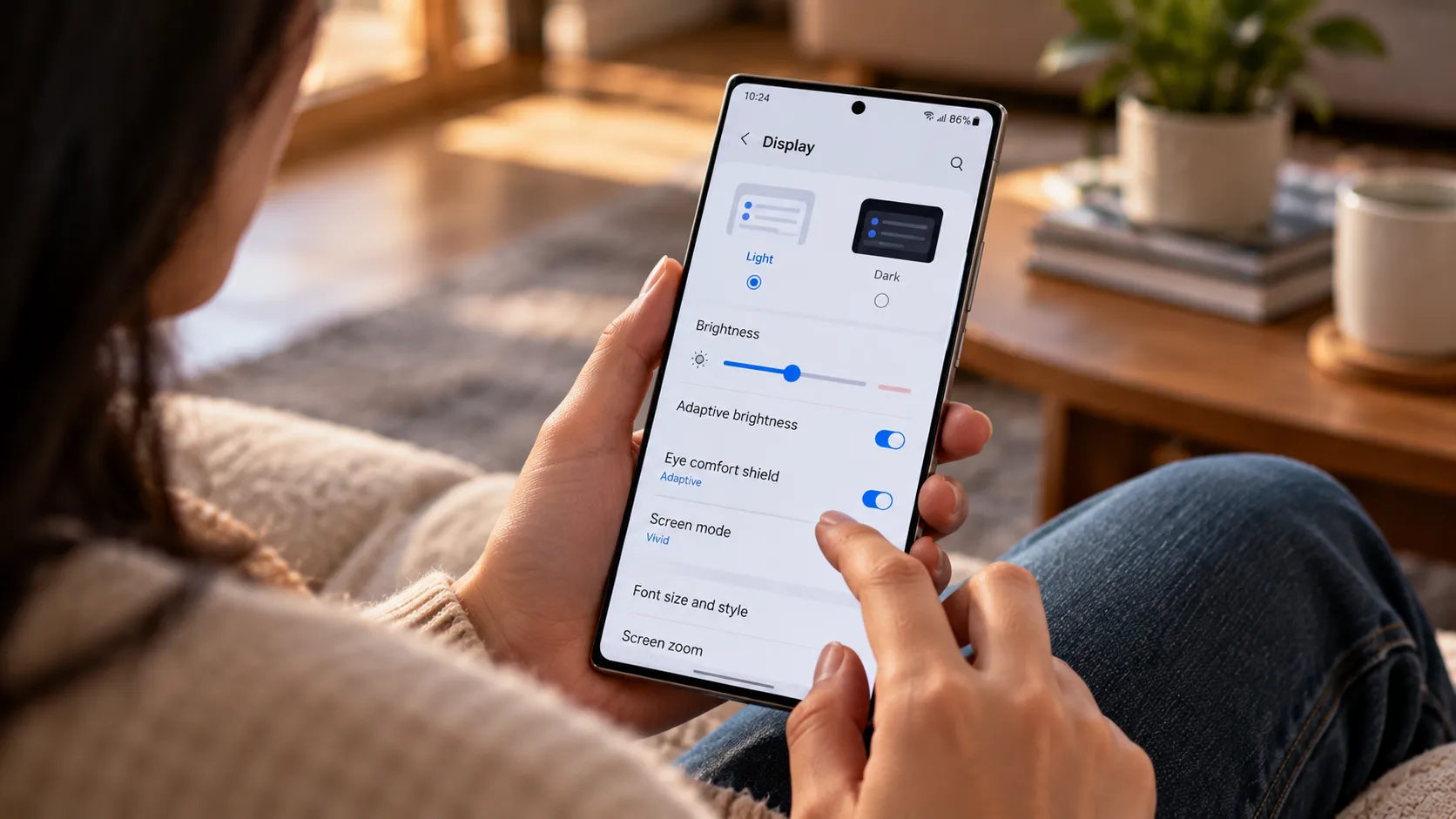
The screen is the one spec that's always on
Most phone features are intermittent. The camera app is open for a fraction of any session. The chipset works hard for a few seconds at a time. The screen is on from the moment you unlock the phone to the moment you put it down.
That's the core of the argument. A hardware improvement that returns value during every minute of use is more useful, at a given price point, than one that only pays off when you trigger a specific feature. Budget 5G manufacturers haven't always acted like they believe this. Replacing an AMOLED panel with IPS LCD is easy to justify as a cost decision. Dropping from 90Hz to 60Hz looks like a rounding error on a bill of materials. But both changes are immediately felt by anyone holding the phone, and neither gets easier to live with over time.
The camera objection deserves a direct answer because it lands hardest with buyers. More sensors and higher megapixel counts are appealing on paper. The problem is that camera performance in this tier is genuinely hard to evaluate from a spec sheet. Sensor resolution is a poor proxy for image quality; software processing usually matters more than the hardware underneath it. Display quality doesn't require that kind of interpretation. It reveals itself the moment you pick up the phone.
Chipset differences follow similar logic, as a matter of practical observation rather than benchmark data. Budget 5G phones have converged around a narrow band of mid-tier processors. The gap between competing options in this class tends to show up in synthetic tests, not in daily messaging and browsing. The difference between scrolling on a 60Hz LCD versus a 90Hz AMOLED is felt immediately, without running a test. If two hardware investments cost roughly the same but one is invisible in practice and the other isn't, the invisible one isn't really an upgrade for the person holding the phone.
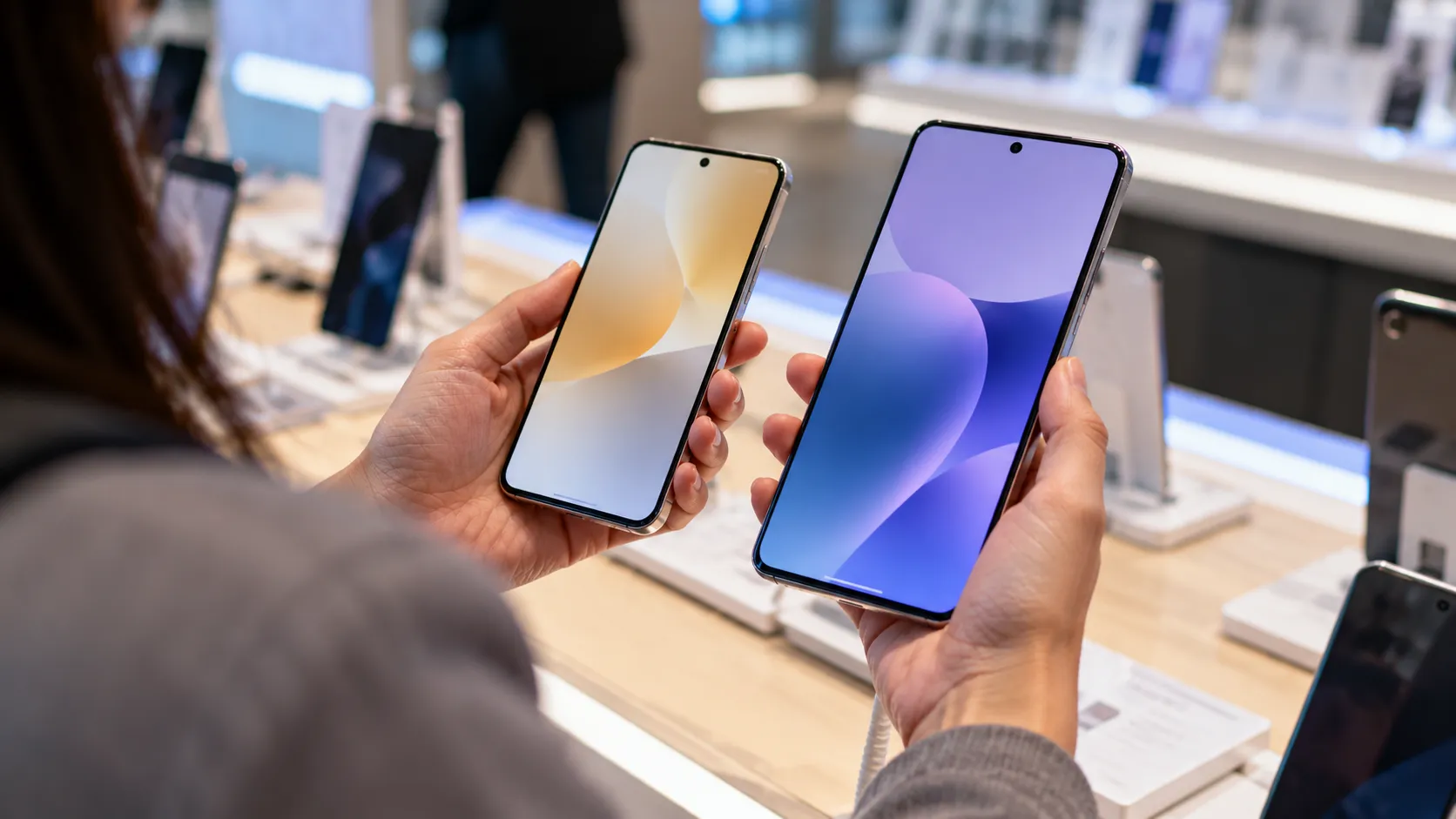
If you're comparing phones in this range, these are the specs worth examining:
- Panel type: AMOLED over LCD, for contrast and outdoor readability. The difference is immediately visible.
- Refresh rate: 90Hz is a practical threshold where scrolling starts to feel noticeably smoother. This is a rule of thumb, not a hard engineering standard.
- Peak brightness: Outdoor usability degrades below roughly 600 nits, as a general guideline rather than a precise cutoff.
- Megapixel count: Not a reliable proxy for camera quality in this tier. Ignore it as a comparison point.
- Chipset tier: Meaningful for sustained gaming; less so for the browsing and messaging that fills most sessions.
These aren't measurements drawn from independent testing. They're practical heuristics based on where perceptible improvements tend to cluster in this segment, and where they don't.
Why the economics work differently for Samsung
The display-first argument doesn't apply equally to every manufacturer competing in this price range. For Samsung, the cost structure is simply different.
Samsung operates Samsung Display, its panel manufacturing subsidiary. That vertical integration means Samsung's access to AMOLED panels is different from what's available to brands purchasing displays from external suppliers. This is analysis, not a sourced cost comparison. But the basic logic holds: a company that makes screens has more room to choose better ones for its own budget devices than a company that must buy them at market rates. Motorola, Xiaomi, and Realme don't have an equivalent position in the supply chain. That's not a guarantee Samsung uses the advantage well, but the cost argument against a quality display upgrade is structurally weaker for Samsung than for any of its direct rivals here.
Samsung has also committed to multi-year software support across the Galaxy A-series lineup, though the specific policy URL is currently unavailable for verification. Whether the A27 5G falls under that commitment should be confirmed against Samsung's published device list before treating it as settled. If it does, a good screen on a phone with a long support window is a materially better long-term buy than the same screen on a phone that stops receiving updates in two years. The hardware holds its value longer when the software keeps pace.
One real risk belongs in the argument. Some lower-end Samsung phones have struggled with animation fluidity under One UI, and the software layer draws consistent criticism for pre-installed applications. If One UI on the A27 5G doesn't run smoothly enough to take advantage of a higher-refresh panel, the display investment is partially wasted. Smooth performance at 60Hz beats stuttering at 90Hz. Reviewers will establish this quickly once hands-on testing begins. It's the variable most likely to complicate an otherwise straightforward case.
What to watch when coverage lands
The argument is straightforward. What would confirm Samsung acted on it with the A27 5G is a short checklist: AMOLED at 90Hz or higher, outdoor brightness clearing around 600 nits in independent measurement, and pricing that stays within $30-$50 of comparable Motorola and Xiaomi models that don't meet those thresholds. That price band is an editorial benchmark, not a market rule. A meaningful display advantage that costs $80 more than the competition is a harder sell than one that costs $20 more.
The Motorola Moto G Power (2025) and current Xiaomi Redmi entries in the same price range are natural comparison points. If either arrives with equivalent display specs at a lower price, the A27-specific argument weakens considerably. If neither does, Samsung's supply chain position will have translated into something buyers can actually use.
The screen is working all day. Samsung makes the screens. That combination gives Samsung more reason than any rival to get this right, and display quality is the first number worth checking when hands-on coverage arrives. If Samsung ships a genuinely good panel here, competitors will have to answer on either panel quality or price. That's a good outcome for the segment regardless of which phone a buyer ends up choosing.


Comments
Be the first, drop a comment!