



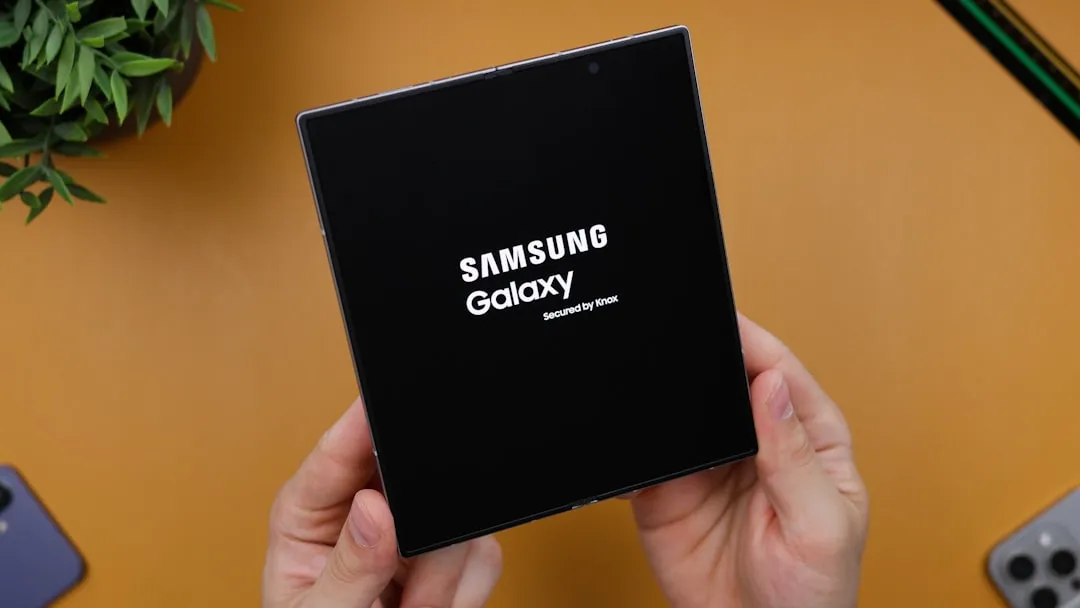
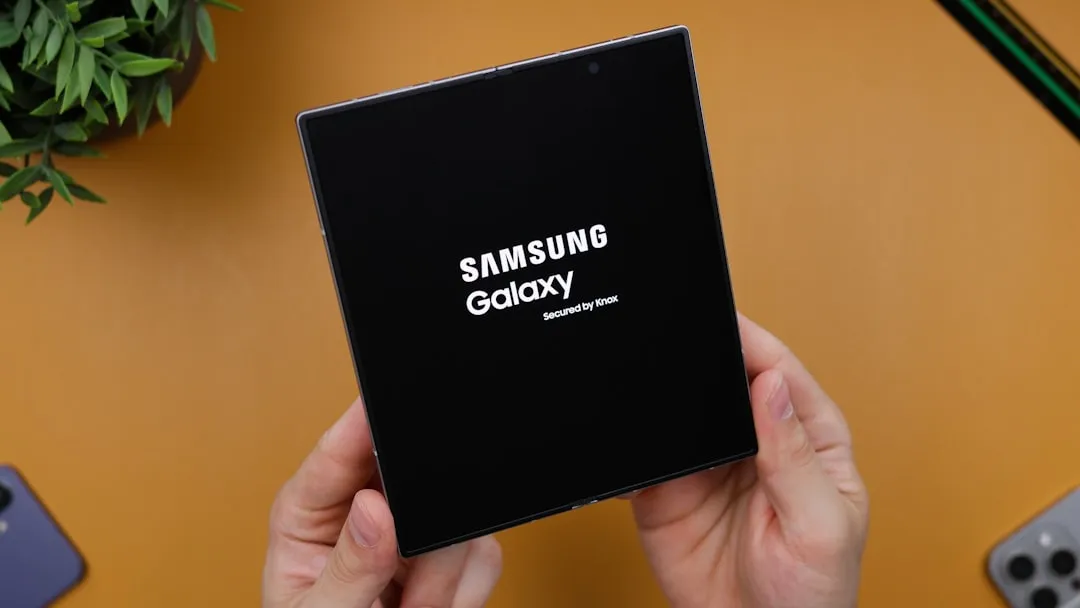
After months of speculation and leaked images, Samsung's first tri-folding smartphone has finally been officially unveiled. The Galaxy Z TriFold represents Samsung's most ambitious foldable device to date, according to Samsung's official announcement. This engineering marvel builds on a decade of foldable innovation, attempting to solve the mobile industry's challenge of balancing portability with productivity (Samsung). The device transforms from a standard smartphone into a 10-inch tablet-like experience, promising to revolutionize how we think about mobile computing (Economic Times).
What makes the TriFold's design so impressive?
Let's break it down—Samsung has created something that honestly feels like it shouldn't be possible yet. The Galaxy Z TriFold showcases remarkable engineering with its dual in-folding mechanism that creates a surprisingly sleek profile. When fully opened, the device measures just 3.9mm at its thinnest point, making it considerably thinner than comparable tablets (Mashable). Think about that for a moment—we're talking about a device that folds twice and still manages to be thinner than most traditional tablets when expanded, fundamentally changing what's possible in portable computing design.
The secret lies in Samsung's precision engineering approach to the tri-fold challenge. The folded configuration reaches 12.9mm thick, with Samsung utilizing two different-sized Armor FlexHinges that work in perfect synchronization (Economic Times). What's particularly clever is how the device folds inward to protect the main screen—addressing one of the biggest durability concerns from earlier foldable generations by keeping that expensive display safely tucked away when not in use.
Here's what really impressed me: Samsung has included an auto-alarm system that alerts users if they attempt incorrect folding through on-screen notifications and vibrations (Samsung). This isn't just a safety feature—it's Samsung acknowledging that tri-fold mechanics are inherently more complex and building in user education to prevent costly mistakes. Smart engineering meets practical user experience.
How does the display technology work?
Now here's where the engineering excellence really shines through multiple layers of innovation. The display setup is where the TriFold truly showcases Samsung's display mastery, featuring a 6.5-inch cover display with an impressive 2,600 nits peak brightness (SamMobile). That's not just bright enough for direct sunlight visibility—it's brighter than most flagship smartphones, ensuring the external experience never feels like a compromise.
When unfolded, users get access to a massive 10-inch internal screen with 1,600 nits brightness, significantly larger than the 8-inch display found in the Galaxy Z Fold7 (NotebookCheck). This size difference isn't just about numbers—it represents the transition from "large phone" to genuine tablet territory, where productivity tasks like document editing and creative work become truly viable on mobile.
The main display leverages Samsung's Dynamic 2X AMOLED technology with up to 120Hz refresh rate, creating an immersive viewing experience that adapts intelligently to content type (Samsung). Whether you're scrolling through spreadsheets, editing high-resolution photos, or streaming content, that adaptive refresh rate ensures optimal battery life while maintaining visual smoothness across the expanded 10-inch canvas.
What's the performance and battery situation?
Samsung didn't mess around when it comes to powering this tri-fold complexity. They've equipped the TriFold with a customized Snapdragon 8 Elite Mobile Platform specifically optimized for Galaxy devices (Mashable). This isn't just marketing speak—the customization focuses on managing the unique power distribution challenges of a tri-fold design, where three separate display sections and dual hinges require sophisticated power management coordination.
The camera system maintains Samsung's photography leadership with a flagship 200MP main sensor (Economic Times). Beyond the impressive resolution, the tri-fold form factor opens up entirely new photography possibilities—imagine using the 10-inch display as a massive viewfinder for professional-level composition, or leveraging the folded configuration for unique angle shots that would be impossible with traditional phones.
But here's the engineering marvel that really caught my attention: the device houses a 5,600mAh three-cell battery system distributed across each of the three panels for balanced power delivery and all-day endurance (Samsung). This distributed approach solves the fundamental challenge of tri-fold battery design—maintaining optimal weight balance while ensuring no single panel becomes a weak point in the charging or longevity equation. It's the kind of systems-level thinking that transforms ambitious concepts into reliable daily drivers.
How does the software experience adapt to three screens?
This is where Samsung's decade of foldable expertise translates into genuine productivity innovation. The TriFold becomes the first smartphone capable of running Samsung DeX natively, enabling users to create a full desktop-like working environment from anywhere (Samsung). Think beyond just having a big screen—this is about fundamentally changing how mobile computing integrates into professional workflows, eliminating the need for separate tablets or laptops for many tasks.
Users can run three apps simultaneously side-by-side, with seamless transitions between Samsung DeX and One UI modes (NotebookCheck). The practical applications are transformative: imagine managing email on one panel while participating in a video conference on another, with presentation materials open on the third. This isn't just multitasking—it's the kind of workflow efficiency previously reserved for multi-monitor desktop setups.
The device builds upon One UI's proven multitasking architecture, including the ability to run two smaller app windows alongside one that occupies half the foldable display (NotebookCheck). Samsung has essentially created a pocket-sized productivity ecosystem that scales from basic smartphone tasks to complex professional workflows depending on how you unfold it—literally adapting to your needs rather than forcing you to adapt to device limitations.
What about durability and quality control?
Samsung has learned hard lessons from early foldable challenges, and their quality assurance process for the TriFold demonstrates that institutional knowledge. Each device undergoes a rigorous 200,000-cycle folding test equivalent to folding the device 100 times daily for five years (Samsung). But the real innovation lies in testing tri-fold complexity—validating that both hinges maintain synchronization and display integrity across hundreds of thousands of cycles.
The manufacturing process reflects Samsung's commitment to precision at scale. Advanced automated assembly systems and 3D laser scanning ensure display quality control meets the exacting standards required for a device that costs more than many laptops (GSMArena). Every single unit receives comprehensive validation through high-speed CT scanning of internal components and extensive real-world scenario testing across network, battery, display, and environmental factors (GSMArena).
This isn't just about preventing early failures—it's about building confidence in an entirely new product category. Samsung's quality control investments signal their commitment to making tri-fold reliability a solved problem rather than an ongoing concern, which is essential for mainstream adoption of such advanced folding technology.
When can you actually get one?
Here's the availability timeline that matters for early adopters: The Galaxy Z TriFold launches in South Korea on December 12, 2025, with pricing around $2,400 (NotebookCheck). While that's certainly premium pricing, it positions the TriFold as more accessible than some analysts expected for first-generation tri-fold technology—particularly when you consider you're essentially getting phone, tablet, and desktop functionality in one device.
Samsung plans to bring the device to the U.S. market in the first quarter of 2026, though American pricing hasn't been announced yet (Mashable). Given Samsung's typical global pricing strategy and the additional costs of regulatory compliance in different markets, U.S. consumers should expect pricing in the $2,500-$2,800 range, positioning it as a premium productivity device rather than a mainstream consumer phone.
The device enters direct competition with Huawei's Mate XT series, marking the beginning of genuine tri-fold market competition (NotebookCheck). This competitive dynamic is crucial—it validates the tri-fold concept while ensuring rapid innovation and eventual price reductions as manufacturing scales and competition intensifies.
The future of foldables starts here
The Galaxy Z TriFold represents more than Samsung's latest engineering achievement—it's the realization of truly adaptive mobile computing. With its combination of cutting-edge display technology, robust performance capabilities, and innovative software adaptation, the device successfully merges phone, tablet, and desktop experiences into one remarkably slim package (Samsung). This convergence addresses the fundamental inefficiency of carrying multiple devices for different computing needs.
What impresses me most is how Samsung's decade of foldable expertise manifests in every aspect of the TriFold, from the precision-engineered dual hinges to the comprehensive quality testing that ensures long-term durability (Samsung). This isn't experimental technology being rushed to market—it's the culmination of systematic innovation designed to establish tri-fold phones as a legitimate computing category rather than an expensive curiosity.
For tech enthusiasts and mobile professionals ready to embrace the next evolution of mobile computing, the Galaxy Z TriFold offers a compelling glimpse into a future where our devices truly adapt to how we work and play (Economic Times). The question isn't whether tri-fold phones will transform mobile computing—Samsung's TriFold proves they already have. The remaining question is how quickly this technology becomes accessible to mainstream users, and based on Samsung's track record with foldable price reductions over time, that future may arrive sooner than we think.








Comments
Be the first, drop a comment!